By Edward Acquah, GNA
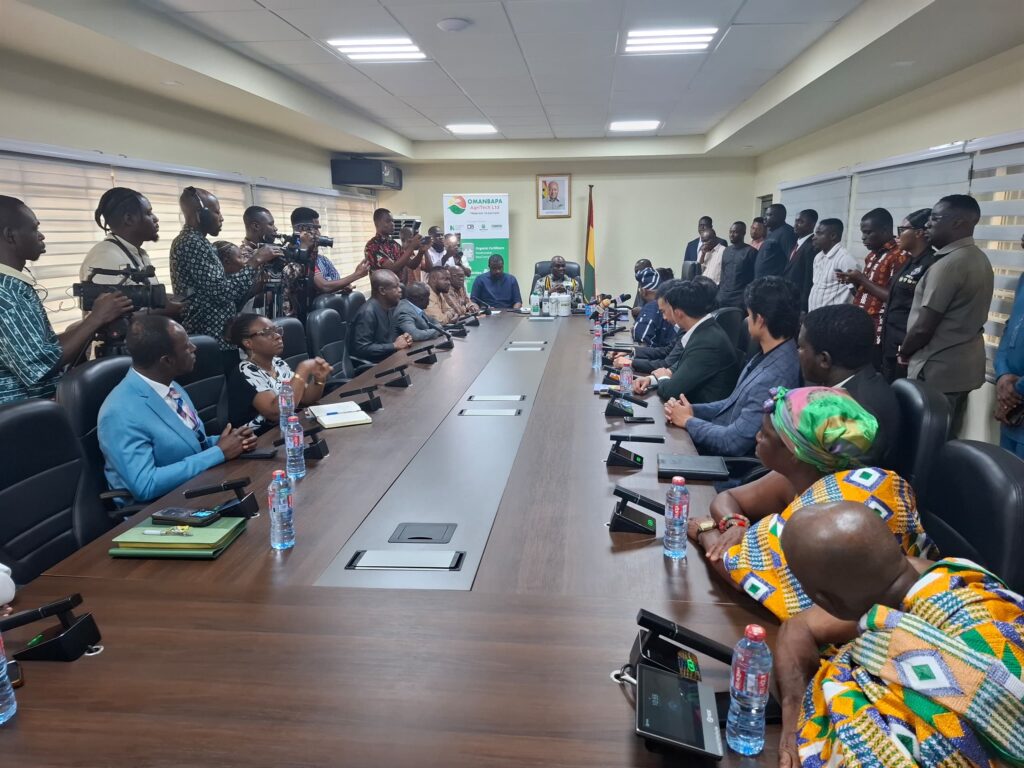
Accra, July 27, GNA – The Ministry of Food and Agriculture has signed a Memorandum of Understanding with Omanbapa AgriTech Limited to establish an organic fertiliser plant to boost food production and reduce Ghana’s dependence on synthetic fertilisers.
The agreement, signed in Accra on Monday, provides for the immediate commencement of the project, which is expected to be located between the Ashanti and Ahafo regions.
The facility will initially operate as a blending plant using imported raw materials before transitioning into a full processing plant within one to two years.
Speaking at the signing ceremony, Mr Eric Opoku, Minister of Food and Agriculture, said the project formed part of the Government’s agricultural transformation agenda to protect soil health and improve food safety.
“We are looking at how we can gradually transition from the use of inorganic or synthetic fertiliser to organic fertiliser,” he said.
Mr Opoku said the product had undergone technical testing by the Plant Protection and Regulatory Services Directorate (PPRSD) and had been certified for use in Ghana after demonstrating its potential to increase food production.
He said farmers who tested the product also reported positive results, providing the Ministry with both technical and practical evidence of its effectiveness.
Mr Opoku said the project would create additional income opportunities for farmers because agricultural waste materials, including maize husks and other crop residues, would be purchased as raw materials for fertiliser production.
“Apart from the fertiliser we are getting, they are also creating marketing opportunities for our farmers,” he said.
Mr Bernard Oduro Takyi, Group Chief Executive Officer of Omanbapa Group, said the project would be implemented in three phases comprising the procurement of inputs, blending operations and full-scale manufacturing.
He said the company planned to invest about US$10 million in the project.
Mr Takyi said the initial blending phase was expected to produce between 20,000 and 30,000 metric tonnes of fertiliser annually, while full-scale production could reach about 60,000 metric tonnes.
He said local production would make organic fertiliser relatively cheaper than imported alternatives and create employment opportunities for Ghanaians.
Mr Takyi added that the use of organic inputs would also support efforts to reduce agricultural waste, lower carbon emissions and improve the competitiveness of Ghanaian agricultural exports, particularly cocoa.
Under the agreement, the two parties are expected to establish a technical committee to determine the exact location of the plant and oversee implementation of the project.
Mr Opoku urged the company to ensure that the commitments captured in the Memorandum of Understanding were translated into visible action on the ground
He said that the Government was ready to support private-sector investments that would contribute to Ghana’s food security agenda.
GNA
Edited by Kenneth Sackey Reporter: Edward Acquah