By J. K Nabary
Winneba (C/R), July 13, GNA – Participants of the inaugural workshop of the Small-Scale Fisheries Academy (SSF Academy) have expressed their commitment to help their fellow fishers better understand the Fisheries and Aquaculture Act in their various communities.
The participants numbering thirty men and women drawn from fishing communities across Ghana’s four coastal regions, stated this in a communique copied to the Ghana News Agency, at the close of the maiden SSF Academy workshop at Winneba.
They also pledged to establish monthly dialogue platforms to bring together chief fishermen, canoe owners and other actors in the fishing industry to jointly identify and implement solutions to challenges at their landing beaches, while raising common concerns with the Ministry and the Fisheries Commission to inform future policy and management decisions.
“In this way, we will locally develop initiatives which can complement national governance, create a dynamic relationship between community-based action and form fisheries management that values and incorporates the knowledge and experience of fishers and other actors in the fishing.”
According to them, the training, have strengthened their capacities as community facilitators, equipping them to support their professional groups and communities in playing a more active role in fisheries co-management.
The communique indicated further that, the Academy marks the beginning of a one-year partnership between the non-profit Mundus maris asbl, the Canoe and Fishing Gear Owners Association of Ghana (CaFGOAG) LBG and its aims to mobilize fishing communities to identify and implement locally driven initiatives that complement government efforts to regenerate fisheries resources and safeguard the livelihoods of fishers and fish workers among others at the landing beaches.
To also restoring fish stocks is essential not only for artisanal fisheries but also for the long-term ecological and economic sustainability of Ghana’s semi-industrial and industrial fisheries.
They stated further that, years of widespread illegal fishing practices across multiple subsectors have significantly reduced the productivity of what were once abundant marine resources and continue to undermine effective fisheries management and as a result, Ghana increasingly relies on fish imports, which the Fisheries Commission estimates at approximately 80,000 tons annually.
“We recognise the important efforts being made by the Ministry of Fisheries and Aquaculture and the Fisheries Commission to reduce fishing pressure and address overfishing which include Campaigns against illegal, Unreported and unregulated fishing, establishment of Marine Protected areas, and the promotion of co-management approaches.” they stated.
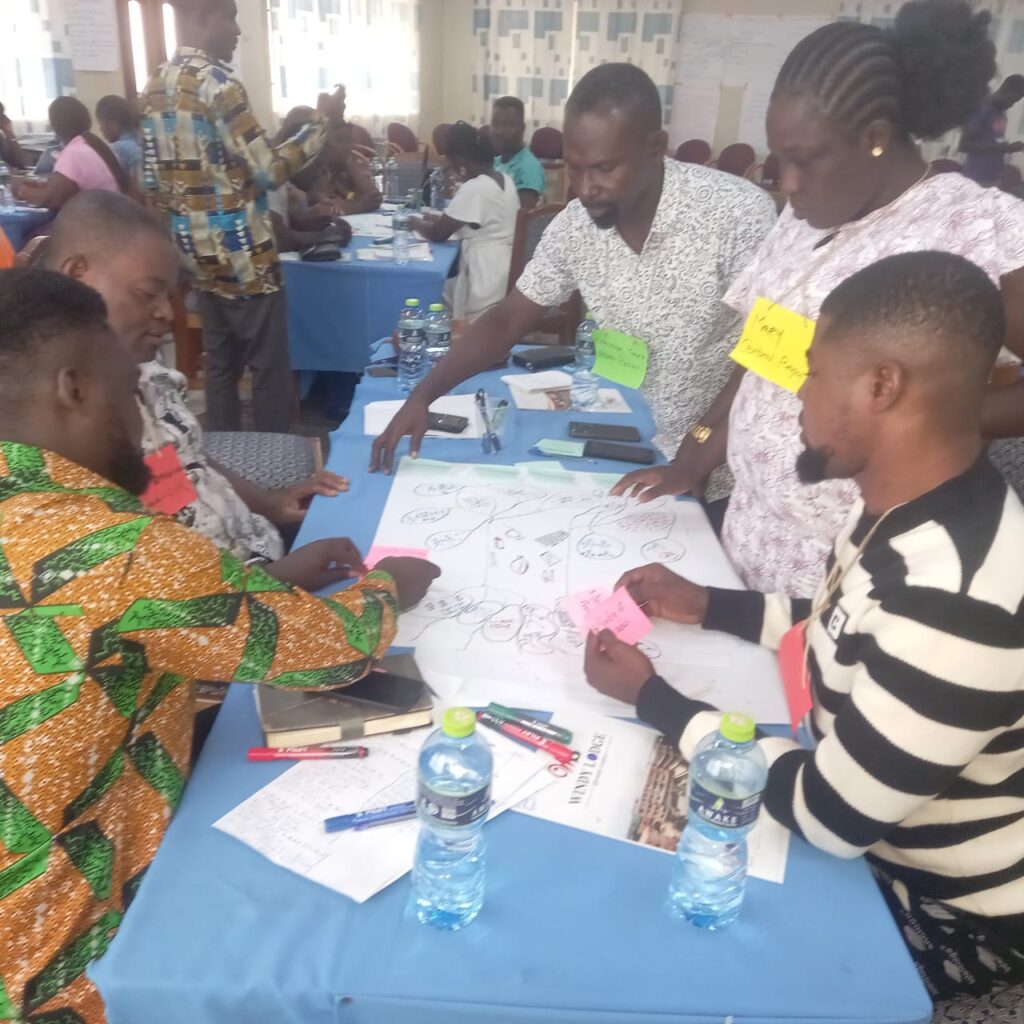
They further stated that, in context, the SSF Academy partnership represented a timely and valuable contribution that could reinforce and accelerate such ongoing initiatives, providing a safe, inclusive space for dialogue where people from across the fisheries sector and others with interest in its future exchange experiences, learn from each other and jointly develop practical solutions to share challenges.
They explained that such collaboration built on lessons from previous development initiatives in Ghana, included the recent training of approximately 300 fisher leaders and community representatives on the Fisheries and Aquaculture Act, 2025 (Act 1146) and supported by Blue Ventures Conservation.
According to them, the Fisheries and Aquaculture Act, 2025, which provided a legal foundation for fisheries co-management, represented an important step forward.
They also described the partnership between Mundus Maris and CaFGOAG as one that seeks to translate the legal framework into practical action by strengthening co-management institutions, encouraging dialogue, and fostering greater voluntary compliance with fisheries laws and regulations.
“The partnership welcomes collaboration with universities, civil society organisations, non-governmental organisations, traditional authorities, development partners and others committed to supporting the sustainable future of Ghana’s small-scale fisheries,” they advocated for.
GNA
Edited by Alice Tettey/ Audrey Dekalu