Accra, July 11, GNA – The Driver and Vehicle Licensing Authority (DVLA) has appealed to the public to support the implementation of a new Radio Frequency Identification (RFID)-enabled vehicle number plate system, describing it as a major step towards improving road security, vehicle identification and service delivery.
The Authority said the new registration regime, which was initially scheduled to take effect on January 2, 2026 but was suspended pending parliamentary approval, would be rolled out after the necessary legal processes were completed.
Mr Otuo-Srebour Kwasi Bona, Deputy Director in charge of Vehicle Inspection and Registration at the DVLA, made the appeal during a media briefing in Accra on Friday.
The Authority said more than 3.7 million vehicles will be re-registered.
Mr Bona said the current registration system had become vulnerable to number plate cloning, manual manipulation and delays in retrieving vehicle records, making it difficult for law enforcement agencies to track vehicles linked to crime.
“The objective is to create a more credible and updated vehicle database, improve public safety and security, properly identify vehicle owners and enhance service delivery,” he said.
Mr Bona explained that the new plate would be embedded with RFID chip capable of storing vehicle and ownership information, allowing authorised agencies to retrieve data electronically in real time.
He said the system would also reduce the use of fake number plates, prevent the registration of stolen and uncustomed vehicles, and improve compliance with international vehicle registration standards.
Unlike the current regime, where registration numbers indicate the year of registration, the new format would comprise a registration number followed by four letters, with the first two indicating the registration centre and the remaining two generated randomly by a computer algorithm.
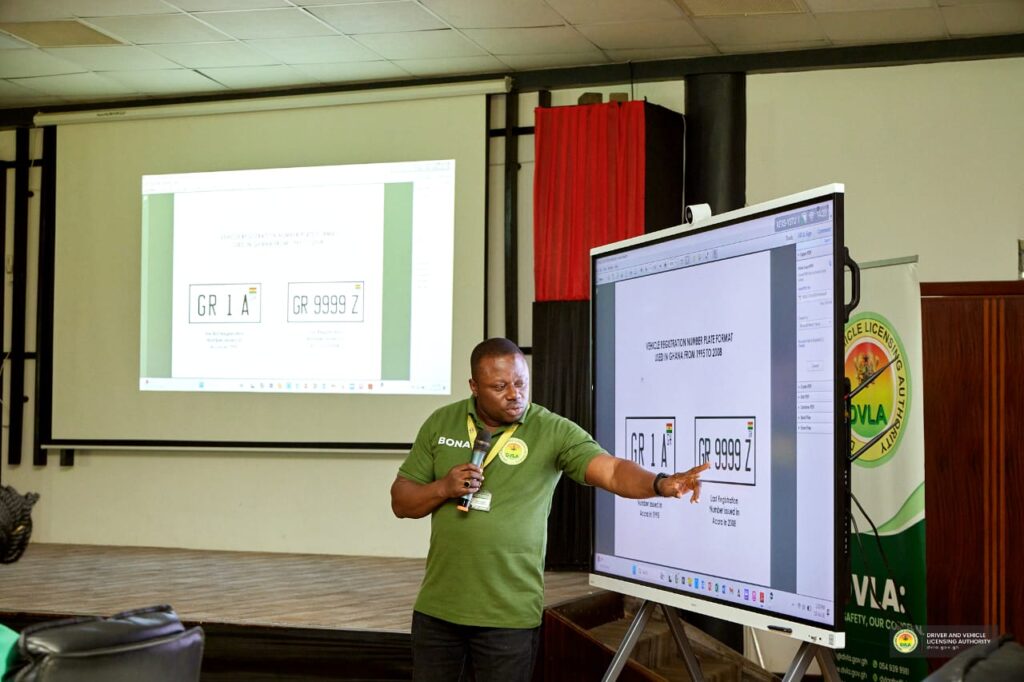
Mr Bona said the removal of the year identifier would eliminate the practice of vehicle owners delaying registration until the beginning of a new year to obtain a newer registration number.
“The random allocation takes away predictability. There will be no need for people to wait for January before registering their vehicles,” he said.
He said the new regime would also assign number plates to individuals rather than vehicles, allowing owners to retain their plates when they dispose of a vehicle and transfer them to another vehicle within the same category.
The Authority also introduced distinct number plate designs for private, commercial, government, diplomatic, electric vehicles, motorcycles, tricycles, trailers and earth-moving equipment, each incorporating enhanced security features, including holograms, thermal markings and RFID technology.
Mr Julius Neequaye Kotey, Chief Executive Officer of the DVLA, urged motorists and other stakeholders to embrace the reform, describing it as a critical national security intervention.
“Most crimes involve the use of vehicles. We need a system that enables us to identify vehicles quickly and accurately. We therefore call on everyone to support this project,” he said.
Mr Kotey said the Authority had already begun deploying vehicle clone detection technology as part of the broader reform programme and had intercepted dozens of cloned vehicles during the registration process.
He said public cooperation would be essential to ensuring the successful implementation of the new vehicle registration regime.
GNA
George Agboklu