By Evans Worlanyo Ameamu
Dzita (V/R), July 8, GNA – ActionAid Ghana, in partnership with Habitat for Humanity International and with support from UN-Habitat, has launched a mangrove restoration project at Dzita in the Anloga District of the Volta Region to strengthen the resilience of coastal communities against the effects of climate change.
The initiative forms part of a broader programme aimed at building resilience in vulnerable coastal communities in the Volta region, where years of mangrove depletion have left many areas exposed to coastal erosion, flooding, and rising sea levels.
Mr Ali Malik Gbene, Quality and Knowledge Management Manager at ActionAid Ghana, told the Ghana News Agency (GNA) that the intervention was being implemented under Component Two of a UN-Habitat-funded programme focused on improving resilience in Ghana’s coastal communities.
“The component of the initiative covered three key areas, including the installation of early warning systems to help communities anticipate floods and rainfall risks, alongside nature-based solutions centred on mangrove restoration,” he said.
Mr Gbene said the restoration target for Ghana stood at 110 hectares, with mapping already completed for about 300 hectares within the Anloga area alone, indicating strong potential for the project’s expansion.
Also, a 10-hectare pilot planting exercise was carried out last year, and the project had since progressed into its first full phase of mangrove planting in the district.
According to him, restoring the mangrove cover would not only serve as a carbon sink but also support fish breeding, and directly benefit the livelihoods of fishing communities in the area.
The project also had a livelihood component, with many residents’ farmers along the fringes of the mangrove areas, to be introduced to improved agricultural technologies to support their activities.
He said the initiative had benefited from strong collaboration among the Forestry Commission, the Physical Planning Department of the Anloga District Assembly, the National Disaster Management Organisation (NADMO) and other state institutions.
Mr Gbene appealed to community members to take ownership of the project and support efforts to sustain the restored mangrove ecosystem.
He proposed that residents who harvest mangroves for fish smoking should be encouraged to raise seedlings and undertake replanting activities to ensure the continued regeneration of the vegetation.
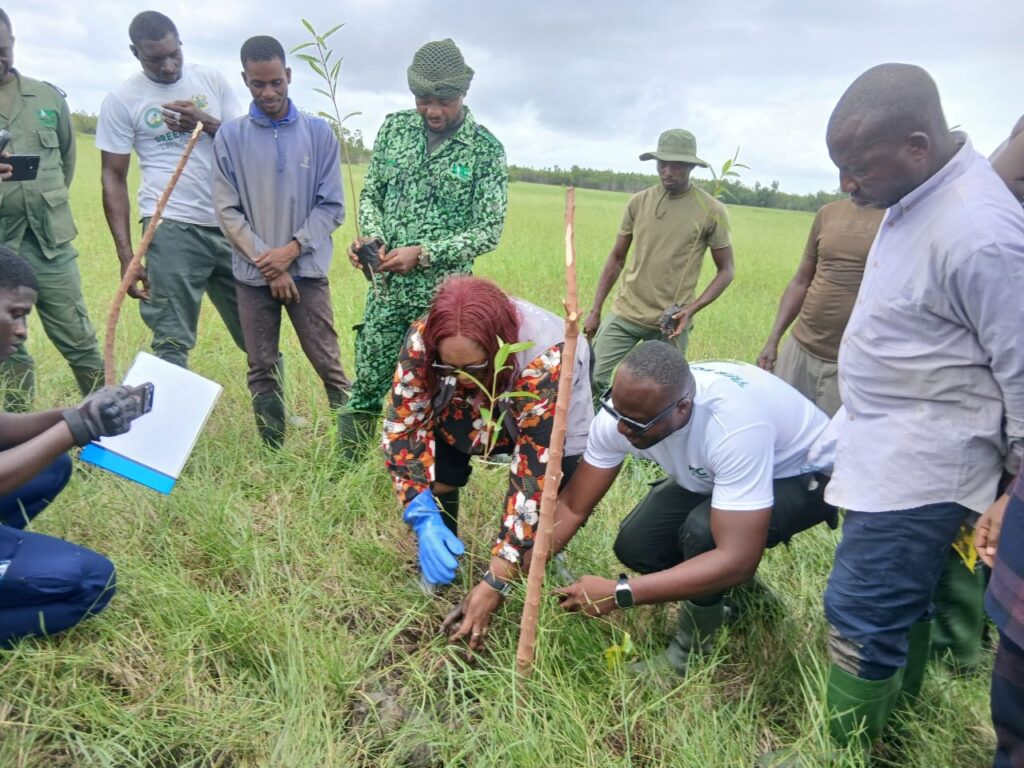
Mr Solomon Domayen Antumwini, Country Representative of Habitat for Humanity International, said the project would contribute significantly to environmental sustainability and create economic opportunities for residents.
“The reason why we funded this project is because mangroves serve health purposes, first it is able to ensure that there is resilience in the coastal communities, there will reduce erosion, handle flooding issues.”
Mr Antumwini said the marshy nature of the Dzita coastline made mangroves the most suitable vegetation for the area and urged residents to support the initiative.
He said information gathered indicated that many residents depended on mangroves for firewood, particularly for fish smoking.
Mr Antumwini said relevant technical agencies were being engaged to explore alternative sources of fuelwood and establish community woodlots as long-term measures to reduce pressure on mangrove resources and ensure the sustainability of the restoration effort.
Madam Sandra Seyram Kpedor, the District Chief Executive for Anloga, commended the partners for bringing the project to the district.
She said the initiative would create employment opportunities for residents while attracting additional development interventions to the area.
Madam Kpedor acknowledged that mangroves in the district had for years been cut down mainly for firewood used in fish smoking.
She said the Assembly was addressing the challenge through public education and awareness creation.
The DCE said the Assembly would intensify sensitisation programmes to help residents appreciate the environmental importance of mangroves.
She added that the Assembly would collaborate with non-governmental organisations to identify alternative livelihood opportunities for fisherfolk who depended on mangrove resources.
Some residents of Dzita who spoke to the GNA expressed satisfaction with the project and pledged to support efforts aimed at protecting and sustaining the mangrove ecosystem.
GNA
Edited by Maxwell Awumah/Lydia Kukua Asamoah