By Francis Ntow
Accra, June 17, GNA – The United Nations (UN) country team in Ghana improved its programme delivery rate to 80 per cent in 2025, up from 64 per cent the previous year, investing US$113.3 million across 34 agencies in the country.
The investments were delivered across seven joint programmes with 185 implementing partners in five critical areas of impact – poverty and economic inclusion, health, education and social services, peace, security and governance, disability inclusion and gender equality, and climate finance and digital transformation.
Key achievements included moving 950,000 people out of multidimensional poverty between the fourth quarter of 2024 and the third quarter of 2025, and reducing maternal mortality from 310 deaths to 234 deaths per 100,000 live births.
The UN noted that the country’s security environment remained stable despite some 34,000 people being displaced from the Gbinyiri conflict, over 150 deaths recorded through the Bawku conflict, with immigration patrols expanding from 12 to 22 kilometres.
Additionally, 24,226 students received digital safety awareness training, 54 journalists trained on conflict-sensitive reporting reaching 100,000 radio listeners, and generating 1.5m video views on peace messaging.
In disability inclusion and gender equity, various programmes across the 16 regions of Ghana resulted in child marriage prevalence reduced to 16.1 per cent from the baseline progress of 19 per cent, with the development of a national disability data framework.
On climate change, the UN observed the diversion of 24,152 tonnes of organic waste from landfills, with experts helping to shape the country’s disaster risk finance strategy, advancing a parametric flood insurance solution designed to protect 4.9m people.
At the launch of the UN’s annual results report in Accra on Tuesday, Resident Coordinator Zia Choudhury, noted that their system’s programmed US$112 million expenditure in 2025, yielded higher rates, reflecting stronger coordination and accountability.
“We are improving our delivery rates because we are ready to deliver with greater discipline, greater reliability across the 34 agencies,” Mr Choudhury said, highlighting UN’s focus on approaches that provided greater impacts.
“The UN’s annual envelope of over US$113m may not seem large compared to national infrastructure spending, but is managed with careful targeting, careful coordination, careful accounting,” he said, emphasising improved performance amid global pressure on development financing.
He mentioned quality education among children and nutrition support, farmers accessing seeds and finance, women and girls gaining protection and economic opportunities, and communities becoming better prepared for climate shocks as some of the outcomes of their programmes in the country.
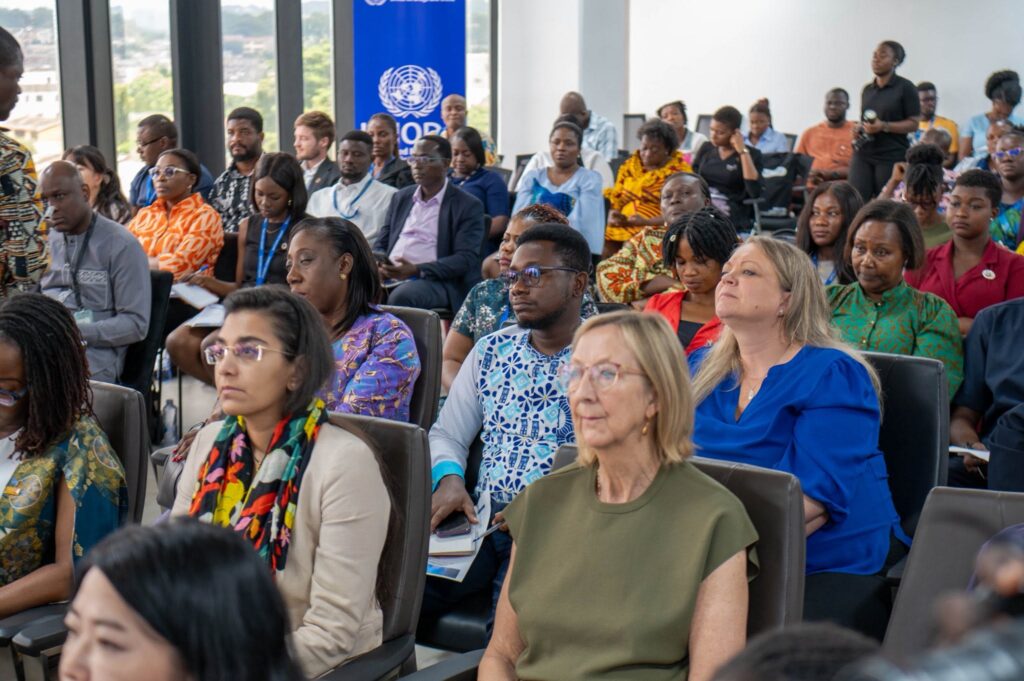
Mr David Klotey Collison, the Coordinating Director of Operations at the Ministry of Finance, noted that the outcomes were achieved through partnership, which continued to be nurtured year after year, both in moments of difficulty and progress.
He explained that the UN’s systems remained a strategic partner to Ghana’s provision of essential services, social protection, climate resilience, economic transformation and peace building in communities in the country and across the sub-region.
“Over the past year, Ghana has made deliberate efforts to strengthen fiscal policy, optimised public investment, enhanced domestic resource mobilisation, but international cooperation was necessary in achieving the country’s sustainable development goals,” Mr Collison said.
“The conversation is now shifting from stabilisation towards transformation and resilience… We aim to work alongside… including public private partnerships to build long term economic and ecosystems.”
The Coordinating Director expressed the country’s appreciation to the UN and its partners for their support to Ghana, pledging to enhance collaborations to engender greater outcomes in the years ahead.
GNA
Edited by Agnes Boye-Doe
Reporter: Francis Ntow
[email protected]