By Michael Foli Jackidy
Hohoe (V/R), June 18, GNA – Professor Lydia Aziato, the Vice-Chancellor of the University of Health and Allied Sciences (UHAS), has called for an end to the stigma, misconceptions and discrimination surrounding menstruation, stressing that it is a normal biological process and not a disease.
Speaking as Chairperson at the UHAS and Reckitt Global Hygiene Institute (RGHI) Project dissemination forum in Hohoe on Wednesday, Prof Aziato said many girls and women experienced severe physical, emotional and psychological challenges during menstruation, which were often overlooked by society.
She explained that while some women experienced little or no discomfort during their menstrual periods, others suffered debilitating pain that could prevent them from carrying out their daily activities.
“There are women who spend several days in hospital or are unable to get out of bed because of severe menstrual pain. Some experience intense pain for several hours every month to the extent that they cannot even walk, while others become so distressed that they contemplate suicide,” she said.
Prof Aziato said her previous research on menstrual pain had exposed the difficulties many adolescent girls faced in managing menstruation and its impact on their mental health and overall wellbeing.
She noted that girls who experienced heavy menstrual flow often dealt with anxiety, embarrassment and emotional distress, particularly when they stained their clothing or bedding despite using sanitary products.
“For some girls, no matter how long or absorbent the sanitary pad is, they still wake up with stained bedsheets. These experiences create enormous mental health challenges for young girls,” she said.
She also highlighted the role of social and cultural practices in worsening the situation, saying some communities and religious settings still imposed restrictions on menstruating women and girls.
“Even today, in some religious settings, women are not allowed to enter places of worship while menstruating. In some homes, menstruating women are not allowed to cook or use the same utensils as other family members. These practices create unnecessary stress and reinforce harmful misconceptions,” she said.
Prof Aziato stressed that menstruation should never be a basis for discrimination, exclusion or shame.
“The uterus prepares itself every month in anticipation of pregnancy. If pregnancy does not occur, the lining is shed, and that is what we see as menstruation. It is a normal biological process and not a disease,” she explained.
She urged traditional leaders, parents, teachers and communities to support adolescent girls and create safe and enabling environments where they could discuss menstrual health without fear or embarrassment.
“The fact that your daughter or niece is menstruating does not mean she should be prevented from participating in family or community activities. Menstruation is not an illness and should not be treated as one,” she said.
Prof Aziato also appealed to boys and young men to stop teasing girls who accidentally stain their clothes during menstruation.
“Do not laugh at them or make them feel ashamed. Menstruation is a natural part of life, and we all have a responsibility to support girls and women through this period,” she said.
She commended Dr Sitsofe Gbogbo, the Principal Investigator of the RGHI project, and her team for undertaking research that had brought national attention to the link between menstrual hygiene and adolescent mental health.
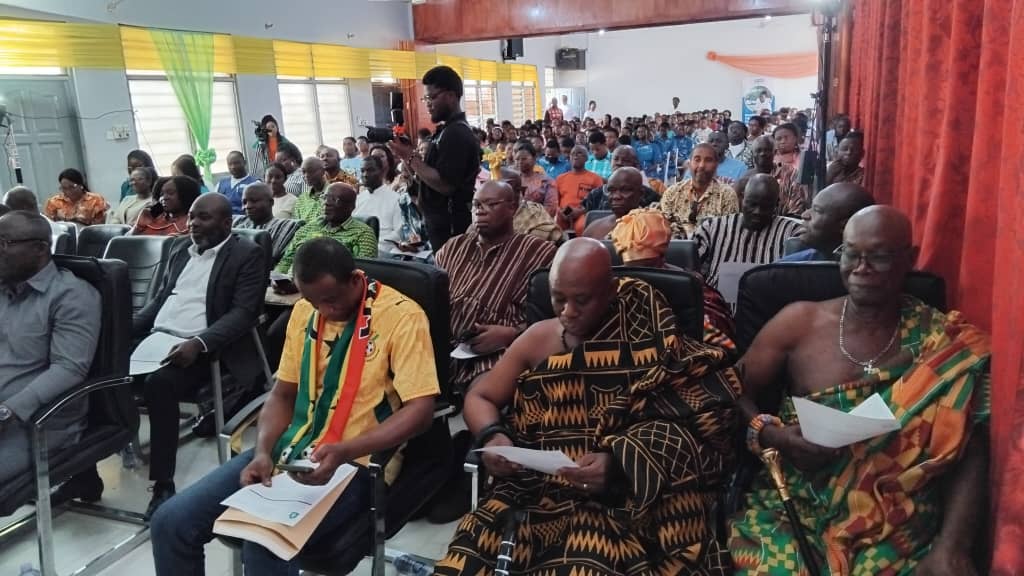
The dissemination forum, held on the theme ‘Breaking the Silence: Menstrual Hygiene Management and Adolescent Mental Health in Ghana,’ brought together researchers, health professionals, policymakers, students and development partners to discuss ways of improving menstrual health and promoting the wellbeing of adolescent girls.
GNA
Edited by Maxwell Awumah/Benjamin Mensah