By Kekeli K. Blamey, GNA
Sogakope (V/R), June 25, GNA – The Ghana Maritime Authority (GMA) has engaged stakeholders to develop a unified strategy aimed at enhancing trade facilitation, improving port efficiency, and strengthening anti-corruption measures across the country’s maritime industry.
The initiative forms part of a four-day Joint Facilitation Committee (FAL) and Maritime Anti-Corruption Network (MACN) Workshop, being held in Sogakope in the Volta Region under the theme: “Ensuring Efficient and Transparent Port Clearance.”
The workshop has brought together representatives from the Ministry of Transport, the Ghana Maritime Authority (GMA), Maritime Anti-Corruption Network (MACN), IMANI Ghana, and members of the National Facilitation Committee to align their operational plans and develop a coordinated roadmap for transparent and efficient maritime operations.
Participating institutions include the Ghana Ports and Harbours Authority (GPHA), Shipowners and Agents Association of Ghana (SOAAG), Ghana Immigration Service, Ghana Shippers Authority, Ghana Navy, Ghana Institute of Freight Forwarders (GIFF), Cyber Security Authority, Marine Police, Ghana Health Service, Customs Division of the Ghana Revenue Authority, Ghana Link Network Services, and the Ghana National Chamber of Commerce and Industry.
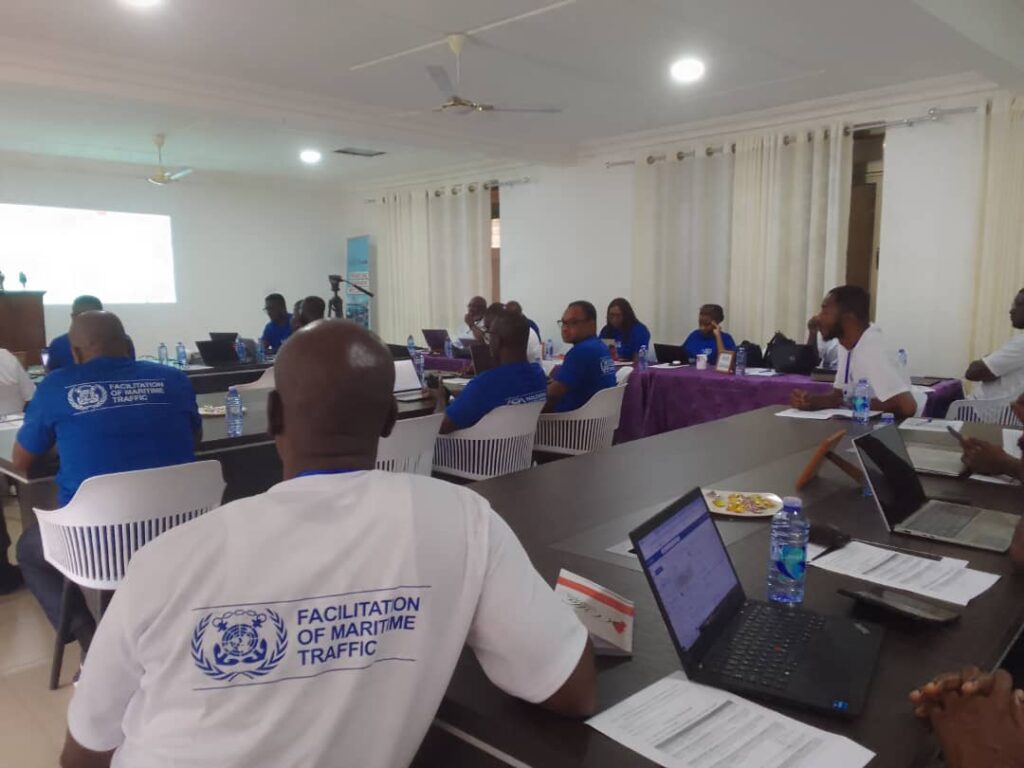
Delivering the welcome address on behalf of the Director-General of the GMA, Ms Janet Houghman, the Chairperson of the National FAL Committee and Director of Maritime Services at the GMA, commended stakeholders for their commitment to improving maritime trade facilitation and promoting transparency within the sector.
She said the workshop would provide a platform for participants to harmonise the work plans of the National FAL Committee and MACN, develop coordinated anti-corruption interventions, and support Ghana’s compliance with international maritime obligations.
“The success of our maritime sector depends on our ability to work together to remove operational bottlenecks, enhance transparency, and create a predictable business environment for all port users,” she stated.
Ms Houghman expressed confidence that the deliberations would result in practical and measurable actions capable of strengthening Ghana’s maritime governance framework and improving the country’s competitiveness within the global shipping industry.
Mr Stephen Adjokatcher, the President of the Ghana Institute of Freight Forwarders (GIFF), who chaired the workshop, stressed the importance of collaboration among stakeholders to prevent duplication of efforts and to maximise available resources.
He urged participants to focus on practical and achievable outcomes that would strengthen Ghana’s position as a preferred maritime and logistics hub in West Africa.
Mr Adjokatcher said the workshop was expected to produce a well-aligned and actionable work plan capable of advancing trade facilitation, transparency, and good governance within Ghana’s ports.
Speaking to journalists, Ms Maria Gowon, the Lead for West and Central Africa at the Maritime Anti-Corruption Network (MACN), described corruption as one of the most significant challenges facing the global maritime industry.
She noted that MACN continued to receive numerous reports of bribery and facilitation payments within ports worldwide, warning that the effects of corruption extended beyond the maritime sector to ordinary citizens and national economies.
“The impact of corruption is profound. It affects seafarers, undermines port efficiency, discourages trade, and ultimately increases the cost of goods and services for consumers,” she said.
Ms Gowon explained that the MACN’s anti-corruption interventions were built on three key pillars: transparency of port procedures, data-driven monitoring of compliance, and effective enforcement of established standards.
“Corruption is a shared challenge between the public and private sectors and can only be effectively addressed through collective action, continuous dialogue and sustained collaboration,” she added.
Mrs Lydia Tsotsoo Odai-Tettey, the Deputy Director responsible for Maritime Sector Development and Innovation at the Ghana Maritime Authority, said stakeholders were currently developing a three-year strategic plan covering the period 2026 to 2028, together with a detailed action plan for the remainder of 2026.
She explained that the strategic documents would serve as a roadmap for implementing agreed reforms and transforming discussions into measurable actions.
Mrs Odai-Tettey noted that breakout sessions held during the workshop had already laid a solid foundation for finalising a consolidated work plan to improve maritime operations and strengthen cooperation among stakeholders.
Mr Dennis Asare, Senior Research Associate at IMANI Ghana, said the organisation had spent the last decade undertaking research and policy advocacy aimed at promoting accountability, transparency, and ease of doing business within Ghana’s ports.
He said IMANI’s research had identified several factors contributing to corruption and inefficiencies in the port sector, including weak institutional accountability, inadequate coordination among agencies, and political influences affecting regulatory enforcement.
“Our role is to provide evidence-based research, facilitate stakeholder engagement, and support policy reforms that will strengthen accountability and reduce opportunities for corruption within the port environment,” he stated.
Mr Asare stressed that improving efficiency at the ports was not necessarily about reducing the number of regulatory agencies but rather enhancing coordination, streamlining processes, and strengthening accountability mechanisms.
“Every agency at the port performs a specific mandate. What is required is better collaboration and coordination to ensure that their activities complement one another and contribute to a more efficient and transparent port system,” he said.
Stakeholders expressed optimism that the workshop would produce a unified implementation framework capable of enhancing trade facilitation, reducing corruption risks, and positioning Ghana’s ports as competitive gateways for regional and international commerce.
GNA
Edited by Maxwell Awumah/Benjamin Mensah