By Florence Afriyie Mensah
Kumasi, May 08, GNA – Women in Business, especially, small and medium-sized enterprises (SMEs) owners have been tasked to build stronger structures to be able to scale up.
With stronger structures including records and book-keeping, business registration among others, women can confidently access loan facilities for expansion.
Dr. Godwin Acquaye, Chief Executive Officer, Business and Financial Times (B&FT) who rallied for this noted that some women still had challenges with collateral when accessing loan facilities, and this hindered them from scaling up in their businesses.
“This is not just an observation; it has stemmed from the fact that some women do not take their book-keeping and records seriously and no financial entity will be ready to offer a loan to such a business owner without proper records,” he stated.
Speaking at the 3rd Edition of the Women in Business Dialogue Series 2026 in Kumasi, he said the role women played in SME growth in Ghana could not be under-estimated, which was why it was necessary to tool women and ensure that they were strong enough to scale up.
Dr. Acquaye indicated that there was a $5 billion gap when it comes to financing SMEs, and SMEs formed about 90 percent of businesses in Ghana contributing 70 percent to GDP.
The Dialogue Series was put together by B&FT with sponsorship from Ecobank Ghana PLC.
It was themed “Building Market Leaders: Empowering Women‑Led SMEs and Agribusiness for Inclusive and Sustainable Growth”.
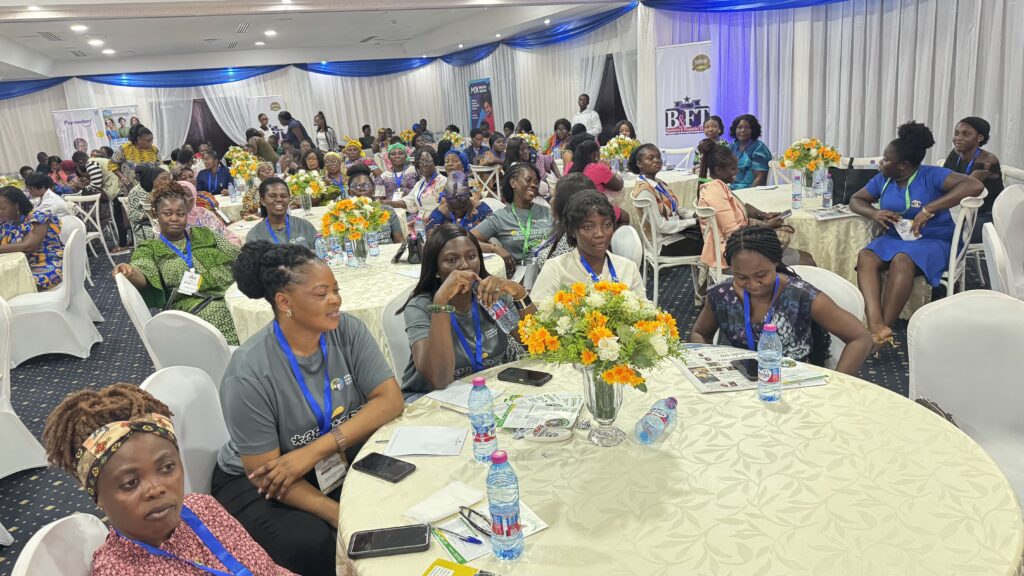
On fast tracking the establishment of the Women’s Development Bank, he said the facility in operation could further cushion the SME women who had the right structures.
Madam Regina Ofori, Head of Marketing and Brands, Ecobank Ghana PLC, said the bank believed that empowering women-led SMEs was not a matter of “corporate social responsibility” but a strategic economic imperative.
It is in this vein that the bank is committed to providing the financial oxygen and strategic support required to ensure that the next generation of African corporate giants are led by the women, she noted.
She however observed that many women enterprises remained constrained at a micro-scale as result of systemic friction including limited access to capital, gaps in technical and managerial capacity.
GNA
Edited by Yussif Ibrahim/Kenneth Odeng Adade
Reporter: Florence Afriyie Mensah