By Michael Foli Jackidy, GNA
Ho (V/R), May 07, GNA – The Volta River Authority (VRA) has called for stronger collaboration among stakeholders, strict enforcement of environmental laws and improved emergency preparedness to mitigate the impact of flooding and environmental degradation within communities along the Volta Lake and downstream areas.
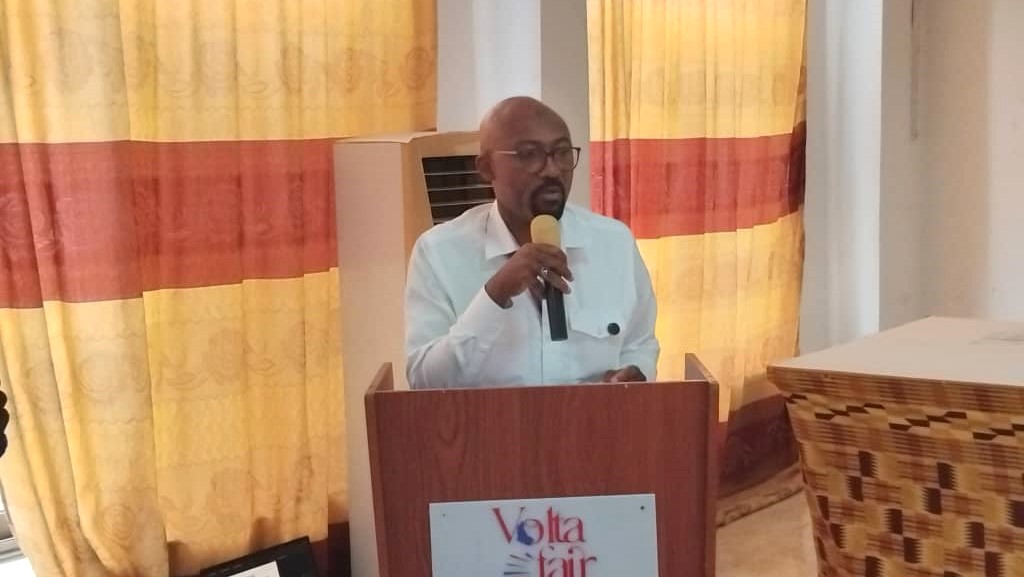
Mr Abdul Noor Wahab, the Director of Water Resources and Renewable Energy at the VRA, said emergency preparedness required continuous engagement and planning to ensure institutions and communities remained ready to respond effectively in times of crisis.
He said this during the 2026 Annual Stakeholder Workshop on the Emergency Preparedness Plan (EPP) and Environmental Management Plan (EMP) organised by the VRA in Ho, on Wednesday, for the stakeholders in all the flood prone Districts and Municipalities in the Volta Region.
Mr Wahab explained that the annual engagement, which has been held consistently since 2011, was aimed at sensitising stakeholders on their roles and responsibilities in managing emergencies associated with the operations of the Akosombo and Kpong Hydroelectric Dams.
“This engagement reminds all of us of our roles and responsibilities in the management of emergencies. For emergencies, you have to prepare ahead so that whenever they occur, you are ready to handle them,” he said.
He clarified that the workshop did not suggest any imminent spillage from the dams, stressing that the exercise formed part of routine preparedness and stakeholder coordination.
Mr Wahab said the workshop highlighted flood-prone and high-risk areas downstream and indicated that maps of those areas would be shared with Municipal and District Assemblies (MDAs) to guide planning and land use decisions.
He expressed concern over activities such as sand winning, encroachment on wetlands and indiscriminate development along waterways, which he said altered the natural land topography and increased the risk of flooding.
“What happens is that when people occupy wetlands or engage in activities such as sand winning, it changes the land topography. As a result, areas that ordinarily should not be flooded become flooded during periods of heavy rainfall or controlled spillage,” he said.
Mr Wahab urged local authorities and Assemblies to enforce regulations governing land use, wetlands protection and environmental management.
He said all stakeholders, including the Forestry Commission, NADMO, Ghana Police Service, Ghana National Fire Service and district assemblies, had a collective responsibility to protect the Volta Lake and River systems for future generations.
He warned that structures illegally erected on public lands or waterways risked demolition, even where permits may have been obtained improperly.
Alhaji Mohamed Avona Akape, the Chief Director of the Volta Regional Coordinating Council (VRCC), speaking on behalf of Mr James Gunu, Volta Regional Minister, commended the VRA for its continued collaboration with the VRCC in strengthening disaster preparedness in the region.
He said the devastating 2023 Akosombo Dam spillage, which displaced thousands of residents in North, Central and South Tongu and other districts, underscored the need for proactive disaster prevention measures.
He outlined several government interventions, including the expansion of climate adaptation and flood control infrastructure to the Volta Region under the Greater Accra Resilience and Integrated Development Project framework.
He also highlighted the government’s 24-Hour Economy Policy, which he said included strengthening emergency response institutions such as NADMO, the Ghana National Fire Service and the National Ambulance Service to ensure round-the-clock disaster response.
Alhaji Akape said the government’s Blue Economy Agenda would enforce buffer zone policies along the Volta Lake, regulate land use planning and support affected communities with sustainable alternative livelihoods after flood disasters.
He said plans were also underway to decentralise emergency logistics by ensuring that all flood-prone districts in the Volta Region had pre-positioned relief items, boats and communication equipment before the end of 2026.
The Chief Director urged MDCEs, security agencies and regional directors not to treat the workshop as a routine exercise but rather translate the discussions into concrete district-level action plans and regular simulation exercises.
Mr Addison Dodzi Mornyuie, District Chief Executive for Central Tongu, told the GNA that the Assembly had intensified public education on the need for building permits and proper spatial planning.
He said some communities affected by recent flooding were not originally flood-prone areas but became vulnerable due to indiscriminate construction along waterways and unapproved structures.
Participants at the workshop were taken through presentations on the overview of the Emergency Preparedness Plan, flood risk zones, downstream development challenges and the Environmental Management Plan.
GNA
Edited by Maxwell Awumah