By Prince Acquah
GNA Special Correspondent, Casablanca
Casablanca, May 05, GNA – Some experts at the GITEX Future Health Africa conference in Casablanca are pushing for a governance and regulatory framework for the use of Artificial Intelligence (AI) in health care to ensure the ethical use of data.
They commended the historic transformation AI had brought to the health system but insisted that the use of data must be heavily regulated, observing that some data were highly sensitive and must be protected.
Discussing the topic: “Medical research in the age of artificial intelligence: data, models and evidence,” they believed that AI must be founded on high quality data, meaningful algorithms and trust to make real impact.
Prof Saber Boutayeb, the Director General of Research and Innovation at the Mohammed VI Foundation for Science and Health (FM6SS), observed that AI operated as an additional layer, offering faster and more structured workflow, and allowed the use of multiple reference frameworks to compare data.
He said: “It also enables multi-parametric analysis. However, it is important to note that genomic data is, by nature, highly sensitive.
“Nevertheless, through ongoing research, 109 fully sequenced Moroccan genomes are now accessible to other research centres. Access is granted through a formal procedure available on the CNRS platform.”
The don insisted “Researchers-provided they are working on topics of public interest, comply with ethical charters, and receive approval from the relevant data protection authority—can access this type of data.
“I would like to add that when we talk about precision medicine, there are certain AI tools that must be used in a regulated and cautious manner,” he insisted.
In spite of it profound power, Prof Boutayeb indicated that AI could replace clinicians in purely medical interpretation, because there were elements drawn from medical reference frameworks and professional expertise that AI did not replicate yet.
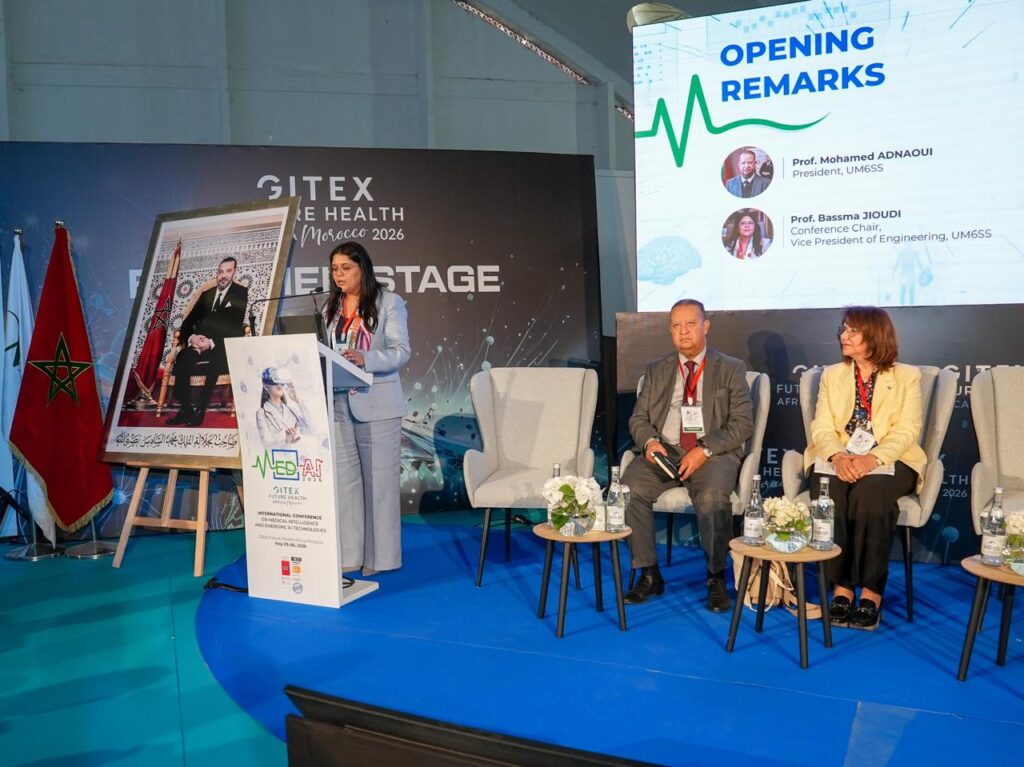
Prof Jamila El Alami, the Director of the National Centre for Scientific and Technical Research (CNRST), emphasised that digital transformation must be both dynamic and secure.
“There is strong potential in fields such as precision medicine, particularly in treatment optimization and the use of high-quality data. It is therefore essential to establish national governance aligned with international standards, including those of the World Health Organization and European health systems,” she stated.
“We must build an interoperable national governance framework one that organises and structures access to data for researchers through mechanisms that ensure controlled yet fluid access,” she stressed.
Professor Anas Doukkali, President of E-Health Innovation Centre – CIES-MU5R, who moderated the discussion, noted that Morocco operated a hybrid healthcare system which reflected many of the core features of established international systems.
“Importantly, we also have significant advantages, particularly in system architecture because digital technology and AI offer us a unique opportunity; not only to catch up, but also to avoid the mistakes and challenges encountered by more advanced systems,” he said.
He emphasised that the country was living through a period of profound transformation in its healthcare system driven by the vision of His Majesty Mohammed, the King of Morocco.

The GITEX Future Health Africa conference entered day two on Tuesday, featuring several conferences, workshops and exhibitions.
Hundreds of global leaders in health care, investors, start-ups and exhibitors are participating in the three-day conference which aims to revolutionise Africa’s ailing healthcare system.
It is under the auspices of Mohammed VI Foundation for Sciences and Health (FM6SS), the Ministry of Health and Social Protection of Morocco and the KOAUN with high patronage by His Majesty King Mohammed VI, the King of Morocco.
Being held on the theme: “Digitising Africa’s healthcare future: Essential care advancing with AI, ”scientific conferences, specialised workshops, and an exhibition and innovation spaces on the sidelines.
Participating African countries include Morocco, Ghana, Senegal, Burkina Faso, Cameroon, Côte d’Ivoire, Equatorial Guinea, Benin, Dr Congo, Tchad, Gabon, Niger, Mali, Togo, Zambia, Tanzania, Nigeria, Malawi, Republic of Kenya, Cape Verde, Ethiopia, Liberia, Gambia, and Angola.
GNA
Edited by Alice Tettey
Reporter: Prince Acquah
[email protected]