By Maxwell Awumah, GNA
Ho, May 3, GNA – Dr Fiona Braka, the World Health Organisation (WHO) Representative to Ghana, has said that the overarching principle of leadership is rooted in service to humanity, driven by integrity, self-awareness and compassion to inspire and navigate change.
Quoting Mahatma Gandhi that “the best way to find yourself is to lose yourself in the service of others,” Dr Braka said leadership was less about self and more about serving others.
She has therefore advised all aspiring leaders to seek opportunities to learn, build experience and embrace difficult tasks, noting that small beginnings should not be despised.
She stated this at the Second Cohort of the Oncology Nurse Leadership Programme (ONLEP) in Africa, dubbed the “ONLEP Fireside Leadership Chat,” held at the Professor Isaac Anyidoho Auditorium of the University of Health and Allied Sciences (UHAS), Trafalgar Campus, Ho.
The Fireside Chat, themed: “Leadership Across Borders,” was attended by management members of UHAS, lecturers, faculty, students and 60 participants from the second cohort of ONLEP drawn from 17 African countries.
The programme is being organised by UHAS in collaboration with international partner institutions including the International Society of Nurses in Cancer Care (ISNCC), City Cancer Challenge (C/Can), and AMGEN, which are providing funding support.
ONLEP is a six-month, fully funded postgraduate certificate programme that combines online and face-to-face learning. It aims to train oncology nurses to build strong leadership foundations, integrate psycho-oncology into practice, manage stress and change, and acquire skills in networking and collaboration.
Dr Braka said effective leadership was defined by clear communication, adaptability, accountability and the ability to empower others to foster positive, productive and trusting environments.
Touching on leadership across borders, Dr Braka said leaders must respect culture and religion, and be culturally sensitive to the belief systems of communities in which they work.
She noted that women in leadership were often judged by higher expectations and standards, stressing that this should serve as motivation to strive for excellence.
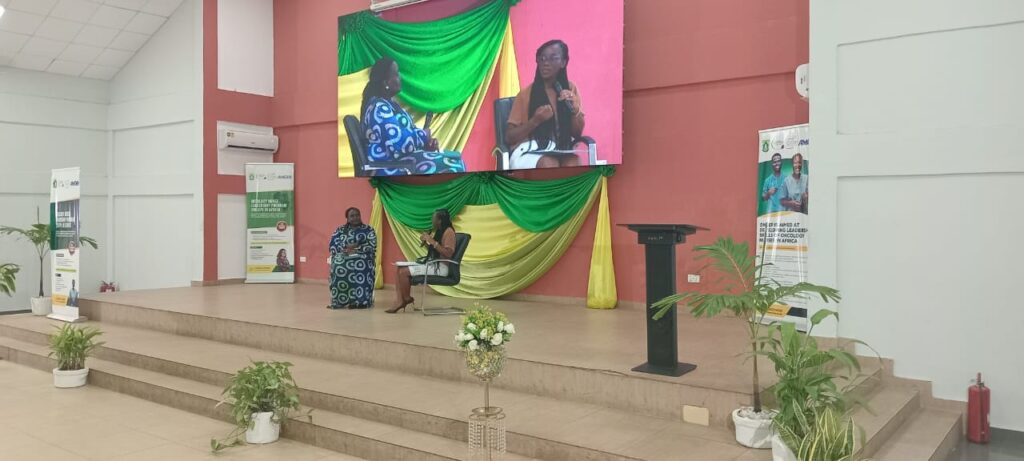
Dr Braka likened leadership to a muscle that must be nurtured through continuous training and openness to change, adding that leadership growth was shaped by environment and people and required stepping out of one’s comfort zone.
“Leadership across borders isn’t about crossing geographical lines – it’s about expanding perspective. Be confident and excel across borders and comfort zones. And more importantly, pay attention to what people say about you.”
She said nurses, especially oncology nurses, continued to play critical roles in cancer care, including screening, chemotherapy administration, patient monitoring and psychosocial support, while collaborating within multidisciplinary teams.
Dr Braka commended the organisers and partners of the initiative, saying oncology care go beyond building clinical competence to strengthening leadership at all levels of the health system.
Professor Lydia Aziato, Vice-Chancellor of UHAS, said the Fireside Chat was intended to inspire leadership, enhance knowledge sharing, build capacity, promote networking and enable participants to learn from experienced mentors to strengthen oncology leadership in Africa.
She said the ONLEP was introduced in response to the critical leadership role nurses play in oncology care, which required deliberate capacity building in the specialised field.
Prof Aziato said a total of 240 oncology nurses across Africa were expected to be trained over five years and awarded recognised postgraduate certificates by UHAS.
She encouraged participants to remain curious and committed to lifelong learning, keep abreast of emerging trends and innovations, value teamwork and collaboration, and uphold the core values of UHAS, which include Excellence, Integrity, Innovation, Service and Care.
Professor Peter Adatara, Dean of the School of Nursing and Midwifery, UHAS, described ONLEP as a game-changer, saying it focused on developing skills in evidence-based oncology practice, policy development and review, advocacy, as well as project planning and implementation.
GNA
Edited by Lydia Kukua Asamoah
Reported by Maxwell Awumah