By Patrick Ofoe Nudzi, GNA
Accra, May 5, GNA – The Ghana TVET Service has launched the Bicycle Education and Empowerment Programme (BEEP) to improve access to education in rural communities.
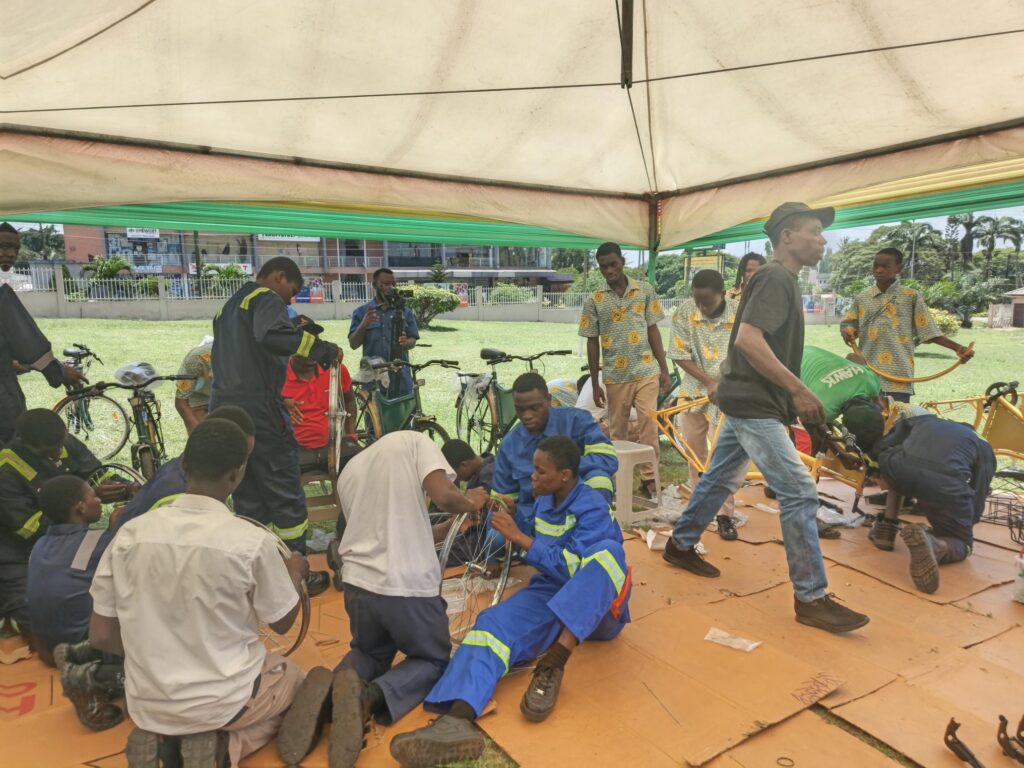
The initiative seeks to remove distance barriers to schooling and strengthen Ghana’s technical skills base through the annual supply of 20,000 durable, locally assembled bicycles from TVET-led hubs.
Mr Eric Kofi Adzroe, Director-General of the Ghana TVET Service, said the programme would primarily target schoolchildren in underserved communities, particularly girls in northern Ghana.
He said long distances to school often affected attendance and academic performance and, in some cases, forced students to drop out, adding that providing bicycles would give learners safety, consistency and a better chance to complete their education.
Mr Adzroe said the programme, being implemented in collaboration with Trans-Sahara Industries Limited, would also create opportunities for skills development, employment and local production.
“The initiative formed part of efforts to transition from assembly to full-scale production of bicycles and motorcycles in Ghana. This forward-looking approach positions Ghana to participate in the growing global shift towards sustainable mobility while building advanced technical competencies within our TVET ecosystem,” he said.
Mr Adzroe said the Service had, since last year, enhanced collaboration among government, academia and industry to ensure relevant skills training and improved employment outcomes for graduates.
“Our learners are already engaged in production, gaining hands-on experience, while part of the proceeds is reinvested into the system to support sustainability,” he said.
Mr Gerald Acheampong, Chief Executive Officer of Trans-Sahara Industries Limited, said access to bicycles could significantly improve the lives of children who walked long distances to school, particularly those covering five to eight kilometres daily and arriving exhausted.
He said beyond education, the bicycles could serve as economic tools for families by facilitating transportation of goods, access to healthcare, and supporting small businesses.
“The initiative would also drive industrial growth, and we are already engaging international partners on electric motorcycles, battery systems and related infrastructure. So, the path is clear- bicycles today, electric mobility tomorrow, and eventually a localised micro-mobility industry in Ghana,” he said.
Mr Acheampong pledged that the first 100 bicycles, valued at 230,000 cedis, would be donated to the Ministry of Education for distribution to female students in 10 selected schools in northern Ghana.
“These are not just gifts; they are tools to unlock education, overcome distance and affirm to every rural child that they do matter,” he said.
GNA
Edited by Kenneth Sackey
Reporter: Patrick Ofoe Nudzi
[email protected]