By Solomon Gumah, GNA
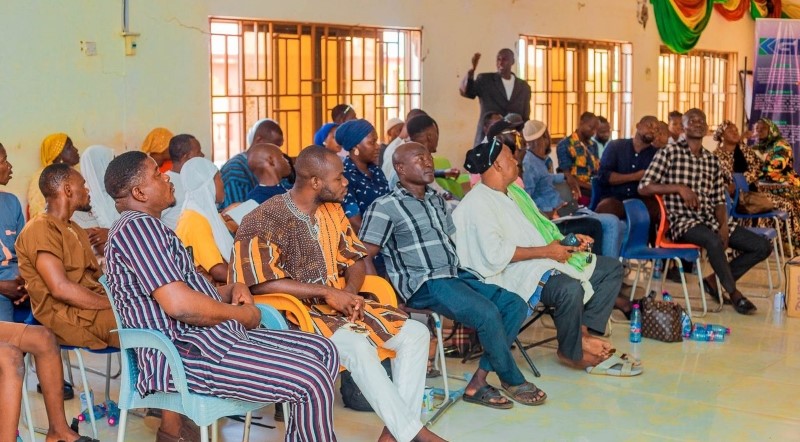
Kumbungu (N/R), May 16, GNA – The Female Empowerment and Advocacy for Development (FEAD Ghana) with support from the KGL Foundation has convened a stakeholders’ engagement on education in the Kumbungu District to strengthen literacy outcomes and improve learning conditions for schoolchildren.
The engagement, held under the theme: “Building on Progress: Co-creating the Future of Education in the Kumbungu District”, brought together more than 50 participants including officials from the Ghana Education Service (GES), Circuit Supervisors, headteachers, Members of the District Assembly, Parent-Teacher Associations, Civil Society Organisations, teachers, and adolescent girls and boys from project schools.
The meeting sought to rally community support for FEAD Ghana’s LitLead+ Project while assessing the current state of education in the district and identifying collaborative solutions to challenges affecting teaching and learning.
Hajia Hikmat Baba Dua, Executive Director of FEAD Ghana, said the LitLead Project, launched last year, had transitioned into the LitLead+ Project to better respond to the needs of adolescents in the district.
She explained that the first phase of the project established five safe-space clubs in Kumbungu D/A; Nibrasiat, Zangbalung, Gbullung, and Bognayili Junior High Schools, reaching 150 learners comprising 20 girls and 10 boys from each school.
She said the initiative marked FEAD Ghana’s first hybrid club model for adolescents, which was adopted following consultations with the District Education Directorate and community leaders.
She said the project recorded significant gains in literacy, leadership, and confidence-building among participating learners.
She noted that 80 per cent of learners showed measurable improvements in reading, listening, and writing skills through standardised assessments supported by storybooks and other learning materials.
She added that 60% of learners especially girls assumed leadership roles in their schools after participating in leadership training and mentorship programmes while 75% reported increased confidence to speak in class and public spaces following competitions and radio engagements organised under the project.
She said 90% of teacher-mentors adopted gender-responsive pedagogy and Social and Emotional Learning (SEL) techniques after receiving training and structured curriculum support.
Hajia Dua announced that FEAD Ghana had secured an additional year of funding support from the KGL Foundation to expand the project with a renewed focus on literacy, leadership, and Sexual Reproductive Health and Rights (SRHR).
As part of the engagement, learners and teacher-mentors from the first cohort of the project shared testimonies on how the initiative had impacted their lives and learning experiences.
Ms Nasara Umar, a learner from Kumbungu D/A JHS, recounted how she struggled with self-doubt before joining the club under the project.
She said the initiative helped her to build confidence and communication skills, which enabled her to contest and win the position of Senior Prefect of her school.
Madam Hanifa Fuseini, Northern Regional Girls Education Coordinator commended FEAD Ghana for organising the engagement and described it as timely considering the numerous challenges confronting the education sector in the district.
She emphasized need for stakeholders to work collectively to transform educational outcomes and praised FEAD Ghana for aligning its interventions with the priorities of the Ghana Education Service on foundational literacy.
Mr Nyee Mathias, Kumbungu District Public Relations Officer, GES presented a situation analysis on the state of education in the district and highlighted challenges including limited access and enrolment from kindergarten to senior high school, teacher shortages and retention difficulties, overcrowded classrooms, inadequate office space and learning resources, lack of libraries and ICT facilities, poor Water, Sanitation and Hygiene (WASH) infrastructure, and insufficient staff accommodation and dormitories at the senior high school level.
He called for increased investment in infrastructure expansion, teacher motivation, learning support systems, and stronger community engagement to improve educational outcomes in the district.
GNA
Edited by Eric K. Amoh /Kenneth Odeng Adade