By Florence Afriyie Mensah
Fumesua (Ash), May 06, GNA – Rice Farmers, millers, aggregators, seed producers, and other key value-chain actors have received training on good agronomic practices.
Selected beneficiaries were taken through seed purity and varietal selection, land preparation, soil and water management, fertilization and nutrition, post-harvest handling of rice seeds, as well as weed control in rice farming.
The training was put together by the Crops Research Institute under the Council for Scientific and Industrial Research (CSIR-CRI) as part of the Korea-Africa Food and Agriculture Cooperation Initiative (KAFACI) Rice project.
The goal of the KAFACI Rice project is to increase rice productivity by developing and sharing high-yielding Tongil-type rice varieties and helping scale proven agricultural technologies to farmers.
Over the past decade, the project has helped CSIR-CRI to release more than 10 rice varieties, which include both upland and lowland varieties.
Some of these varieties are climate-smart and are popular among farmers, and they include CRI-Agyapa – a lowland rice variety that is early-maturing (105 – 115 days).
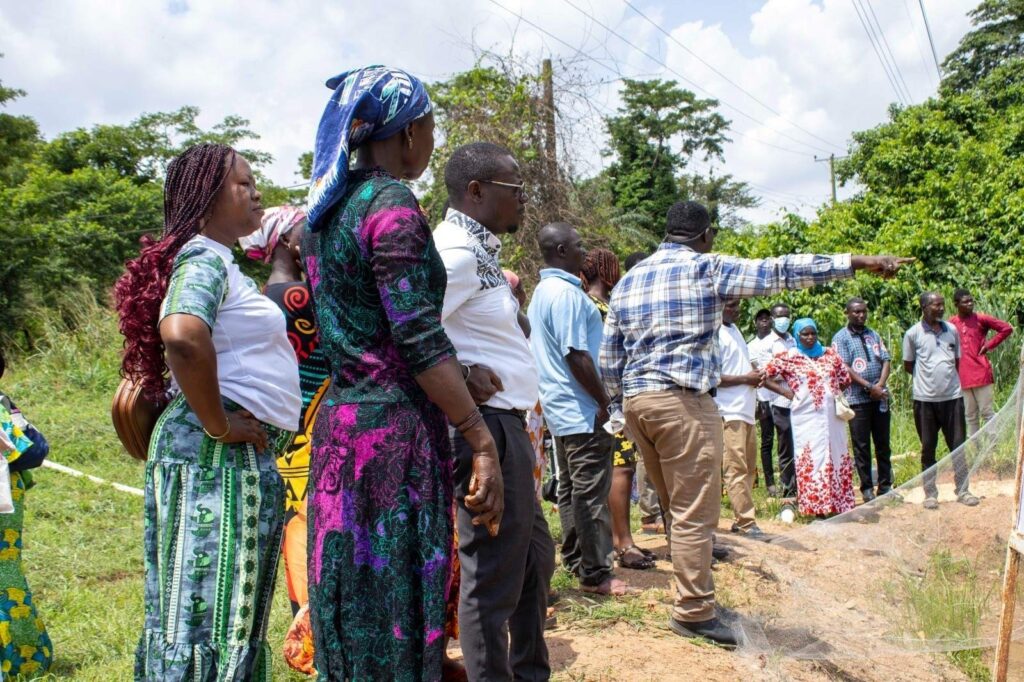
As part of the training, participants were taken to the technology park and field to have hands-on training.
Dr. Kirpal Agyemang Ofosu, a Research Scientist and Rice Breeder at CRI, speaking at the opening of training at Fumesua near Kumasi, said rice was an important commodity which researchers were studying to continually develop favourable ones for consumers.
According to him, it had become necessary for more education in the product’s cultivation, citing that the CRI research yield is around 8.0 tonnes/ha but on farmers’ field it drops to 3.5 tonnes/ha.
This development leaves a gap, he said, adding that it was the duty of the research institute to close the gap by educating farmers to adopt best practices and improve their yields.
It will also go a long way to reduce importation cost as rice is among the three top imported commodities in Ghana.
Dr Ofosu commended the government’s initiatives aimed at expanding local production of rice and advocated regular supply of inputs to farmers to reduce production cost.
He encouraged farmers to purchase seeds from the right sources such as research institutions and certified seed producers to preserve the integrity of varieties cultivated.
Professor Maxwell Darko Asante, Director, CSRI-CRI, assured value-chain actors that researchers would continuously develop technologies right from varieties, agronomy (how crops are cultivated), pests and weed management to post-harvest management in ensuring that Ghana achieves rice self-sufficiency.
He urged the state to ensure that the policy environment favoured farmers, noting that the current rice glut was not helping.
According to him, “farmers have put in a lot of efforts, therefore stakeholders need to ensure that the policy environment is good for farmers to sell their products and make way for the next cultivation season.”
GNA
Edited by Yussif Ibrahim
Reporter: Florence Afriyie Mensah