By Bertha Badu Agyei/ Harriet Kwakye, GNA
Accra, May 13, GNA – The African Women Lawyers Association (AWLA) Ghana, has raised concerns over aspects of judicial reasoning in some recent matrimonial cases, particularly comments relating to a spouse’s physical appearance and financial independence.
“AWLA Ghana is deeply concerned by aspects of judicial reasoning that introduce irrelevant and subjective considerations into the adjudication of matrimonial disputes such observations risk reinforcing harmful gender stereotypes”
Madam Effiba Kojoah Amihere, the Executive Director of AWLA at a press briefing in Accra stated unequivocally that a party’s appearance has no legal relevance to the determination of spousal property rights or financial relief or should a spouse’s financial independence diminish their entitlement on marital property.
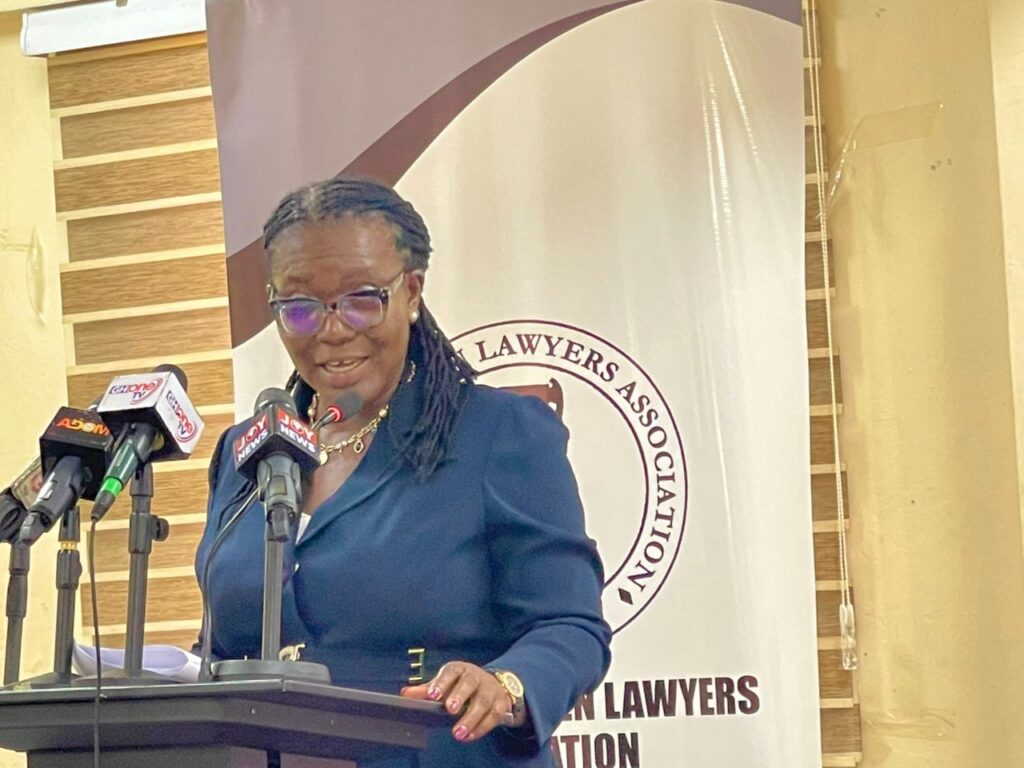
She noted that Ghana still lacked a comprehensive law to regulate the distribution of property between spouses despite the coming into force of the 1992 constitution and called for urgent reforms of the spousal property laws to ensure fairness and consistency in the distribution of property after divorce.
The proposed reforms should clearly define marital property, establish equality as the presumptive basis for distributions, codify non-monetary contributions, and provide structured guidelines for judicial discretion as well as strengthen enforcement mechanisms.
Madam Amihere, explained that the prolonged legislative gap had forced the courts to develop principles on a case-by-case basis, resulting in conflicting judicial decisions and unpredictability in matrimonial disputes adding that “legal uncertainty is not an abstract concern but has a concrete and often devastating consequences”.
Throwing more light on the issue, she noted that although the Supreme Court had made significant pronouncements recognizing marriage as an economic partnership, some recent judgments had departed from those principles, creating doctrinal inconsistencies
Citing the Supreme Court cases of Mensa v. Mensa and Arthur v. Arthur, where the court affirmed that property acquired during marriage was presumptuously joint property and that non-monetary contributions such as homemaking, childcare and emotional support were equally valuable.
Again, she mentioned that the supreme court had consistently emphasized that judicial discretion must be exercised on relevant considerations, grounded in law and equity, and therefore any departure from that standard risked undermining public confidence.
At the centre of this concern is the recent court ruling in the Joana Quaye versus Richard Nii Armah Quaye which has sparked widespread public and professional discourse and emphasized that whiles AWLA respects the independence of the judiciary, it was unequalled to speak where legal developments risk undermining established principles.
Given the fact that many spouses predominantly women, continued to face difficulties proving non-monetary contributions and often endured lengthy litigation with unpredictable outcomes, “this is the reason we think it’s very important for a discussion and for the law to be codified so that no one would be in doubt as to what it is”
She commended the Supreme Court decision in Sarpong v. Sarpong, delivered in December 2025, which outlined guiding principles for trial courts in distributing marital property which required courts to consider factors including the duration of marriage, ownership of land, chronology of construction, financial contributions, pre-marital assets, mutual financial understanding, and non-monetary contributions such as domestic work and child rearing.
“The intangible yet invaluable contributions of a spouse, such as domestic work, child rearing, and emotional or moral support must equally be accorded due recognition and weight,” she quoted from the judgment.
The Association further called on Parliament to expedite the passage of the Comprehensive Spousal Property Legislation in fulfilment of Article 22 of the constitution whiles urging stakeholders including the Attorney General, the Judiciary, the Ghana Bar Association, civil society organisations and the media to work collectively to promote fairness, equity and predictability in matrimonial property disputes.
GNA
Edited by Linda Asante Agyei
Reporter: Bertha Badu Agyei/Harriet Kwakye
Email: [email protected]