By Stephen Asante, GNA
Accra, May 22, GNA – Ambassador Jane Gasu Aheto, Chairperson of the 12th Forum of the African Union Commission on International Law (AUCIL), says the continent is rightly placed to ensure harmony in the implementation of international water law.
It was, therefore, imperative, she said, that while addressing climate change, leaders also take the daily governance of rivers, wetlands, basins, forests, and aquifers seriously.
The meeting, held in the Ethiopian capital of the Forum, in Addis Ababa, was on the theme: “Challenges of Implementing International Environmental Law and Water Resources Management in Africa.”
Ghana delegation to the meeting was led by Dr Ken Abotsi, acting head of the Ghana Mission in Ethiopia to the two-day bank.
Ambassador Jane Aheto, who is Ghana’s Deputy Ambassador to the United States, explained that harmonisation was possible because Africa’s major water resources connecting States were shared before they were separated.
Consequently, the continent must look at responsibility for environmental harm, including where harm was caused by armed groups, terrorist groups, extractive actors, or weak regulatory systems.
“They remind us that geography often imposes cooperation long before diplomacy names it,” she noted. “In this context, international water law cannot be understood as a narrow set of technical rules. It is a language for coexistence.”
The meeting was organised amid the fact that international environmental law has developed remarkably over the past decades.
This has generated principles, treaties, institutions, reporting mechanisms, conferences of parties, jurisprudence, and an expanding body of doctrine.
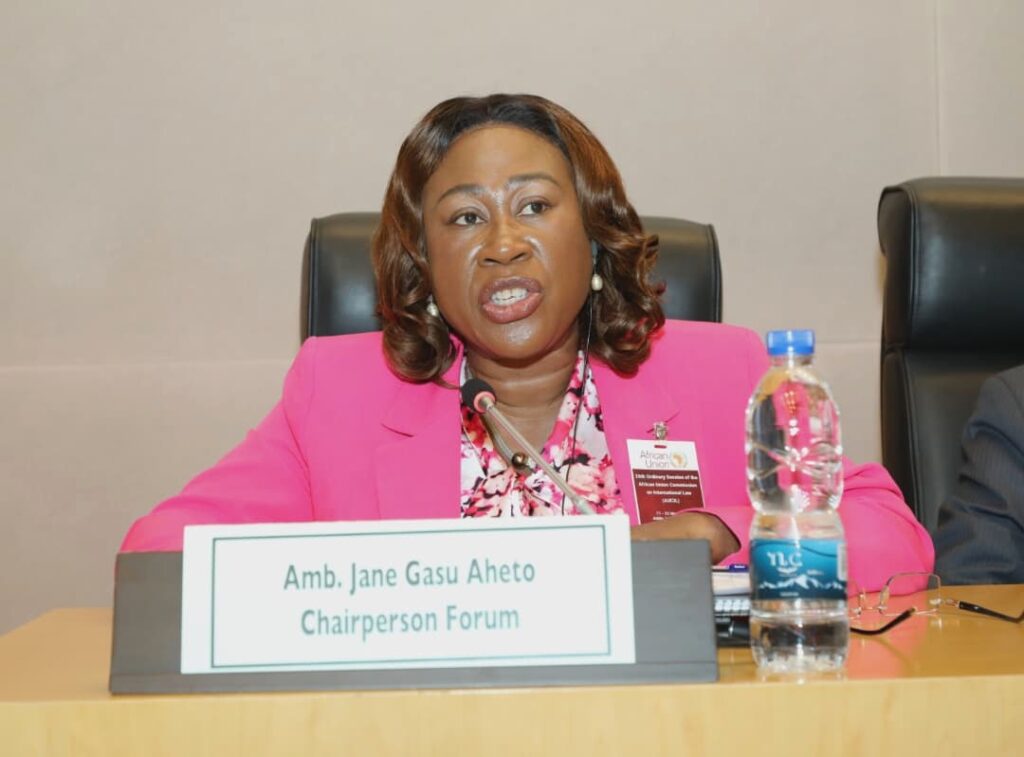
The Chairperson, however, noted: “But one of the central paradoxes of our time is that the growth of environmental law has not always been matched by the protection of the environment.
“There is, in many areas, a painful distance between norm and effect,” Ambassador Gasu Aheto emphasised.
She highlighted that the principles of equitable and reasonable utilisation, prevention of significant harm, prior notification, cooperation, and peaceful settlement were not merely legal formulas.
“They are tools for preserving trust among neighbours. They are instruments for avoiding the conversion of scarcity into conflict. They are part of the legal architecture of African peace and integration,” the Chairperson added.
She reminded stakeholders that environmental law was not only about protecting nature from humanity, but also about protecting humanity from forms of development that forgot nature.
“Water, in the African legal imagination, must be governed not as an object of competition alone, but as a foundation of life, peace, dignity, and shared destiny,” she explained.
“And let it strengthen our conviction that Africa’s contribution to international law is not supplementary,” she advised.
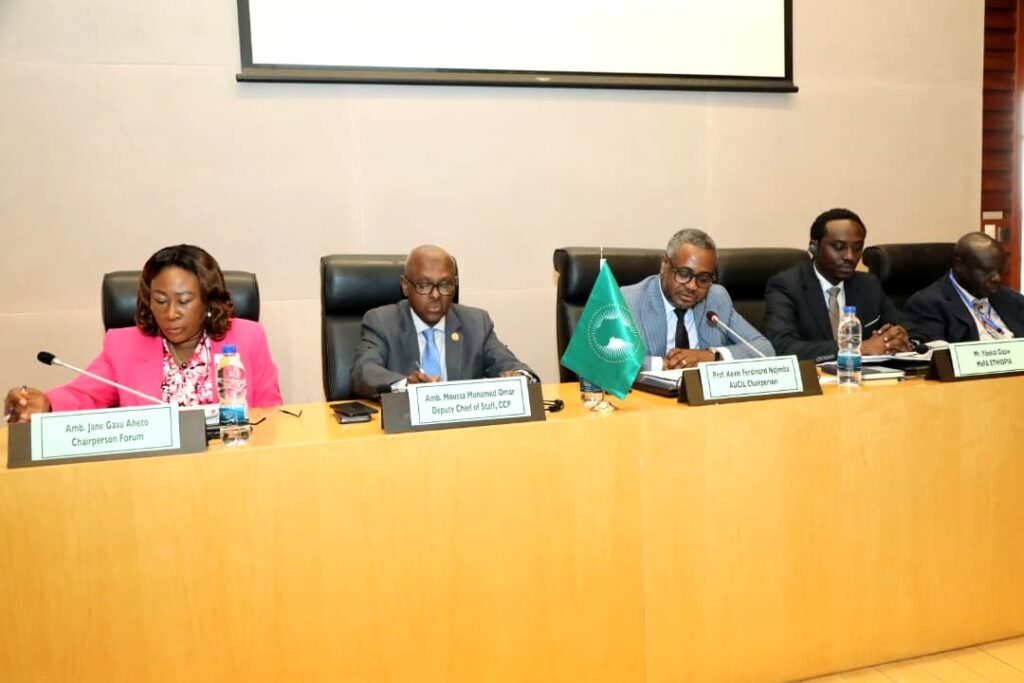
Topics discussed included the governance of water and right to a healthy environment, justiciability of the right to a healthy environment and water, water governance, peace and security.
Others are international environmental law and protection of water, international law and trans-boundary governance of water, climate change and sustainable water governance.
Attention was also given to issues that remain insufficiently explored in international legal discourse.
The include environmental harm linked to armed conflict, attacks on water infrastructure, the responsibility of non-State actors, and the practical challenges surrounding environmental justice and access to remedies.
“These discussions remind us that environmental questions are no longer peripheral questions within international law,” she noted.
“Increasingly, they sit at the centre of conversations about peace, security, governance, and human survival,” Ambassador Gasu Aheto emphasised later in her closing remarks.
GNA
Edited by Beatrice Asamani Savage
Reporter: Stephen Asante
[email protected]