Accra, May 31, GNA-The African Chamber of Content Producers (ACCP) has called for the intervention of African Union (AU) and the African Continental Free Trade Area (AfCFTA) Secretariat to warn South Africa against xenophobic attacks on other African nationals.
They said their action threatened the hard won gains in intra African trade, tourism, and continental unity.
“The situation has deteriorated to the point where Ghana has evacuated approximately 300 of its nationals from South Africa and is assisting them with reintegration”.
A statement copied to the Ghana News Agency said Ghanaians were now expressing extreme disappointment, calling for demonstrations in Ghana, including demands to close South African owned businesses and to refuse the extension of mining leases for South African mining companies operating in Ghana.
It said, meanwhile, online banter had intensified, and there was a growing risk of hate speech and entrenched anti South African sentiment.
“ As the saying goes, the internet never forgets; such scars could persist long after the immediate impasse is resolved”.
The ACCP’s warning has now received direct confirmation from South African Tourism itself. In a statement issued on 28 May 2026, South African Tourism noted with concern “reports of cancelled travel bookings from several African countries following recent protests and incidents targeting foreign nationals in parts of South Africa.”
The agency acknowledged that “Africa is South Africa’s largest source market” and that the continent’s connections are built on “deep historical, cultural and economic ties.”
It said the official admission validated the ACCP’s position that xenophobic violence was not merely a moral outrage but an economic self inflicted wound.
“When families stop visiting one another, the family system disintegrates. Africa is one family. If African citizens no longer feel safe travelling to South Africa, the damage will extend far beyond tourism cancellations, it will fracture the very trust upon which the AfCFTA and Pan African unity are built. The ACCP warns that this is only a prelude of what to expect if drastic measures are not taken immediately.”
It said Ghana had already escalated its diplomatic response, summoning South Africa’s Acting High Commissioner and formally petitioning the AU for an emergency debate over what it called “xenophobic attacks against African nationals” that present a challenge to “the shared principles of African solidarity, brotherhood, and continental unity”.
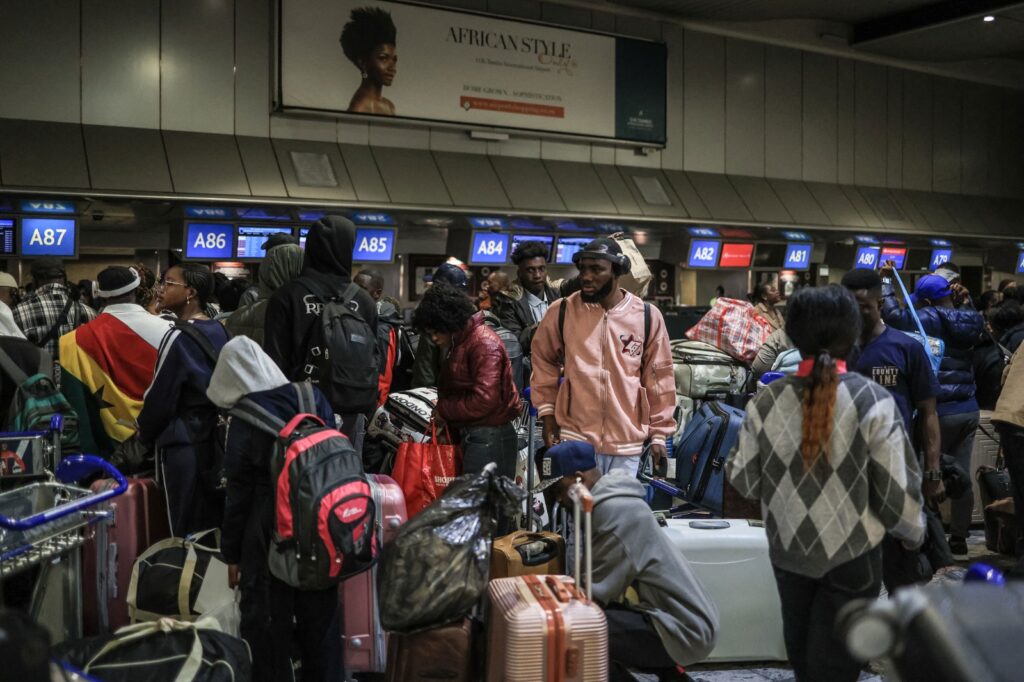
On April 22, Ghana’s Foreign Minister Samuel Okudzeto Ablakwa contacted his South African counterpart to coordinate an official response after disturbing videos of attacks on Ghanaians surfaced online. And on Wednesday, May 27, 2026, first batch of Ghanaians were evacuated from South Africa.
African ambassadors in South Africa boycotted this year’s Africa Day celebrations in protest over the renewed xenophobic hostility.
Ghana’s High Commissioner, Benjamin Quashie, confirmed that the boycott was in direct response to attacks and tensions that had triggered the evacuation of Ghanaians.
Meanwhile, the South African government has denied the xenophobia allegations, describing the incidents as isolated and insisting that “there are no xenophobic attacks”. Ghanaian civil society groups have rejected this denial, adding their voices to demands for structural protection of African migrants.
The ACCP warned that continued xenophobic violence undermined the foundational goals of the AfCFTA, which aimed to create a single continental market for goods, services, and the movement of persons. While intra African trade was still just 14% of total African trade in 2024, far below the roughly 60% seen in Asia and Europe, the ACCP noted that xenophobic aggression and anti foreigner sentiment are among the key barriers to deeper integration.
In South Africa, nearly 73% of citizens now express distrust toward African immigrants, even as the country accounts for over 40% of all intra African trade.
“At a time when the AU, AfCFTA, Afreximbank, the African Development Bank, and the Africa Monologue Challenge are working across different fronts to build a single trade block for Africa, this wave of xenophobia is an extremely backward development,” the ACCP statement reads.
“It is a direct destruction of the efforts made so far. The AU, the South African government, and every African leader committed to sustaining intra African trade must sit up immediately and find creative, diplomatic, and sustainable ways to push intra African trade as a human to human relationship before it can ever succeed as a government to government affair.”
The ACCP called on the AU to investigate whether external forces are sponsoring xenophobic activities to slow the full implementation of the AfCFTA and Continental unity.
“In 1966, when Ghanaians were demonstrating and agitating for the overthrow of Kwame Nkrumah, the world believed it was their own idea,” the statement noted. “Years later, declassified CIA reports indicated that the agitation was being fueled by external forces, including CIA operatives.
President John Dramani Mahama has since confirmed that declassified US documents show the CIA orchestrated Nkrumah’s overthrow.”
The ACCP observed that similar patterns of destabilisation have occurred across Africa and Asia, and urged the AU to consider all possibilities.
“The black man is capable of managing his own affairs,” the statement declared. “It is time we all decisively prove Nkrumah right, or wrong.”
The ACCP recalled that the Africa Monologue Challenge had earlier called on the AfCFTA and other stakeholders to strategically produce an “Intra African Trade in Action” documentary as a creative and diplomatic tool to humanise trade and migration. “That proposal was unfortunately ignored,” the Chamber said. “We renew that call today with even greater urgency.”
The ACCP demands that the AU and the South African government take immediate and decisive steps. First, they must convene an emergency summit of African leaders to address the root causes of xenophobic violence and its impact on the AfCFTA.
Second, an independent inquiry should be launched to determine whether external actors are exploiting migration tensions to undermine continental unity and trade integration.
Third, a binding protocol on the protection of African migrants and the free movement of persons, as envisioned in the AU’s own Agenda 2063, must be adopted without further delay.
Fourth, continent wide civic education campaigns using the creative economy should be invested in to rebuild trust among African peoples.
“ Finally, the AfCFTA Secretariat must be resourced to monitor and report on xenophobic incidents as trade related barriers.
“The ACCP believes in the success and development of Africa by Africans in Africa and the diaspora,” the statement concluded. “Any undue interference keeps fighting against the words of Nkrumah. We must act now to prove that we are capable of managing our own affairs.”
The ACCP is a pan African institution dedicated to promoting local content sovereignty across twelve sectors, including media, technology, education, and industrial content.
Through its Africa Image Ambassador Programme, it certifies professionals across the continent as ambassadors sworn to protect and project Africa’s authentic image.
GNA
Edited by George-Ramsey Benamba