By Anthony Adongo Apubeo, GNA
Bolgatanga, April 1, GNA – The Ghana Education Service (GES) in the Upper East Region has launched a School Clubs Initiative aimed at reducing violence in second cycle institutions, while nurturing responsible and well-rounded students.
The initiative, on the theme: “Learn, Lead and Grow: The Power of School Clubs,” is expected to be rolled out across all schools in the region, from kindergarten to second cycle institutions.
The move forms part of broader efforts to engage students in meaningful co-curricular activities that promote discipline, leadership and personal development.
Mr Razak Z. Abdul-Korah, the Upper East Regional Director of GES, said the move followed engagements with the national leadership of the Service to find practical ways of addressing rising cases of student unrest across the country.
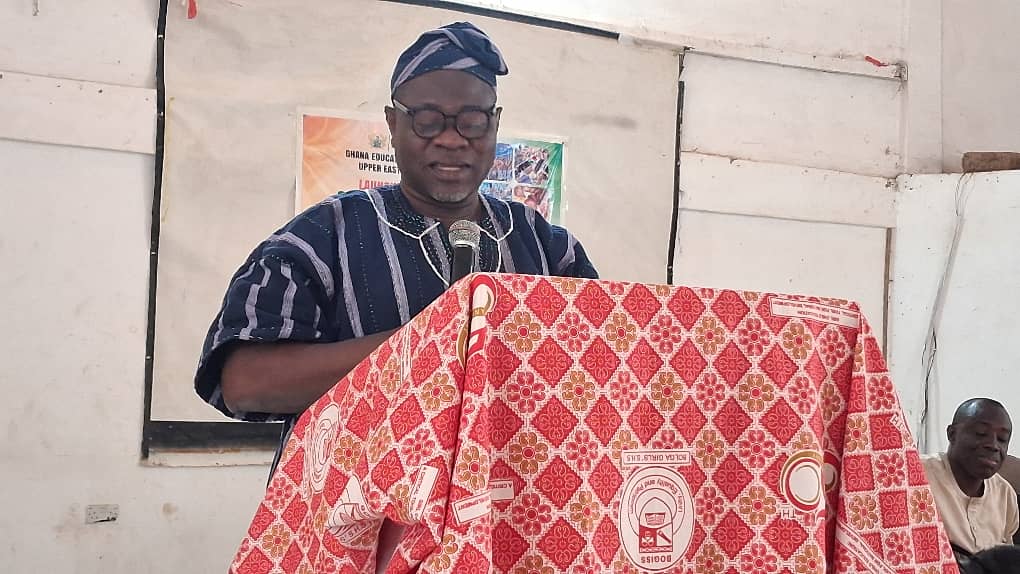
He explained that schools had been tasked to identify and strengthen existing clubs, while ensuring that each school operates not fewer than four active clubs to engage students productively.
“In bringing down student-related riots, particularly where students are idle, we believe engaging them in clubs will redirect their energies into positive activities,” he said.
Mr Abdul-Korah expressed concern over the rising incidents of violence in schools in the region, describing the situation as troubling.
He noted that data available to the region indicated a worrying trend, adding that the situation had attracted the attention of key stakeholders, including the Ghana Police Service and the National Peace Council, who had engaged the Regional Directorate on measures to address the challenge.
Mr Abdul-Korah said the introduction and strengthening of school clubs would serve as a key intervention to reduce tensions among students and promote peaceful coexistence.
“It is sad to report that the Upper East Region is leading in terms of student riots, which is not a good story for us. We are, therefore, expected to use this initiative as a medium of communication to reduce tensions among students and address disciplinary-related issues,” he said.
Clubs such as debating, environmental and tree-planting groups would expose students to topical and national issues while fostering teamwork and responsibility, Mr Abdul-Korah said.
He added that the initiative would be implemented at the regional, district and school levels, with regular monitoring and quarterly reporting on club activities.
“We are not waiting for problems to escalate. Through these clubs, students and teachers can identify early warning signs of unrest and address them before they develop into crises,” he stated.
Mr Frederick Philip Alale, the Upper East Regional Chairman of the Conference of Directors of Education, described the launch as a significant step towards holistic education.
He said school clubs provided a platform for learners to acquire critical life skills beyond the classroom, including leadership, critical thinking and emotional intelligence.
“School clubs are the laboratories of life where theory meets practice. They offer students the opportunity to learn, lead and grow into responsible citizens,” he said.
Mr Alale urged school authorities and teachers to treat club activities as an essential part of the educational process rather than an added burden and called on students to actively participate.
Mr Richard Akumbas Ayabilla, the Upper East Regional Chairman of the Conference of Heads of Assisted Secondary Schools (CHASS), said the initiative would help revive dormant clubs and uncover hidden talents among students.
“Clubs provide the avenue for students to develop their potential. Many leaders, artists and professionals discovered their talents through school clubs,” he said.
He pledged the commitment of school heads to ensure effective supervision and coordination of club activities in their respective institutions.
Mr Matthew Abeaba Abereniya, the Senior Industrial Relations Officer of the Teachers and Educational Workers Union (TEWU) of the Trades Union Congress, Ghana, expressed organised labour’s support for the initiative but stressed the need for adequate resources.
“Clubs cannot function effectively without the necessary support. We must ensure that teachers and coordinators are resourced to carry out these activities,” he said.
He encouraged students to take advantage of the clubs to develop their leadership abilities, noting that many national leaders began their journeys through such platforms.
GNA
Edited by Caesar Abagali/ Christabel Addo