By Stephen Asante
Accra, July 05, GNA Professor Isaac Wiafe, a computer scientist at the University of Ghana (UG), Legon, says the delay in approving Artificial Intelligence (AI) curricula developed by research institutions is a disincentive to advancing the nation’s AI Strategy.
“Some AI curricula become outdated while waiting for approval,” he noted.
Prof. Wiafe, speaking at an inaugural lecture organised by UG in Accra, appealed to the Ghana Tertiary Education Commission (GTEC), the regulatory body overseeing tertiary education, to address the issue urgently.
He cited the Computer Science Department’s programme on some AI models, which were developed about three years ago when large language models were not predominant. By the time it was approved, it had become obsolete, he said.
“Now that it has been approved, it has become obsolete. It is no fault of ours; it is the system,” he lamented.
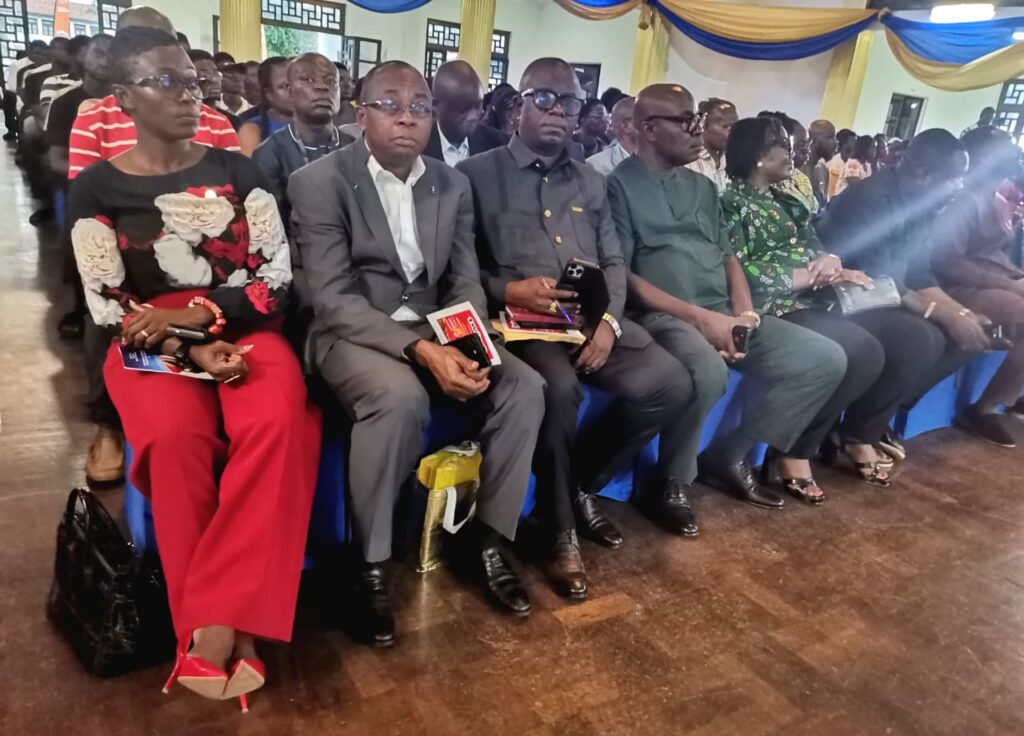
Prof. Wiafe was speaking on the topic: “Why AI is Irrelevant to Ghana: Reclaiming our Future through Human-Centred Transformation”
The lecture focused on emerging evidence from studies on technology adoption, digital inclusion, and AI awareness.
In his analysis, Prof. Wiafe said the current AI ecosystem risked creating a new form of digital dependency at scale.
“It may contribute to cultural homogenisation, marginalise indigenous knowledge, reinforce existing inequalities, and weaken local innovation ecosystems. These concerns raise important questions about technological sovereignty, data ownership, algorithmic governance, and Ghana’s ability to shape its own digital future,” he noted.
The computer scientist said Ghana’s ability to achieve a breakthrough in AI technologies that reflected society’s needs and aspirations “cannot be achieved with the current delays in curriculum approval by GTEC”.
“If Ghana is to move from AI adoption to AI relevance, universities cannot remain passive observers of the technology. The University of Ghana and similar research institutions must invest in and present thought-provoking discussions. They must become places where the nation develops its intellectual, technical, and ethical systems to govern these AI platforms,” he noted.
He said although GTEC’s blueprint is important for quality assurance, it should become more responsive to rapidly changing disciplines.
“Quality assurance must evolve from being only a gatekeeping process to an agile national mechanism to keep Ghana’s universities relevant in the age of AI,” he advised.
Prof. Wiafe indicated that building research excellence in efficient model training, low-resource AI methods, domain adaptation, and evaluation of local content could be underestimated.
“We may not need the largest frontier model in the world; we only need to build the human capacity to shape AI for Ghana’s needs. If we fail to build this talent pipeline, then even the best AI strategy will depend heavily on external expertise,” he cautioned.
In recent years, UG has partnered organisations including Google Research Africa on a novel initiative dubbed ‘Project Euphonia’ The research initiative aims to improve speech recognition technology for individuals with non-standard speech patterns.
The project is to create AI models that better understand and accurately interpret diverse speech patterns, focusing on local Ghanaian languages to enhance inclusivity in communication.
Prof. Nana Aba Appiah Amfo, Vice-Chancellor of the University of Ghana, chaired the programme.
GNA
Reporter: Stephen Asante_
[email protected]
Edited by Samuel Osei-Frempong