By Edward Dankwah, GNA
Accra, April 18, GNA – Rev. Dr. Godwin Kofi Ahlijah, the President of the Ghana Evangelical Missions Association (GEMA), has underscored the urgent need for strategic partnerships, decentralization, and innovation in advancing missionary work across Ghana and beyond.
He said the move was necessary to address existing gaps in mission outreach, improve coordination among stakeholders, and ensure that underserved communities were effectively reached with both the gospel and social interventions.
The President of GEMA was speaking at the Association’s 2026 Annual General Meeting (AGM), held in Accra.
The meeting, which brought together church leaders, mission agencies, and stakeholders in the Christian community, focused on strengthening collaboration to enhance national transformation through evangelism and social impact initiatives.
Rev. Dr. Ahlijah emphasized that partnerships remained critical to the sustainability and effectiveness of mission work.
He noted that GEMA, in its current and upcoming tenure, was prioritizing collaboration with churches, mission organizations, and stakeholders across sectors, including the corporate space.
“Such partnerships will ensure efficient use of resources and long-term sustainability of mission activities,” he added.
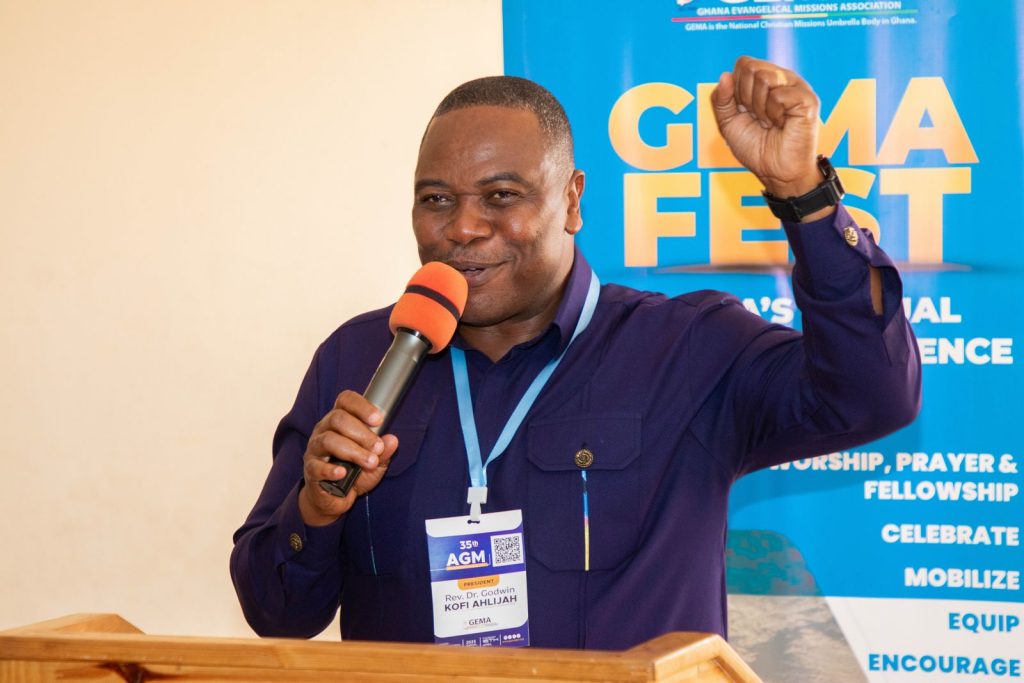
He highlighted decentralization as a key strategy for expanding the reach of the gospel, stressing the need to move beyond major urban centers such as Accra, Kumasi, and Takoradi to underserved and remote communities.
The AGM further explored GEMA’s five-year strategic plan, which aims to provide a clear roadmap for mission activities.
Key components include the establishment of a national mission hub, increased research and data documentation, and capacity-building initiatives to train and equip missionaries.
Rev. Ray Mensah, President of AfriGO, speaking on the broader national agenda, described their Vision 2040 initiative as a transformative framework to drive evangelization across Ghana and contribute to global mission efforts.
He added that the initiative positions Ghana as a key player in global missions, particularly at a time when Africa had become a leading center of Christianity.
He highlighted the role of technology in modern evangelism, noting that digital platforms, social media, and emerging tools such as artificial intelligence were been leveraged to mobilize, educate, and engage audiences.
Rev. Dr. Seth Anyomi, the Founding Father of the GEMA, reflected on the association’s journey since its establishment in 1990, noting that the GEMA had significantly contributed to raising awareness among churches about the need to reach unreached populations both within and outside Ghana.
“In the early days, mission efforts were scattered and uncoordinated. GEMA brought structure and unity, enabling churches to recognize the unfinished task of evangelism,” he added.
Participants at the AGM were encouraged to embrace collective responsibility in advancing mission work, with a strong call for churches, mission agencies, and the private sector to align efforts toward national development.
The GEMA reiterated its commitment to fostering unity, innovation, and strategic action in fulfilling its mandate, expressing confidence that strengthened partnerships and a shared vision will drive sustainable impact across Ghana and beyond.
GNA
Edited by Benjamin Mensah