Accra, April 1, GNA-The African Chamber of Content Producers (ACCP) has called on President John Dramani Mahama to consider using Africa’s creative economy, including actresses, influencers, and musicians to produce at least two Pan-African films that will communicate and advance his vision for reparatory justice.
The call follows Ghana’s historic leadership at the United Nations General Assembly, where a resolution spearheaded by President Mahama was adopted with an overwhelming majority of 123 Member States voting in favour, declaring the Transatlantic Trafficking of Enslaved Africans and the system of racialised chattel enslavement as “the gravest crime against humanity” . Only three nations, the United States, Israel, and Argentina voted against the resolution, while 52 countries, including the United Kingdom and European Union member states, abstained .
Speaking on an Accra-based TV station, Mr Mawuko Kuadzi, a back-to-back Artios Award winner, Africa Image Ambassador, and member of the Casting Society of America, praised the president for his bold advocacy but expressed surprise that during the President’s address to the UN, he omitted film as a tool for advocacy.
“I was shocked that the president did not include film in his list of advocacy tools during his speech,” Mr. Kuadzi stated. “The United States and other countries have mastered the use of film as a tool for advocacy. When you look at how Hollywood works hand-in-hand with the US government to project American power and values, you realise that film is not just entertainment, it is strategic communication. I am calling on the President to reconsider his options and consider an intentional film for this advocacy. I am ready to cast across Africa for such a project.”
President of the African Chamber of Content Producers, Nana Dwomoh-Doyen Benjamin, provided historical context, noting that one of the tools of colonisation was cinema itself.
He pointed to the Bantu Educational Kinema Experiment (BEKE) , a project of the International Missionary Council in coordination with the Carnegie Corporation and British colonial governments in the mid-1930s.
“The BEKE films were produced by the British, directed by the British, and everything except the Black actors was British,” he explained.
“They promoted hygiene, cash crop cultivation, and, most importantly, prestige films that highlighted the institutions of British rule.
The goal was to shape pro-colonial narratives and brainwash Black communities into accepting colonisation.
The films built on stereotypical representations of Africa and Africans as backward and inferior, in need of European guidance .”
Nana Dwomoh-Doyen noted that after the end of colonisation, cinema continued to be used as a tool of the Cold War, with films being deployed to project ideological dominance.
“The West understood something that we have forgotten: he who controls the story, controls the future.”
The ACCP President drew a direct parallel to contemporary times, citing the 2025 film “Heads of State,” starring John Cena and Idris Elba, which was released on Amazon Prime .
“ The film follows a fictional US president and British prime minister who survive a plane crash and team up to save NATO from collapsing, taking down Russian villains along the way .
“When NATO was receiving bad publicity, Hollywood responded with ‘Heads of State’, a film that, despite its comedic packaging, serves as clear advocacy for the alliance,” he said.
“Reviewers have called it ‘shameless propaganda for NATO’ and ‘a thinly veiled propaganda piece in support of NATO’ . Whether you agree with NATO or not, you cannot deny that they understand the power of cinema to shape public opinion.”
Nana Dwomoh-Doyen challenged African leaders to learn from this example:
“If NATO can commission a film to burnish its image, why can’t Africa commission films to explain what reparatory justice actually means? Why can’t we use our own creative talents to tell our own story, on our own terms?”
Nana Dwomoh-Doyen echoed Ambassador Kuadzi’s call as the official position of the Chamber and called on the President of Ghana, the African Union, and the United Nations to consider intentional film production to properly educate the masses on what reparation truly entails.
“The resolution has passed. History has been recorded. But the work has only just begun,” Nana Dwomoh-Doyen stated.
“How do you explain to a young person in Accra, in Lagos, in Kingston, what reparatory justice means? How do you make them understand the connection between the slave trade and the poverty, the racism, and the underdevelopment that persist today? You show them. You tell them through film.”
The ACCP is specifically calling for the production of at least two Pan-African films:
A powerful, feature-length dramatisation of the transatlantic slave trade, told from an African perspective, centring African agency, resistance, survival, and the enduring spirit of those who were stolen. This film would serve as a permanent educational tool, ensuring that the horrors of the trade are never forgotten and that the dignity of the victims is restored through authentic representation.
A documentary or narrative film that explains the concept of reparatory justice to mass audiences across Africa and the diaspora. It would explore what reparations mean, not merely financial compensation, but recognition, reconciliation, and transformational change addressing persistent global inequalities tied to the legacy of enslavement.
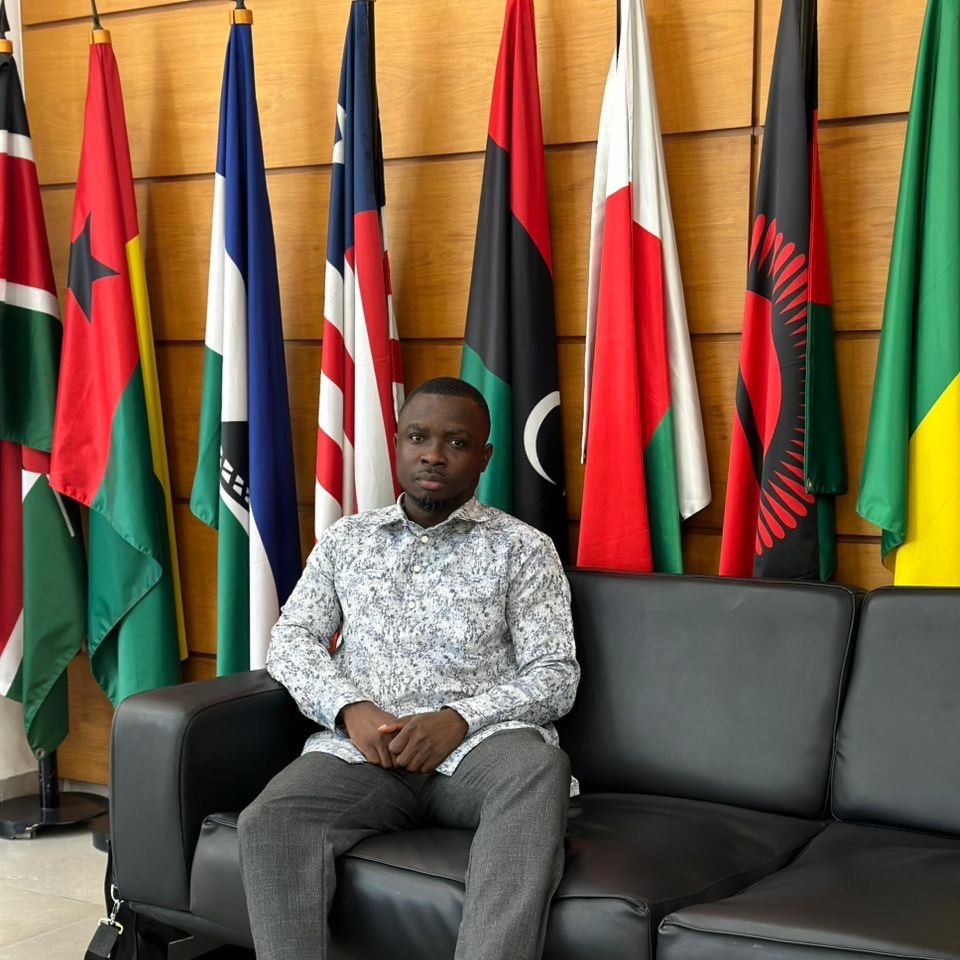
“It’s important to highlight how Haitians ended slavery but Western nations claim credit, and how Africa is deliberately shown as marginal on maps.
President Mahama himself stated that the resolution is a ‘pathway to healing and reparative justice’ and a ‘safeguard against forgetting’ ,” he noted.
“What better safeguard against forgetting than a film that will be watched for generations? What better pathway to healing than a story that touches the heart?”
Kuadzi, who made history as the first African in 40 years to win back-to-back Artios Awards, reaffirmed his readiness to lead the casting efforts for such a project across the continent.
“The Africa Monologue Challenge has already demonstrated that we can discover talent from every corner of this continent,” he said.
“I am committed to using that same network and my experience as a member of the Casting Society of America and the International Casting Directors Association to ensure that these films feature the best talent Africa has to offer, not just from Ghana, but from Nigeria, South Africa, Kenya, Senegal, and beyond.”
The ACCPalso argued that the creative economy itself was a form of reparation.
“By investing in African films, music, and content, the global community can contribute to building an industry that generates jobs, restores dignity, and projects African narratives from an African perspective.
“When the United States government supports Hollywood, they are not being charitable. They are investing in their soft power. They are projecting their values. They are telling their story,” Nana Dwomoh-Doyen said.
“Africa must do the same. We have the stories. We have the talents like Mawuko Kuadzi who have proven that we can compete globally and even win. Now we need the leadership to deploy these talents for our collective liberation and development.”
The Chamber also appealed to the African Union and the United Nations to consider including film production as a formal component of the reparatory justice agenda. The resolution already calls for “transformational change addressing the persistent global inequalities that remain tied to the legacy of enslavement”.
“If the United Nations can establish a reparations fund, as the resolution contemplates, then part of that fund should be directed towards the production of films that will educate, heal, and empower,” Nana Dwomoh-Doyen proposed.
“What better use of reparations than to tell the story of why reparations are needed, and to do so in a way that reaches millions?”
GNA
Edited by George-Ramsey Benamba