By Nii Martey M. Botchway
Accra, March 19, GNA – SEND Ghana and its partners have called on the Government to fast-track the Front-of-Pack Warning Food Labelling (FOPWL) policy to help address the rising burden of Non-Communicable Diseases (NCDs) in Ghana.
The coalition, comprising SEND Ghana, the Ghana Academy of Nutrition and Dietetics (GAND), and the Vision for Accelerated Sustainable Development (VASD), said the policy would not only help address the rising burden of kidney disease and other diet-related conditions but also enable consumers to make informed purchasing decisions.
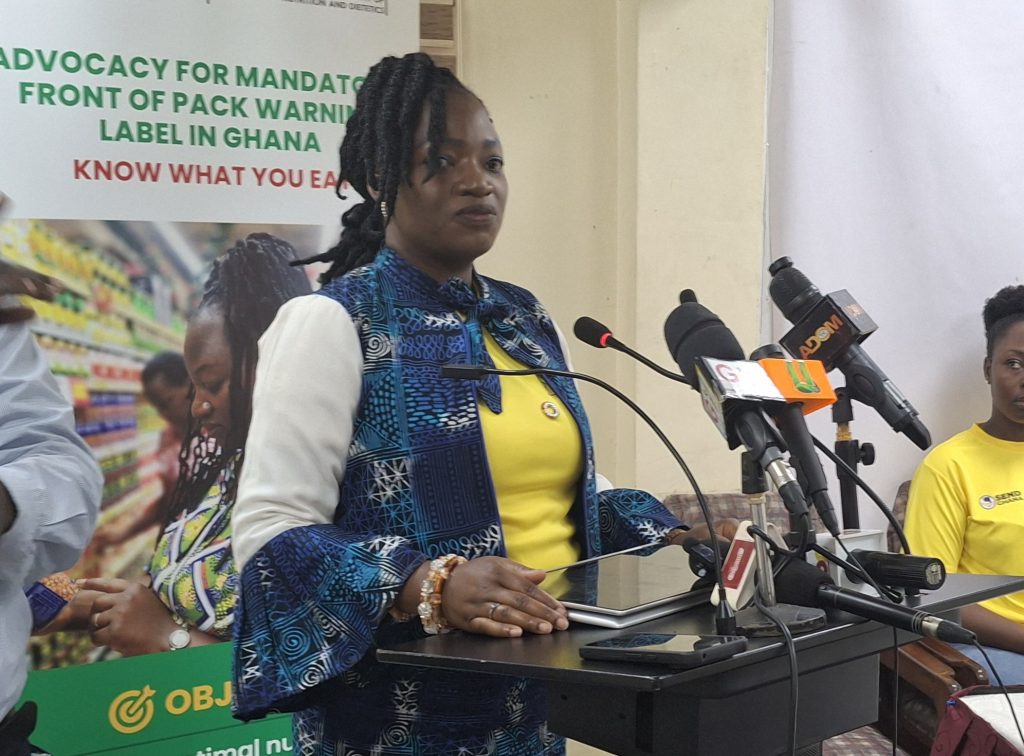
Speaking at a press briefing in Accra on Thursday, Ms. Levlyn Konadu Aseidu, the Project Lead at SEND Ghana, said Ghana was facing a growing public health challenge as kidney disease cases continued to rise, placing increasing pressure on families and the health system.
Citing recent figures shared by Mr Kwabena Mintah Akandoh, Minister of Health, which indicated that more than four million people in Ghana were living with chronic kidney diseases, with about 400 new cases of end-stage kidney diseases recorded at health facilities annually.
Ms. Aseidu said the situation made it important for the Government to fast-track the introduction of the FOPWL policy to help mitigate the growing health burden.
She noted that many consumers lacked adequate information about the nutritional content of the products they consumed, particularly sugar-sweetened beverages marketed to children, due to the absence of front-of-pack warning labels.
According to her, chronic kidney disease often progresses silently, with many patients remaining undiagnosed until the condition reaches advanced stages when treatment becomes complex, expensive and largely inaccessible due to high costs.
She said data from the World Health Organization indicated that non-communicable diseases accounted for approximately 45 per cent of deaths in Ghana, a trend she said continued to rise.
Ms. Aseidu also highlighted the financial implications of the increasing disease burden on government interventions such as the Ghana Medical Trust Fund, popularly known as MahamaCares, which was launched to support specialist treatment for chronic illnesses including kidney failure and cardiovascular diseases.
She however, said preventive measures such as clearer food labelling could help reduce the incidence of diet-related diseases and ease pressure on the health sector as well as the financial burden associated with their treatment.
Ms. Aseidu explained that the proposed Front-of-Pack Warning Food Labelling policy would require food products that exceeded recommended levels of salt, sugar, unhealthy fats and other nutrients of public health concern to display clear warning symbols on their packaging.
“Unlike conventional nutrition panels often printed in small fonts and technical language at the back of packages, front-of-pack labels provide simple and visible warnings to help consumers make informed choices at the point of purchase,” she said.
She said evidence from countries such as Chile and Mexico showed that warning labels could reduce the consumption of unhealthy foods, adding that South Africa had taken the lead in implementing such policies, while Nigeria and Kenya were developing similar regulatory frameworks.
Ms. Aseidu commended the Ministry of Health (Ghana) for initiating work on the policy and appealed to the Health Minister to champion its swift implementation.
She also called on the media, policymakers, civil society organisations, academia and the public to support the introduction of the policy as a practical step towards improving public health outcomes.

Also speaking at the briefing, Prof. Kingsley Pereko, Immediate Past President of the Ghana Academy of Nutrition and Dietetics, stressed the need to fast-track the implementation of the policy.
He said unhealthy diets and the increasing presence of ultra-processed foods in Ghana’s food environment were key contributors to the rising burden of kidney disease and other non-communicable diseases.
Prof. Pereko noted that products such as instant noodles, energy drinks, sugary beverages, highly processed chips and biscuits had become common in homes, markets, offices and schools.
“These foods are often high in salt, sugar and unhealthy fats but low in essential nutrients,” he said.
He therefore urged the Government to prioritise the implementation of the policy and called on all stakeholders to support it.
GNA
19 March 2026
Edited by Samuel Osei-Frempong