By Mildred Siabi-Mensah
Ketan (WR), March 31, GNA – Professor Komla Tsey, a Professorial Research Fellow, Central Queensland University, says Ghana does not suffer from a shortage of ideas about railway revamping and development.
Rather, the persistent failure to translate ideas into decisions that shaped the realities of the sector for the ultimate benefit of the citizenry.
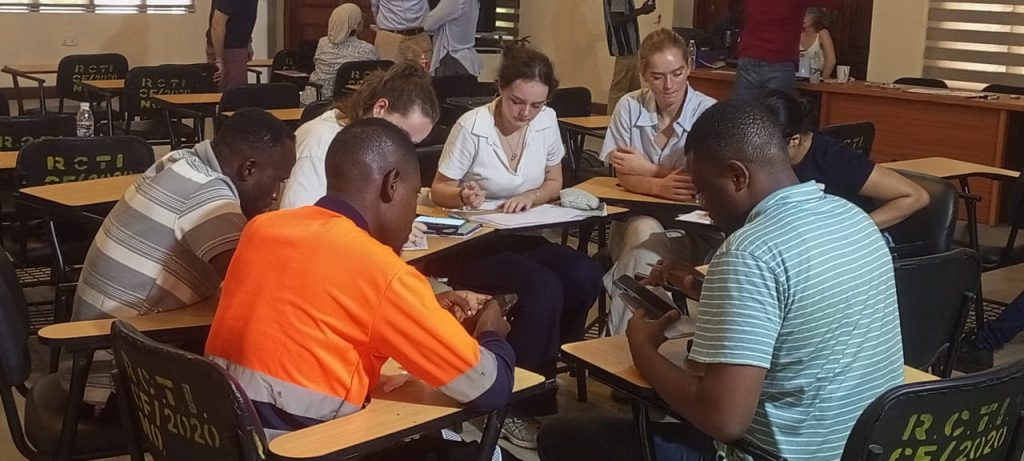
Professor Tsey, said this during the Sea-ing Africa Field school and Conference held at the School of Railways and Infrastructure Development (SRID), University of Mines and Technology (UMaT), Essikado Campus, recently, in the Western Region.
The conference, part of the “Sea-ing Africa: Tracing Legacies and Engaging Future Promises of ‘Big’ Infrastructure Projects in Port City Territories in Ghana and Morocco,” project was coordinated by the Leiden University (The Netherlands) in collaboration with SRID.
The Sea-ing Africa Field school and Conference has become a key event for Ghana’s railway sector.
For decades, Ghana’s railway sector had been discussed as a cornerstone of economic transformation and expected to connect farms to markets, Mines to Ports, and industries to opportunities.
Prof. Tsey, an Adjunct Professor, James Cook University, Australia, observed that despite the strategic importance, progress had been uneven, often stalled by policy inconsistency, underinvestment, and a pattern of decision-making that excluded most affected by the system—communities, workers, and local producers.
“We cannot afford that cycle any longer. What is required now is a deliberate shift—from dialogue to decisions. This means rethinking not just what we discuss, but how those discussions are structured and what they are intended to achieve.”
Another hinge was the historical and structural of the sector, which must be reassessed.
“Railways were designed for extraction, not inclusion. That logic has proven stubbornly resilient, shaping not only where investments go, but who benefits from them,” he narrated.
The unveiling of the Railway Master Plan and ongoing investment negotiations, should strengthen community participation along railway corridors, improve environmental oversight in areas affected by illegal mining, and create pathways for local businesses to benefit.
The media, he noted must be become an integral tool in telling the railway story, …”this will help ensure railway reform is not treated as an abstract technical issue. But, as a national development priority with real implications for jobs, equity, and economic growth”.
Dr Costanza Franceschini, the Coordinator of the Field school, examined how shipping, rail and road infrastructure facilitated the movement of raw materials, with ports acting as nodes (connections),impacting on local communities and livelihoods.
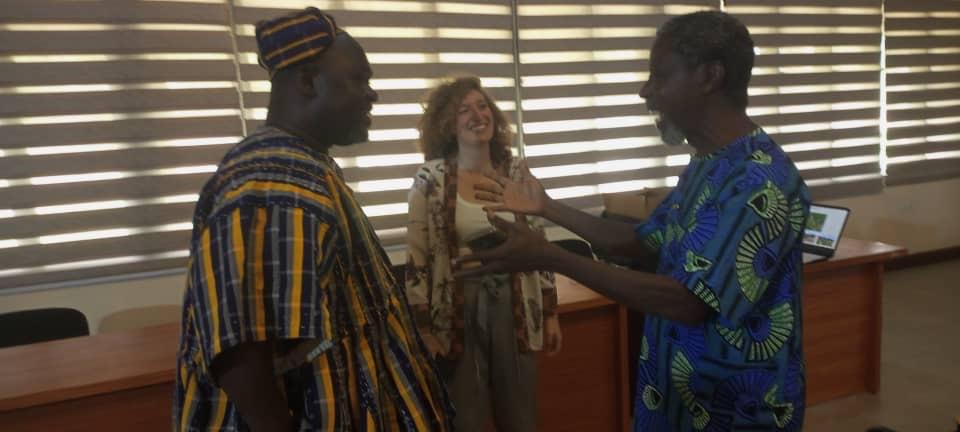
Dr Franceschini, also a Postdoctoral Researcher and Lecturer in Cultural Anthropology at the Institute of Cultural Anthropology and Development Sociology, Leiden University, said, researches focused on the prominent place of infrastructure in the development in Africa.
“This is mainly because ports, highways and railways are intertwined with geopolitics, economic systems, political interests and cultural values that affect citizens,” she added.
In the colonial era, Dr Franceschini recalled how infrastructure was built mainly to exploit natural resources such as bauxite and gold, but however, noted, much of these infrastructures fell into disrepair, partly due to a lack of maintenance.
GNA
Edited by Justina Hilda Paaga/George-Ramsey Benamba