Accra, May 27, GNA – The Water Resources Commission and the University of Johannesburg have signed a three-year Memorandum of Understanding (MoU) to deepen cooperation in water governance, research, innovation and capacity development to support sustainable water management in Ghana.
The agreement is expected to enhance Ghana’s efforts to address water pollution, water scarcity, environmental sustainability and public health concerns through research-driven and technology-based interventions.
The MoU was signed during an official visit by a delegation from the Water Resources Commission (WRC) to Johannesburg, South Africa, recently, an official of the WRC, told the GNA in Accra.
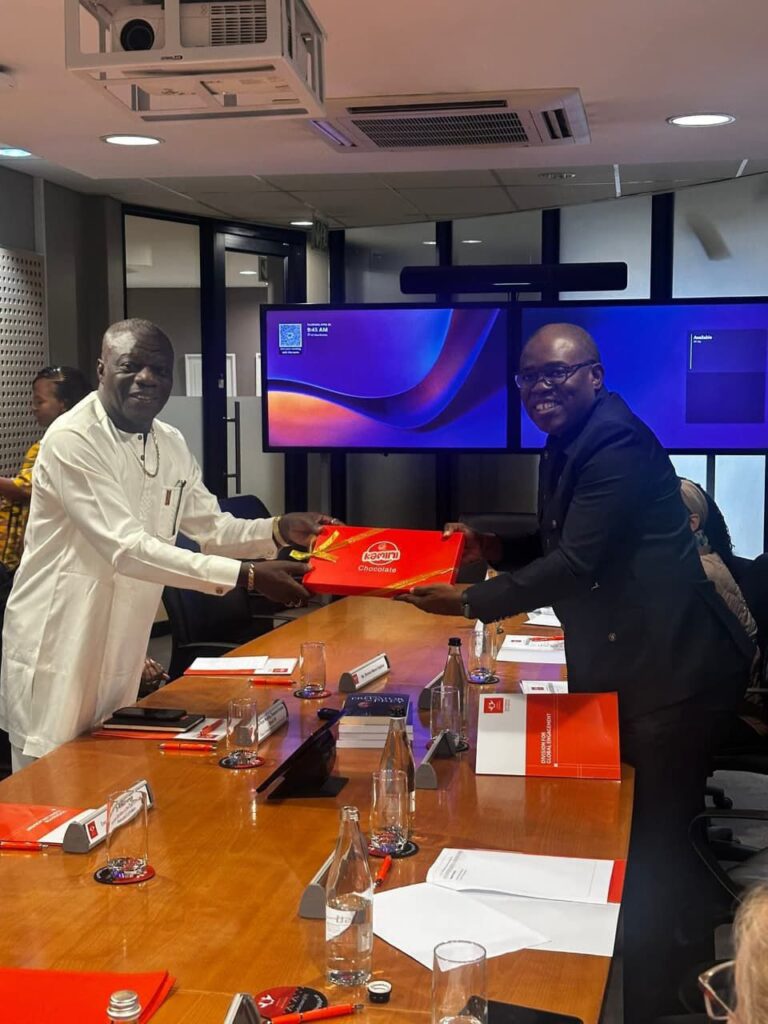
Daasebre Kwebu Ewusi VII, Board Chairman of the WRC, signed on behalf of the Ghanaian institution, while Prof. Letlhokwa Mpedi, Vice Chancellor and Principal of the University of Johannesburg (UJ), signed for the South African university.
The ceremony was held at at the Auckland Park Kingsway Campus of the university.
The WRC delegation included Dr Mawuli Lumor, Acting Executive Secretary of the Commission, and Ms Florence Mawusi Dagbanu, Senior Human Resource Officer.
Officials from the University of Johannesburg who participated in the engagement included Prof. Refilwe Phaswana-Mafuya, Deputy Vice Chancellor for Research and Innovation, and Prof. Sarah Gravett, Senior Director of the Division for Global Engagement.
The agreement establishes a framework for collaboration in water resources management and governance and water quality assessment and monitoring.
It also addresses issues regarding environmental science and engineering, public and environmental health, innovation, sustainability and applied research.
The MoU provides for staff and student exchanges, postgraduate training and short professional courses.
The two institutions indicated that the partnership would focus on implementation-oriented programmes capable of producing measurable outcomes to support national water management priorities in Ghana.
The visit featured a series of faculty engagement sessions involving the Faculty of Science, the Faculty of Engineering and the Built Environment, and the Faculty of Health Sciences.
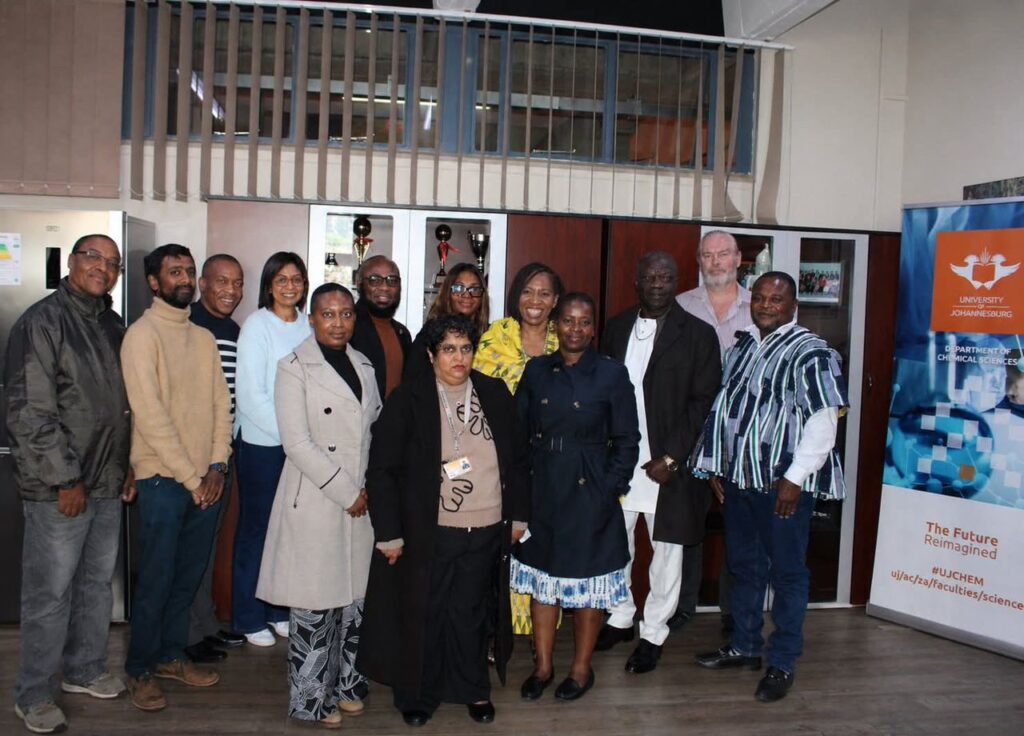
Discussions with the Faculty of Science focused on ongoing water-related research in chemical sciences and nanotechnology, particularly their relevance to Ghana’s water pollution and water quality challenges.
The Ghanaian delegation toured the Central Chemistry Laboratory, the Membrane Technology Laboratory and the SARChI Chair in Nanotechnology for Water Laboratory.
Key issues discussed included the application of nanotechnology in water treatment and pollutant removal, advanced techniques for water quality monitoring, joint research projects and postgraduate supervision.
The parties also explored opportunities for Ghana to benefit from the use of laboratory facilities for pilot interventions and research projects.
Engagements with the Faculty of Engineering and the Built Environment centred on collaborative projects in water and wastewater treatment, engineering solutions to pollution caused by illegal mining and industrial activities, and the development of affordable community-level water treatment systems.
The discussions highlighted the importance of applied research in addressing practical water management challenges confronting communities in Ghana.
At the Faculty of Health Sciences, discussions examined the link between water quality and public health, water-borne diseases, environmental health risks and community water safety.
The session also emphasised the need for multidisciplinary approaches that integrate science, engineering and health sciences into water resources management.
The two institutions also agreed on the need for implementation, monitoring and periodic assessment to ensure the delivery of tangible results under the partnership.
Under the next phase of the collaboration, a joint implementation committee is expected to be constituted to operationalise the MoU, while priority pilot projects and opportunities for joint funding applications would also be pursued.
GNA
Edited by Beatrice Asamani Savage