By Emmanuel Gamson
Takoradi, March 14, GNA – Mrs Olivia Serwaa Opare, the Director of the National STEM Resource Unit, Ghana Education Service (GES), has said the advancement of every modern economy is closely linked to the strength of its mathematical and scientific capabilities.
She said mathematics played a central role in national developments, noting that from engineering and architecture to digital technology, finance and scientific research, mathematical knowledge formed the foundation upon which innovation and progress were built.
She said this when the GES, the African Institute for Mathematical Sciences Ghana (AIMS Ghana), and the Ghana Education Trust Fund (GETFund), collaborated to commemorate the national 2026 International Day of Mathematics, in Takoradi.
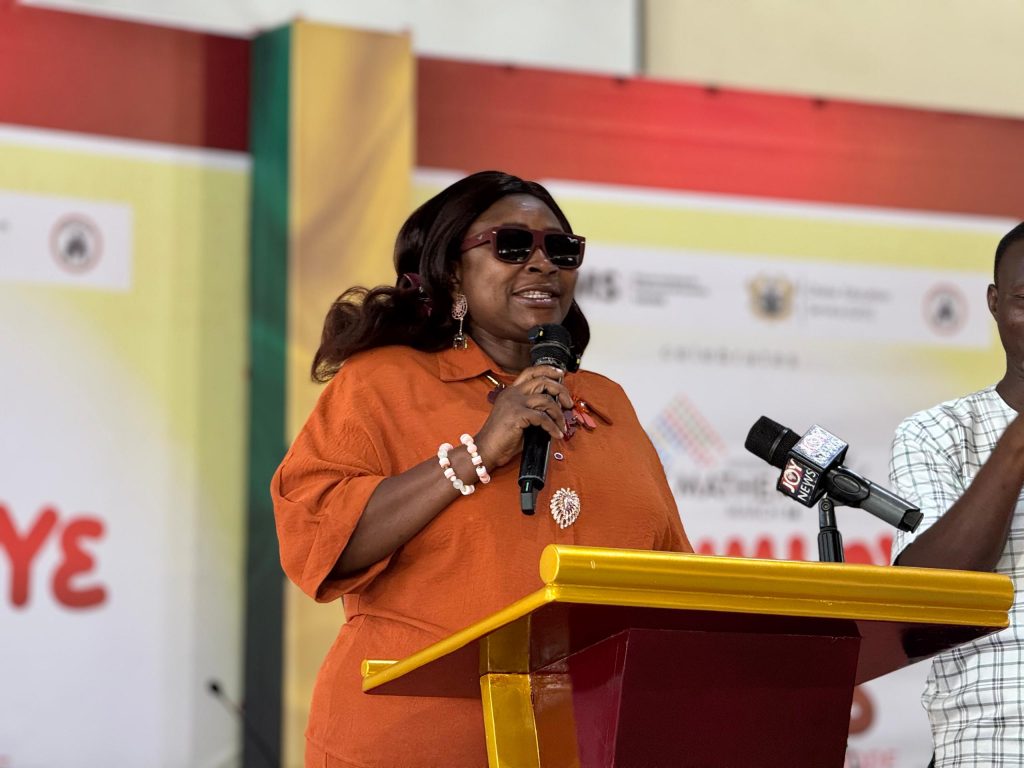
It was held on the global theme: “Mathematics and Hope,” with the Ghanaian sub-theme: “Mɛtumi Ayɛ Maths (I Can Do Maths).”
The Day was to put a spotlight on the importance of mathematics as a discipline in unlocking potentials, creativities, and innovations for nation building.
It brought together students and teachers from selected Basic and Senior High Schools in the Western Region, and key stakeholders in the education sector to highlight the role of mathematics through activities like mathematics role-play and creative art presentations, speed-round mathematics quiz, and mathematics innovation exhibition among others.
Mrs Opare stated that the theme for the celebration was timely and served as a reminder that mathematics was not merely an academic subject, but a powerful tool that enabled individuals and societies to solve problems, make informed decisions and build a better future.
She said: “In our daily lives, we see clear examples of how mathematics supports economic and social activities where market traders calculate transactions with efficiency, farmers estimate yields and manage resources, mobile money operators process financial transactions with accuracy and precision, and many others.
“These everyday examples demonstrate that mathematics is not distant or abstract, but it is deeply embedded in the functioning of our communities.”
Mrs Opare, therefore, encouraged young learners to approach mathematics with confidence and determination, and not view it as a subject reserved for a few individuals.
She called for a collective commitment of all stakeholders to strengthen mathematics education and empower young people with the knowledge and skills required to contribute meaningfully to national development.
Nana Kobina Nketsia V, the Paramount Chief of Essikado Traditional Area, who chaired the occasion said mathematics had existed since the beginning of creation.
It continued to provide the tools needed to solve complex problems, drive innovation, and create solutions for challenges facing societies.
Ms Cynthia Ama Mensah, Senior Lecturer, Department of Mathematics, Statistics and Actuarial Science, Takoradi Technical University, called on stakeholders to create a conducive teaching and learning environment for young learners to develop interests in mathematics to help build them to become critical thinkers and problem solvers.
Mr Emmanuel Essuman, the Western Regional Director of Education, expressed gratitude to the organisers for hosting the national event in the region.
He said the activities held to mark the occasion not only made mathematics exciting but also helped students to appreciate that it could be creative, engaging, and enjoyable.
GNA
Edited by Justina Hilda Paaga/Benjamin Mensah