By Eric Appah Marfo
Accra, March 26, GNA – Dr Zanetor Agyeman-Rawlings, Chairperson of the Parliamentary Select Committee on Security and Intelligence, has disclosed that a Maritime and Other Offences Bill will soon be laid before Parliament to address Ghana’s legal framework gaps.
The Bill would align the framework to international standards on piracy as the current legal regime did not provide a comprehensive definition of piracy, making it difficult for authorities to successfully prosecute such offences, she said.
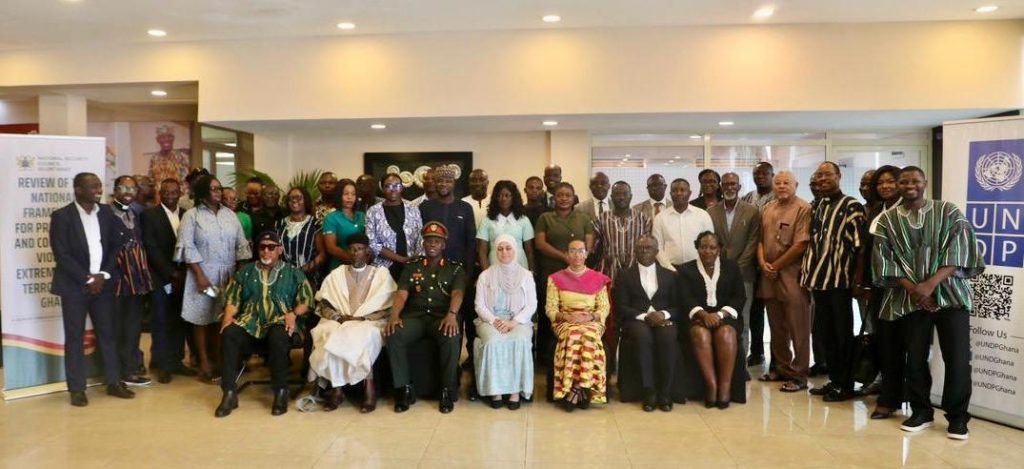
Dr Agyeman-Rawlings made the disclosure on Wednesday at a stakeholder engagement in Accra to review the National Framework for Preventing and Countering Violent Extremism and Terrorism.
The forum was organised by the Government through the National Counter Terrorism Fusion Centre, with support from the United Nations Development Programme (UNDP).
Dr Agyeman-Rawlings explained that in the absence of specific provisions, law enforcement agencies were often compelled to rely on alternative charges when dealing with maritime crimes, a situation she described as inadequate given evolving security threats.
“We currently cannot prosecute piracy because our rather outdated law does not give a definition that makes it possible for us to successfully prosecute,” she said.
“And, therefore, when people commit these offences at sea, we’re having to use all the other reasons but piracy as a means to prosecute, which obviously is not good enough given what’s happening more recently.”
The proposed Maritime and Other Offences Bill would not only close existing legal gaps but also enhance coordination among security agencies and improve Ghana’s overall maritime security framework.
Dr Agyeman-Rawlings said it would also incorporate provisions consistent with the United Nations Convention on the Law of the Sea (UNCLOS).
She underscored the importance of aligning national laws with international conventions to ensure effective prosecution and deterrence of crimes such as piracy, which continued to pose risks within the Gulf of Guinea and the wider West African sub-region.
The Chairperson said Ghana’s security architecture must continuously evolve to reflect changing threat dynamics, including those within the maritime domain, which had significant implications for trade, economic stability and national security.
Parliament remained committed to enacting legislation that responded to the needs of the people and strengthen the country’s capacity to address both traditional and emerging security threats, she said.
Brigadier General Dr Timothy Ba-Taa-Banah, Director of the National Counter Terrorism Fusion Centre, said Ghana would not be complacent in addressing security threats, despite recording no terrorist attacks on its soil.
The country’s record of zero attacks was the result of deliberate strategies and proactive measures, which must be sustained in the face of evolving threats within the sub-region.
“There is no room for complacency for any of the stakeholders involved in this holistic approach,” he stated.
Brig. Gen. Dr Ba-Taa-Banah further highlighted emerging challenges, including the role of artificial intelligence in disinformation and the increasing sophistication of terrorist financing, stressing the need to continuously review and update existing frameworks.
Also addressing participants was Ms Shaima Hussein, Deputy Resident Representative of the United Nations Development Programme, who underscored the urgency of strengthening preventive mechanisms, citing regional trends that pointed to rising extremist activities.
She noted that the Sahel region accounted for a significant proportion of global terrorism-related deaths, warning that Ghana must remain proactive despite its relative stability.
Ms Hussein noted that tackling violent extremism required addressing underlying drivers such as poverty, unemployment, inequality, and social exclusion, particularly among the youth.
The three-day stakeholder engagement brought together representatives from government institutions, security agencies, civil society organisations, religious bodies, and youth groups to assess the implementation of the 2019 framework, identify gaps, and propose strategies to strengthen national security.
Participants are expected to make recommendations to inform the review of the framework and ensure it remains responsive to emerging threats and aligned with current realities.
GNA
Edited by Agnes Boye-Doe