By Dennis Peprah, GNA
Sunyani, (Bono), March 09, GNA – For Fatima and Abawana, they enjoyed ‘Tubaani’ as a breakfast when they were growing up in the Northern part of the country.
Besides its high nutritional content, the two siblings said they never knew that the locally prepared dish, very common on the streets of Tamale, the Northern regional capital, represents a symbol of culture, and tradition.
Drift
As northerners drift to the south, ‘Tubaani’ has become an authentic local food on the streets of Sunyani, creating brisk business for some young women.
The consumption of the traditional cuisine isn’t only reinforcing the bonds of Northerners, but also creating viable economic opportunities for young women, especially single mothers.
What’s Tubaani
Tubaani is a common and nutrient-dense food that originated from the Northern part of the country and is often consumed in Zongo communities.
Preparation
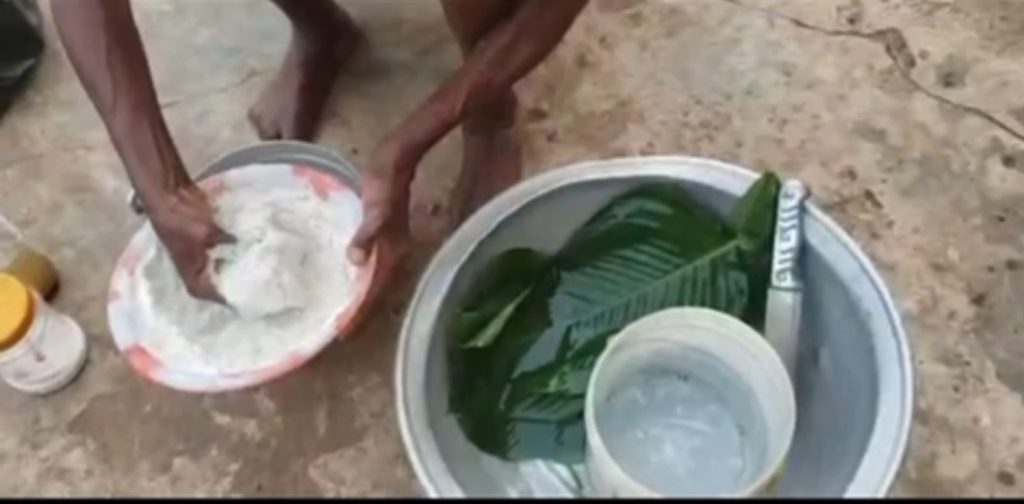
Primarily prepared from soaked beans ground into flour, and steamed until it reaches a solid, pudding-like consistency.
“The process of steaming begins with grinding beans into a smooth paste, adding little water to get the right consistency”, Madam Asibi Kutuu, an aged Frafra ‘Tubaani’ cook at New-Dormaa, a suburb of Sunyani explained.
She said: “you then add a little salt and wrap the ingredients in fresh leaves and allow it to steam for about 20 minutes”.
Mad Kutuu said the diet when served with spicy tomato stew or grind pepper with little salt wet appetite.
“Ka Tubaani nyɛla din nyɛli”, she stated in Frafra dialect interpreted ‘Tubaani is a real treat’.
Mad Kutuu added that Tubaani requires slow steaming until it becomes thick, saying it was typically served with black pepper sauce (shito).
Culture and Tradition
Mad Kutuu said the local cuisine goes beyond providing nutrition, saying that it represented a celebration of culture and tradition particularly among the Frafra tribe, portraying the unity of people and their creative spirit.
Nutritional Value
Checks show that the Tubaani has high nutritional content as most of the ingredients used for preparation contain high in protein, iron, folates, and soluble fiber.
Vendor-experiences
Some women vendors shared their experiences, explaining that the demand and consumption of the local diets were gathering momentum among public sector workers, who often requested it for lunch.
“I even provide office service to some of my customers”, Salamatu Amina, a single mother and a vendor stated, saying that she sells the local dish sometimes in takeaway bowls with the pricing pegging between GHC5 and GHC20 depending on the kind of ingredients.
Another vender, Fatimatu Awanaga, who normally sells the diet around the COCOBOD building in Sunyani, said the diet was easier to prepare. However, some of them could not cook in larger quantities because of lack of capital.
She said with modern stove and microwave, the venders could prepare the diet in commercial quantities, store, re-heat and sell it, saying that the diet, if well prepared, could last for at least three days before it spoiled.
Mad Awanaga called on the government to support them with capital, saying that many young women in the Zongo communities in the Sunyani municipality were now engaged in the sale of ‘Tubaani’ for a living.
GNA
Kenneth Odeng Adade