By Edward Dankwah, GNA
Accra, March 10, GNA – The Government of Ghana is considering plans to extend the breakwater at the Jamestown Fishing Harbour as part of efforts to address persistent siltation challenges affecting operations at the facility.
The move is expected to ensure that the harbour remains navigable for fishing vessels and operates efficiently and effectively to support the livelihoods of fisherfolk while boosting economic activities within the coastal community and Ghana as a whole.
Mr. Joseph Bukari Nikpe, the Minister for Transport, annouced tha plan during a working visit to the Jamestown Fishing Harbour and the Tema Port to assess operational challenges and identify solutions to improve efficiency.
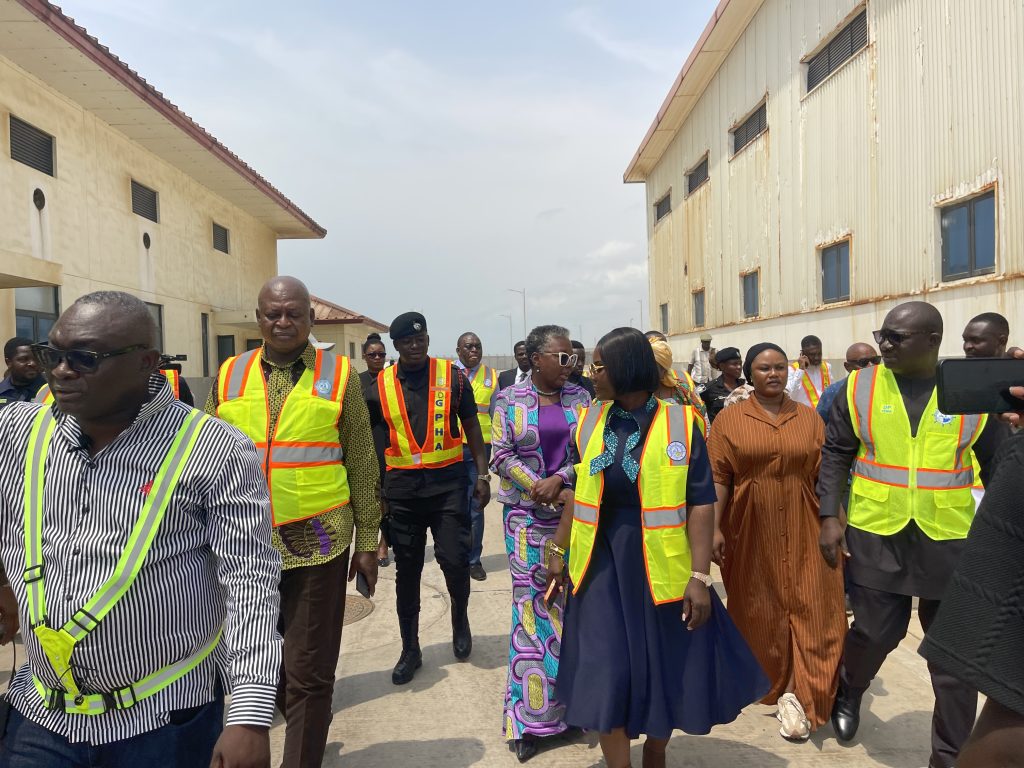
He said inspections conducted at the facility revealed that the current breakwater structure was too short, allowing sediments to quickly accumulate within the harbour.
He explained that because of this, dredging works carried out at the harbour often became ineffective within a short period.
Mr. Nikpe noted that after dredging, the harbour becomes silted again within three to six months, making it necessary to repeatedly undertake costly desilting exercises.
“If the breakwater is not extended, every three months we will have to desilt the harbour, which is very expensive,” he said.
He said the government was therefore exploring measures to extend the breakwater and undertake sustained dredging to ensure that the harbour remained accessible to fishing vessels.
The Minister further revealed that the inspection also uncovered some operational gaps in the facility, noting that certain supporting infrastructure needed to make the harbour fully functional were not provided when it became operational in 2023.
He cited the section designated for the repair of small fishing vessels, which currently could not be effectively used because siltation prevented boats from accessing the area.
Mr. Nikpe said the government would work closely with the Ghana Ports and Harbours Authority and the Ministry responsible for fisheries to address these challenges and improve operations at the harbour.
He said a longstanding water supply challenge affecting the fishing market and fisherfolk at the facility had been resolved through collaboration with the Ghana Water Company Limited and the Ghana Ports and Harbours Authority.
According to him, water supply to the harbour had been restored, while a standby borehole was currently being mechanised to serve as a backup source.
Mr. Nikpe added that the government was determined to ensure the harbour operated efficiently to support the livelihoods of fisherfolk and boost economic activities in the area.
He said improving the facility was also aligned with efforts to promote round-the-clock economic activities under the government’s proposed 24-hour economy policy.
The Minister assured that the government under President John Mahama remained committed to transforming the Jamestown Fishing Harbour into one of the best fishing facilities in the sub-region to better serve Ghana’s fishing industry.
Mrs Emelia Arthur, Minister of Fisheries and Aquaculture, explained that the very name of the harbour highlighted the shared responsibilities between the fisheries sector and harbour authorities in managing and operating the facility.
“Our interest is how to maximise the facilities here for the benefit of artisanal fishers in this country,” she said.
She added that fisheries contributed about 60 per cent of the country’s animal protein intake, with 75 to 80 per cent of that supply coming from artisanal fishers, many of whom depend on facilities such as the Jamestown Fishing Harbour.
Mrs Arthur pointed out that the harbour was equipped with key infrastructure including cold storage facilities, a fish market and a processing centre, all of which were intended to support fishing activities and improve post-harvest handling.
She indicated that the Ministry of Fisheries and Aquaculture was working closely with the Ministry of Transport and other relevant stakeholders to put in place arrangements that would ensure these facilities operate efficiently.
GNA
Edited by Benjamin Mensah