By Prince Acquah
Cape Coast, March 27, GNA – More than 50 years after retirement, Mr Amadu Walah, Ghana’s oldest pensioner, continues to live on, sustained by his monthly pension benefits.
Mr Walah, a 115-year-old resident of Cape Coast, served the state as a professional driver with the Ghana Health Service for many years, contributing to the development of the health sector.
He later worked with the State Transport Corporation in the Central Region until his retirement.
Although he and his family are traditionally into farming, the vocation has slowed down in recent years, making life somewhat challenging.
Apart from impaired sight and hearing, the supercentenarian and father of seven remains physically fit, though not strong enough to engage in any commercial activity.
His contributions to the Social Security and National Insurance Trust (SSNIT) have, therefore, become his main source of support, catering for his daily needs.
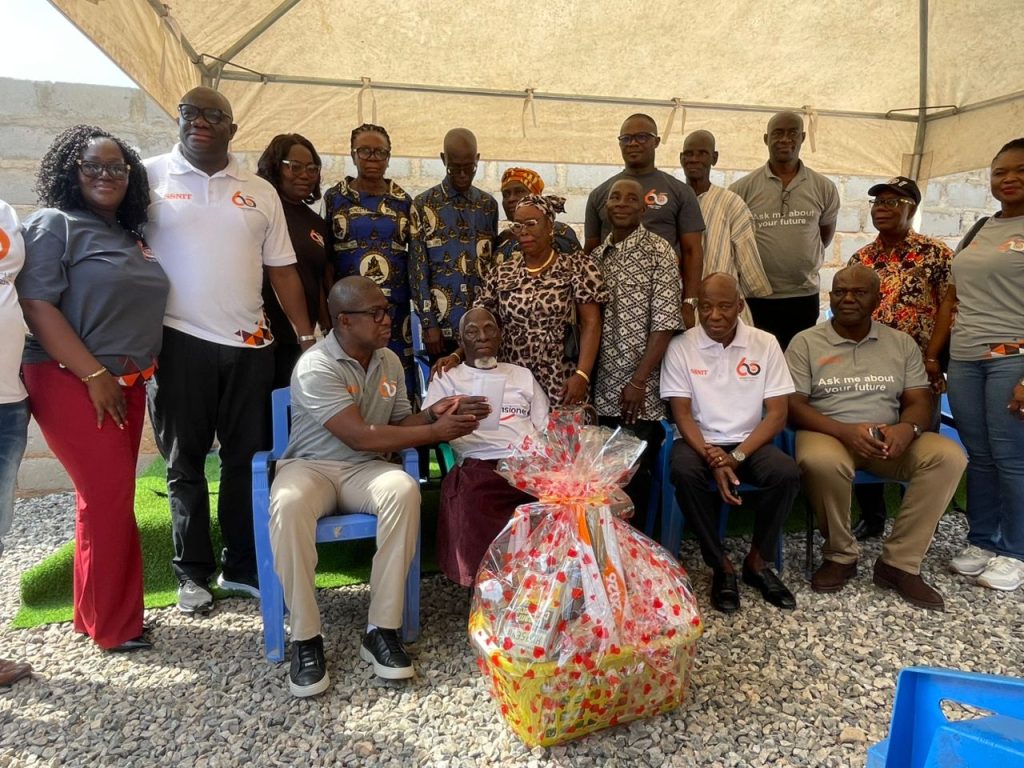
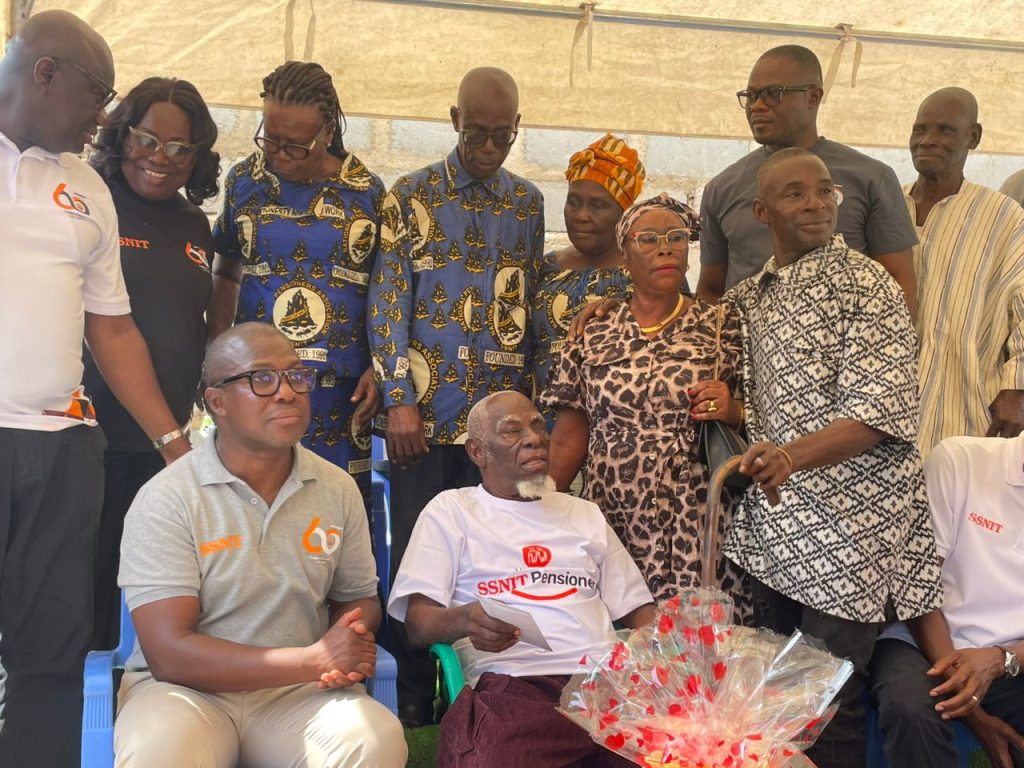
In recognition of his remarkable life and service, a high-level delegation from SSNIT and the Trades Union Congress (TUC) visited him during the ongoing SSNIT-TUC Regional Forum in Cape Coast.
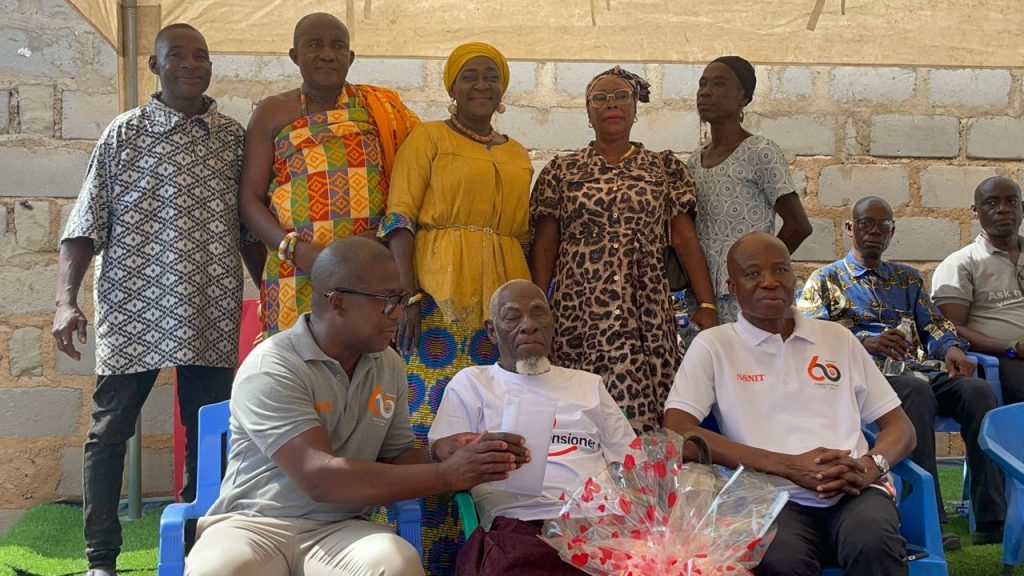
The delegation was led by the Director General of SSNIT, Mr Kwesi Afreh Biney, who also addressed the Regional Council of Labour on the scheme’s activities, strategies, and progress in recent years.
The forum, held under the theme “Empowered Unions, Secured Future: Deepening Pension Literacy Across Ghana,” provided a platform for participants to raise concerns and ask questions, particularly on disparities in monthly payments, asset management, and investments.
Mr Yakubu Walah, a son of the pensioner, told the delegation that his father’s pension had been a lifeline, especially when farming activities declined.
Mr Biney expressed admiration for Mr Walah’s resilience, describing him as a testament to the credibility and importance of the SSNIT scheme.
The delegation presented him with a hamper of assorted consumables and an undisclosed amount of cash.
“God richly bless you for your service to your country. We congratulate you and wish you well. SSNIT promises to continue caring for you as we have done all these years,” Mr Biney said.
Earlier at the forum, Mr Biney highlighted the resilience and sustainability of the scheme, noting that its assets under management had grown significantly from GHS20.4 billion to over GHS25 billion within a year.
He added that returns on the scheme exceeded eight per cent in 2025.
“Our scheme is growing. Today, we have over 2.1 million active members. Our plan this year is to add 300,000 new members, and by 2028, we project reaching about 2.8 million members,” he said.
However, he observed low participation from the informal sector, which constitutes more than 80 per cent of Ghana’s workforce, noting that only about 45,000 individuals from that sector were currently enrolled.
To address this, Mr Biney said SSNIT was intensifying efforts to enrol more informal sector workers through innovation, convenience, and improved accessibility.
He noted that the Trust had introduced digital solutions, including a mobile application and a fully operational 24-hour virtual branch to enhance service delivery.
“We have a fully-fledged virtual branch that operates 24/7. Anything you can do at a physical branch can be done remotely,” he said.
He further disclosed that SSNIT had adopted a co-location strategy with banks to expand its reach, adding that more than eight co-location points had already been established, with plans to increase to 25 by mid-year.
Mr Kwabena Nyarko Otoo, Deputy Secretary General of the TUC, urged citizens to enrol in the SSNIT scheme, citing its long-term benefits.
He said SSNIT offered better returns and reliability compared to other investment options such as treasury bills.
“If you do not join and you retire, you may not have a steady monthly income to sustain you. Even a small pension can make a significant difference,” he stressed.
Mr Otoo also called on the government to settle outstanding penalties owed to SSNIT for defaulting on workers’ contributions.
GNA
Edited by Alice Tettey /Audrey Dekalu