By Florence Afriyie Mensah
Fumesua (Ash), March 04, GNA – Crop researchers at the Crops Research Institute of the Council for Scientific and Industrial Research (CSIR-CRI) are testing new technological devices to detect real–time disease infections on farmers’ fields.
The institute, through the SporeSmart project, is therefore piloting the SporeSmart device technologies and accompanying Artificial Intelligence (AI) based applications, to ensure its effectiveness in detecting diseases on crop fields.
The goal is that by integrating AI-driven forecasting and sustainable biocontrol, the project delivers a scalable, climate-smart approach to Fusarium spp. management, supporting healthier harvests, reducing post-harvesting losses and boosting farmer incomes.
It is being funded by UK Innovate and other research partners from the UK and Brazil.
Dr Kwesi Atta Aidoo Snr, a Research Scientist at CSIR-CRI and Country Lead for the Project at a stakeholders’ demonstration meeting at Fumesua in the Ashanti Region, explained that, the SporeSmart collector captured fungal spores within the environment so that, when it is sent to the laboratory it is able to detect the kind of disease that was likely to happen on the field.
According to him, fusarium disease (a fungus causing soil-borne disease) remained a major constraint to the production of staple crops such as maize, rice, and tomato with serious implications for yields, food safety, farmers’ incomes and public health.
He said it was important to use advanced technologies such as the SporeSmart device to demonstrate how real-time field surveillance and data-driven insights could revolutionize plant disease management.
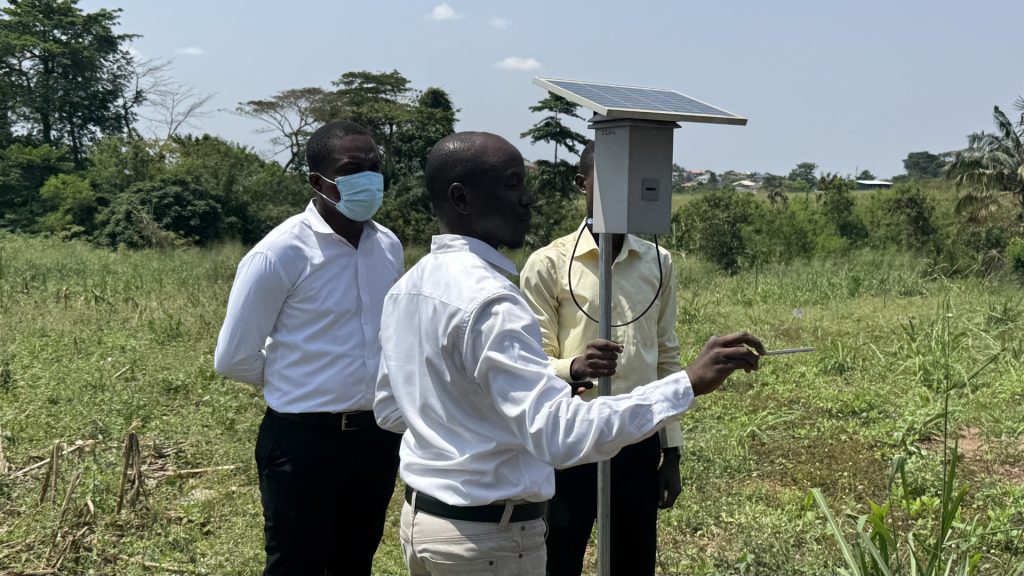
Dr Aidoo Snr said early detection at the field level not only reduced crop losses but also minimized indiscriminate pesticide use, lowers production costs, and supports environmentally responsible farming practices.
Touching on activities taken so far, he said a total of five SmartSpore collectors have been deployed between September 2025 and February 2026.
Over 2,000 spore images taken comprising Fusarium spp and other plant pathogens.
Currently the research team is experimenting with technology and hope to pilot on farmers’ fields.
Dr Aidoo Snr indicated that, for the commercial farmer after piloting and validating the technology, the farmer could purchase and install it on the field.
The government, he indicated, could also invest in the technology, purchase devices to be managed by agricultural extension officers to render services to the smallholder farmer.
Dr Mrs Patricia Acheampong, the CSIR-CRI Deputy Director, said per the project’s vision, the use of environmentally friendly and biologically based solutions aligned with the Institute’s goal of protecting ecosystems, ensuring food safety, and promoting climate-resilient agriculture for generations.
Mr Luke Murell, the Project Lead, MMVSense UK, highlighting the roadmap to scaling up the project, believed that, with the right financing and training of extension officers on the technologies, early detection of disease would be enhanced.
GNA
Edited by Kwabia Owusu-Mensah/Benjamin Mensah