By Stanley Senya
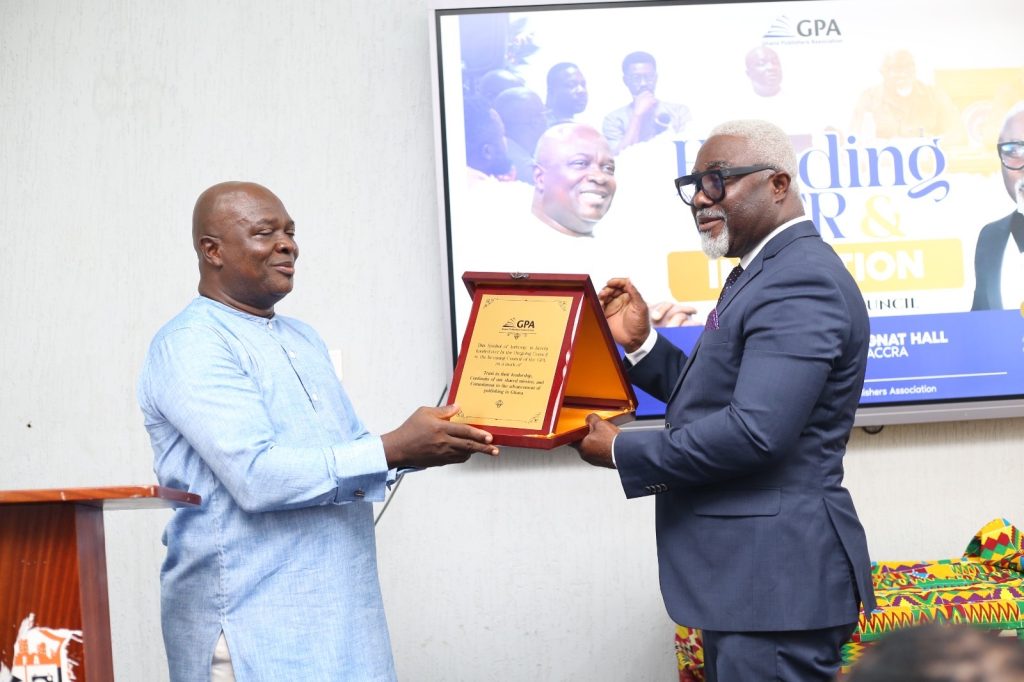
Accra, Jan. 22, GNA – The Ghana Publishers Association (GPA) has inducted into office a new National Council with a call on them to reposition the publishing industry as a strategic pillar of education, culture and national development.
At a handing-over and induction ceremony in Accra, the newly elected President of the Association, Mr Edward Yaw Udzu, expressed gratitude to members for the confidence reposed in the new leadership, pledging to serve with humility, purpose and a strong sense of responsibility to both the industry and the nation.
Mr Udzu said publishing went beyond commercial activity, describing it as the foundation of education, the preservation of culture and a critical driver of sustainable development.
He stressed that books shaped minds, supported learning and transmitted values across generations, noting that any country seeking long-term progress must deliberately invest in its book industry, authors and knowledge systems.
Drawing on more than three decades of professional experience in publishing, marketing and law, the GPA President highlighted key challenges confronting Ghanaian publishers, including rising production costs, currency pressures, piracy, limited market access and the growing need to innovate in response to changing educational and technological demands.
He said although the challenges were significant, they also presented opportunities for reform, collaboration and growth if industry players acted collectively.
Mr Udzu outlined four strategic priorities that would guide the work of the new Council over its 2026–2028 mandate.
The first, he said, was sustained engagement with government to ensure the publishing industry was recognised as a strategic partner in national development, particularly in education and literacy.
He said the Association would intensify advocacy for a clear and predictable national policy on the periodic purchase of books for public schools, libraries and state institutions, explaining that such a policy would improve educational outcomes while creating a sustainable local market for quality Ghanaian publications.
The President said the Council would also engage government on taxation, import duties on printing materials and access to affordable financing to help reduce production costs and strengthen local content development, adding that all engagements would be collaborative, evidence-based and consistent.
The second priority, he said, was building a resilient and innovative publishing ecosystem through stronger partnerships with educational institutions, development partners, international publishing bodies and digital platforms.
He noted that print and digital publishing would be positioned as complementary tools for reaching modern learners and readers.
Mr Udzu identified robust protection of intellectual property as the third priority, saying piracy continued to undermine creativity, investment and authors’ livelihoods.
He said the Association would work closely with CopyGhana, law enforcement agencies and relevant state institutions to strengthen enforcement, improve industry coordination and sustain public education on intellectual property rights.
The fourth focus area, he said, would be capacity building and membership growth, with emphasis on training, professional development and access to market intelligence to enable Ghanaian publishers to compete effectively both locally and across Africa.
He assured members that transparency, inclusivity and accountability would underpin all the Council’s activities, stressing that the Association must serve publishers of all sizes, across traditional and digital platforms, with fairness, integrity and open communication.
Mr Udzu extended a call for collaboration to government, development partners and the media, reaffirming the Association’s readiness to contribute meaningfully to education and cultural policy and recognising the media’s role in shaping national discourse on literacy and development.
The newly inducted Council includes Ms Harriet Adelaide Tagoe as Vice President, Mr Emmanuel Nyarko as Honorary Treasurer and Mr Dan Konoh Odei as Honorary Secretary.
Other members are Mr Stephen Brobbey, Mr Emmanuel Boison, Dr Joseph Albert Quarm, Nana Djan Amaniampong and Nana Kwasi Dankyi Mensah, with Dr Francis Kofi Nimo Nunoo, Head of the Publishing Studies Department at KNUST, serving as a co-opted member.
Mr Asare Konadu Yamoah is an ex-officio member, while Mr Benjamin Tawiah Klu continues as Executive Secretary of the Association.
The ceremony marked the formal transfer of leadership as the Association charts a new course aimed at building a stronger, innovative and unified publishing industry in Ghana.
GNA
Edited by George-Ramsey Benamba