A GNA Feature by Laudia Anyorkor Nunoo
Tema, Jan. 13, GNA- The first assault on the senses comes before a word is spoken. A damp, nauseating stench rises from the bowels of Elmina Castle, clinging stubbornly to ancient stone walls and narrow corridors.
It is the smell of human suffering trapped in time — mould, salt air, sweat, despair. No narration, however skilled, fully prepares a visitor for the heaviness that greets them upon descending into the dungeons of what is popularly known as Elmina Castle, officially St George’s Castle.
Despite years of history lessons and imagined images of enslaved Africans being brutalised and shipped to unknown lands, the experience is profoundly different when one finally walks through the corridors and dungeons of the castle. Here, history is no longer abstract; it breathes, presses, and overwhelms.
A welcome note at the entrance states plainly that the castle was captured by the Dutch in 1637 and became the headquarters of the Dutch West India Company for the next 250 years. Yet the story begins much earlier. Built in 1482 by the Portuguese as São Jorge da Mina, the fortress was the first permanent European trading post on the Gulf of Guinea and today remains the oldest European building in sub-Saharan Africa.
What began as a centre for gold and ivory trade gradually evolved into one of humanity’s most brutal marketplaces – the transatlantic slave trade.
Experiencing the dungeons
Walking through the thick stone corridors, visitors encounter male dungeons where between 150 and 200 men were confined at a time, chained together, fed once or twice a day, and left to rot for months in their own filth.
Children were not even counted as human beings; they were added to adults as fractions in sales records. Historical accounts indicate that only three out of every ten captives survived the castle, while the rest died unnamed, unburied, and unmourned beneath the very floors visitors tread on today.
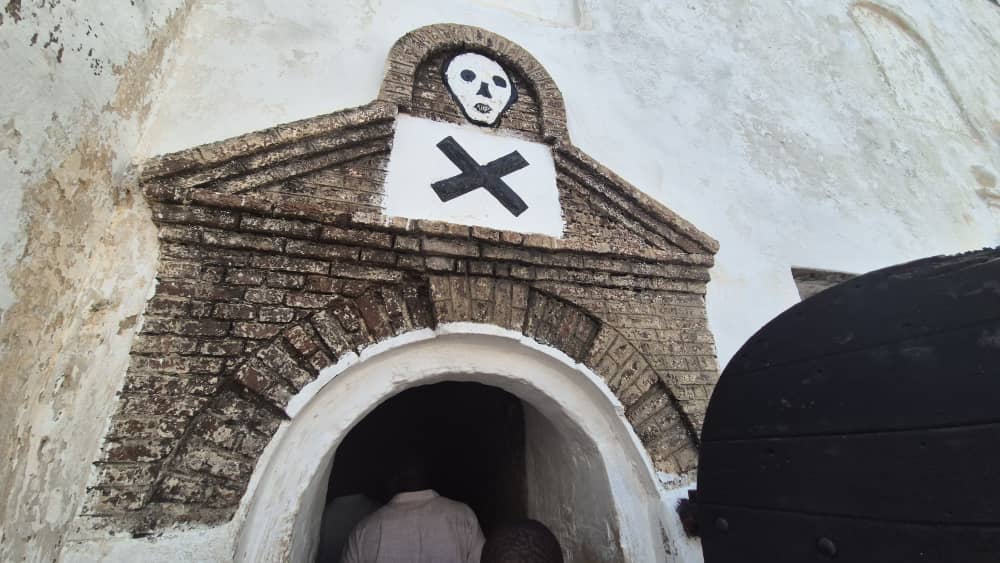
The condemned male dungeon bears a skull and cross marking at its entrance; a silent but unmistakable message that no captive sent there ever emerged alive. Dutch officers reportedly peered through small holes in the doors to check whether the captives had died.
Nearby, rebellious Dutch soldiers were detained briefly in ventilated cells and released within hours — a chilling contrast that underscored the racial hierarchy of cruelty.
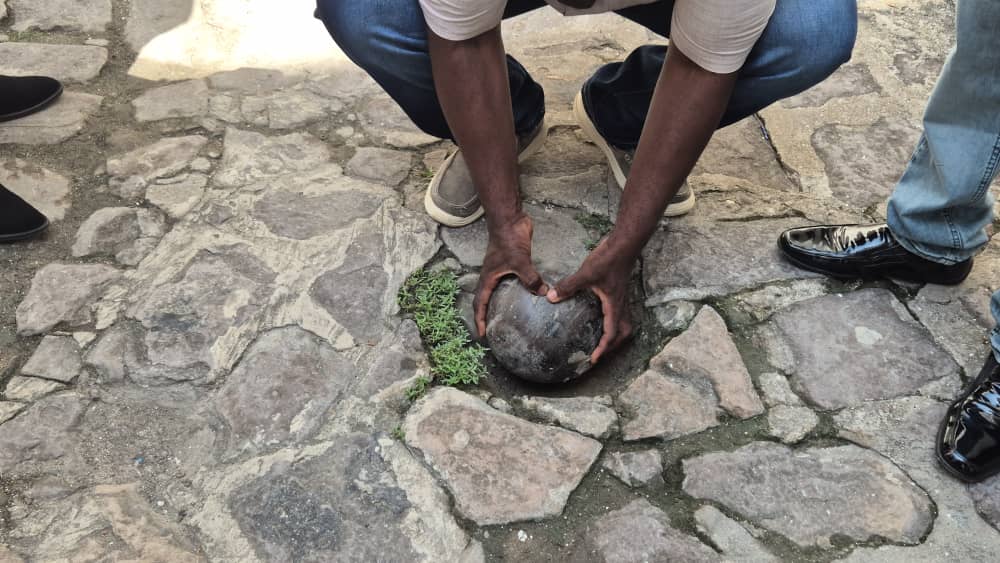
The women’s dungeons tell an even darker story. Over 100 women were crammed into airless chambers for months at a time. Those who resisted sexual abuse by colonial officers were chained to heavy iron balls in the open courtyard, exposed to sun and rain until their spirits broke.
Pregnant women were separated and housed in town. Their children were later taken from them and trained to serve colonial interests. Along Ghana’s coast today, foreign surnames such as Vandyke, Vanderpuye, and others remain living reminders of this forced intimacy and the deep social divisions it sowed among Africans.
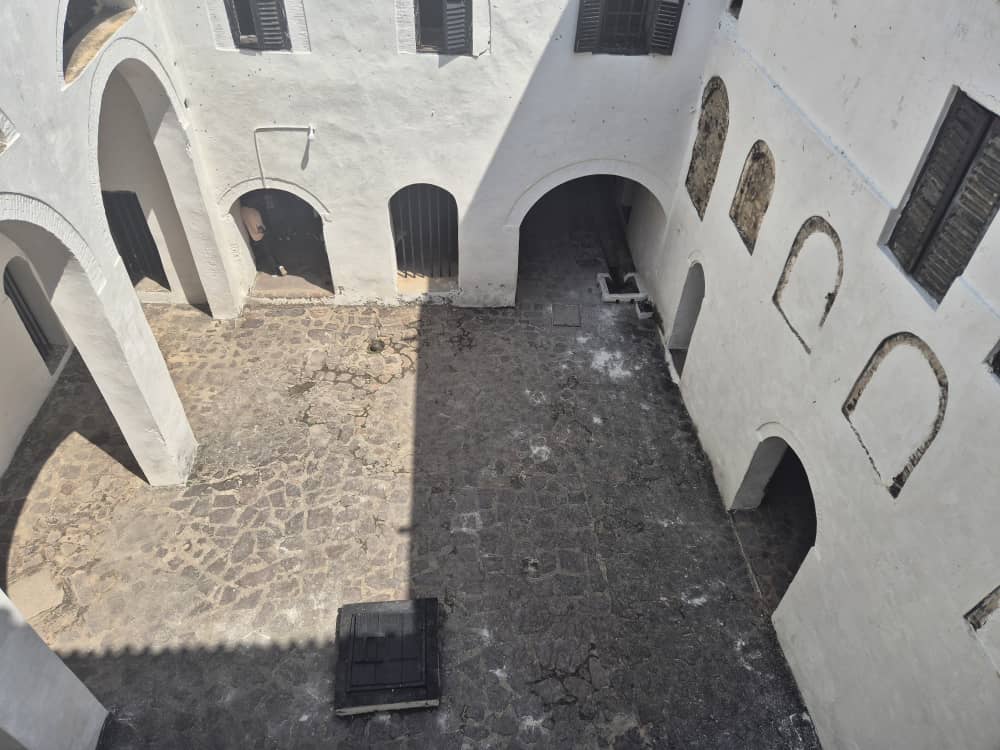
Above the dungeons stood a church where hymns floated over human agony, while nearby lay the governor’s chambers, complete with bedrooms where enslaved women were violated.
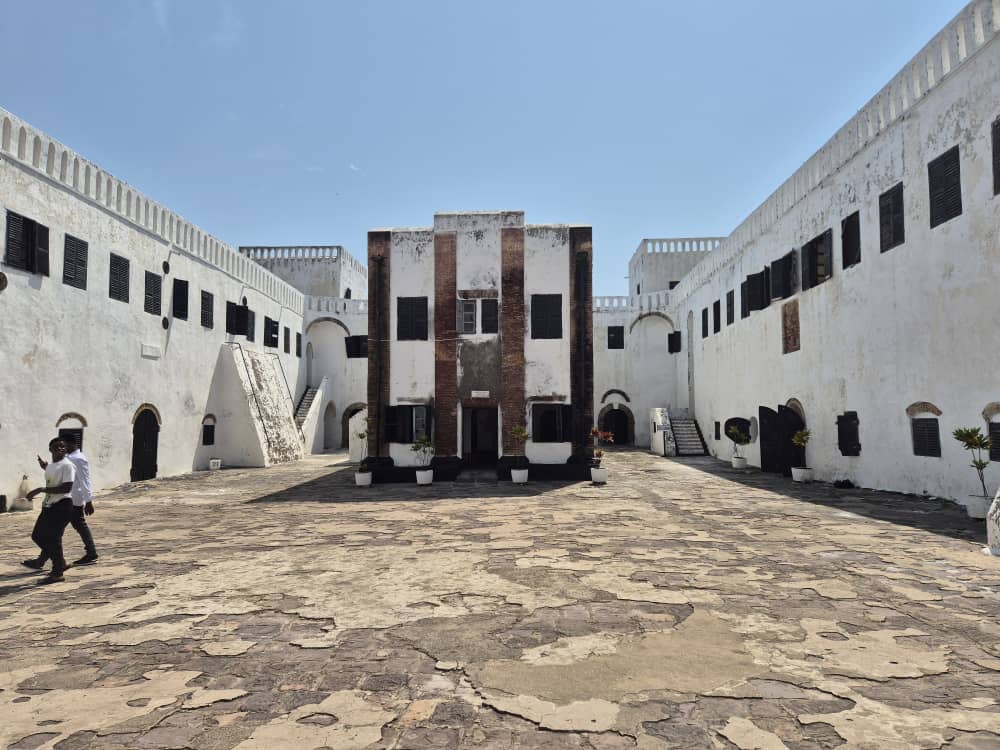
Cannons pointed both towards the sea and the town, signalling domination over external enemies and local populations alike. The walls were thick enough to ensure only two outcomes: survival or death.
From the dungeons, captives were forced through a narrow, low passage leading to the sea, the infamous “Door of No Return”. Once wide during the gold trade era, it was deliberately narrowed when humans became the commodity, restricting movement and tightening control.
Chained together, weakened by starvation and despair, captives shuffled sideways into small boats that ferried them to waiting ships bound for plantations, mines, and cotton fields across the Atlantic.
Today, that passage has been renamed the “Door of Return,” a symbolic act of healing for descendants of the enslaved.
Return of the diaspora
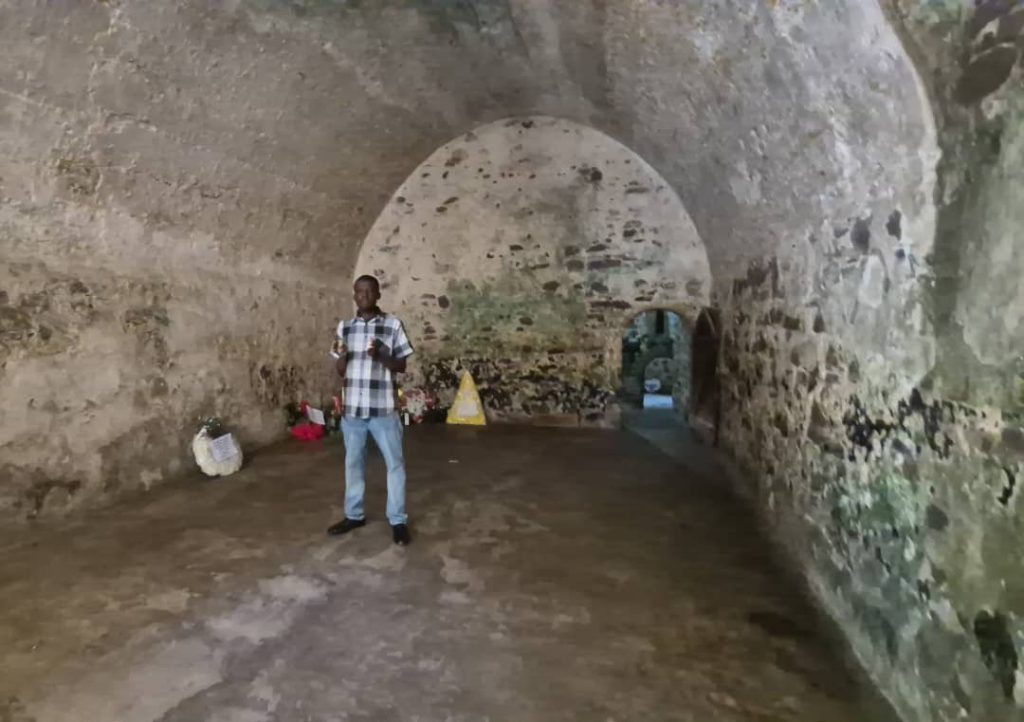
Inside the castle’s transit passages lie bottles of water, flowers, wreaths, and offerings left by members of the African diaspora. Tour guides recount stories of spiritual encounters and healing.
One account tells of a Jamaican man suffering a mild stroke who visited the castle, performed ancestral rites, and reportedly recovered within months. Whether spiritual or psychological, the weight of ancestral memory is undeniable within these walls.
Local tourists call for engagement
Yet, despite its global significance, many Ghanaians remain strangers to this history. The Ghana News Agency observed that while Elmina Castle records high visitor numbers, especially on weekends, the majority are foreigners.
Nana Anamoah Amoasi, an indigene of Elmina, said that although he lived close to the castle, it was his first time entering it.
“Seeing it yourself makes the history real,” he said, adding that Elmina’s churches, festivals, and landmarks could be better packaged to benefit the local economy, pointing to the Edina Bakatue (Blonya) Festival as an underutilised cultural asset.
Mr Frank Annin, a visitor from Accra, stressed that Ghana must take the teaching of history seriously, warning that modern forms of exploitation still exist.
“Every Ghanaian should visit these places from childhood. It helps us understand who we are and plan better for our future,” he said.
Telling our own story
Providing historical context, volunteer tour guide Mr Kwamena Ammisah explained that the Portuguese arrived in the area in 1471 and built the castle in 1482, naming it El Mina – “the mine” – because of the abundant gold resources. The Dutch captured it in 1637, and the British took control in 1872.
Over time, the castle served as a police training school, a secondary school, and now a museum of memory.
For Mr Ammisah, who has volunteered at the castle for over a decade, guiding visitors through pain is a calling.
“This is not just tourism; it is education,” he said. “Until the lion has its own historian, the hunter will always be the hero.”
Life beyond the walls
Beyond remembrance, life continues around the castle. At its forecourt, young men transform discarded sea snail shells into souvenirs, scrubbing them clean and engraving personal messages for visitors.
Nearby, local artists lay paintings on the grass, depicting African identity, resilience, and unity. Boat rides, art sales, and storytelling provide livelihoods rooted in heritage and creativity.
Conclusion
The story of Elmina Castle is not merely one of suffering and loss; it is a call to conscience. The dungeons, the gates, the chains, and the silence engraved into its walls speak across centuries, reminding humanity of the consequences of greed, indifference, and dehumanisation.
Although physical chains no longer bind bodies within Elmina’s walls, modern forms of enslavement persist through ignorance, unemployment, exploitation, inequality, and the marginalisation of young people.
The danger today is no longer ships waiting at the shore but a society that fails to equip its youth with historical awareness, skills, opportunities, and a sense of purpose.
Elmina Castle challenges Ghana to move beyond symbolic remembrance to deliberate action. Education must extend beyond textbooks, allowing young people to encounter history where it occurred, understand the price paid for freedom, and recognise their responsibility to protect it.
By confronting the past honestly and investing deliberately in the present, Ghana can ensure that its youth are not trapped by new forms of bondage but empowered to build a future rooted in dignity, knowledge, and self-determination.
GNA
Edited by Linda Asante Agyei