By Solomon Gumah
Nyankpala (N/R), Sept 1, GNA – The Ghana Chapter of the Open Forum on Agricultural and Biotechnology (OFAB Ghana) has engaged seed producers, farmers and the media in Nyankpala in the Tolon District to update them on the status of Ghana’s first genetically modified (GM) crop, the Pod Borer Resistant (PBR) cowpea.
The PBR cowpea variety, locally called Songotra T, was developed and commercialized in July 2024 by the Council for Scientific and Industrial Research – Savanna Agricultural Research Institute (CSIR–SARI) and its partners.
Mr Enoch Ilori, Project Officer at OFAB Ghana, speaking during the event, said the session formed part of efforts to bridge the knowledge gap between agricultural technologies and members of the general public.
He explained that although the variety had been approved for commercial cultivation, seed producers were still in the process of multiplying seeds for distribution to farmers.
“We brought key stakeholders to meet the experts who developed the seed, and those who understand its nutritional value, to explain how the variety was developed, whether it is safe for consumption, and how it compares with conventional cowpea,” Mr Ilori said.
The event also featured an “eating is believing” session, where participants tasted meals prepared with the PBR cowpea variety to confirm its safety and nutritional qualities.
Mr Kwesi Anderson, Principal Biosafety Officer at the National Biosafety Authority (NBA), assured participants that the PBR cowpea had undergone all required regulatory processes before approval.
“What has been approved is suitable for both cultivation and consumption. We encourage farmers to embrace the variety to increase yields and protect the environment,” he said.
Dr Gloria Adazebra, a Research Scientist and Plant Breeder at CSIR–SARI, noted that the variety was developed to address the devastating effects of the maruca pod borer, a pest that had long troubled cowpea farmers.
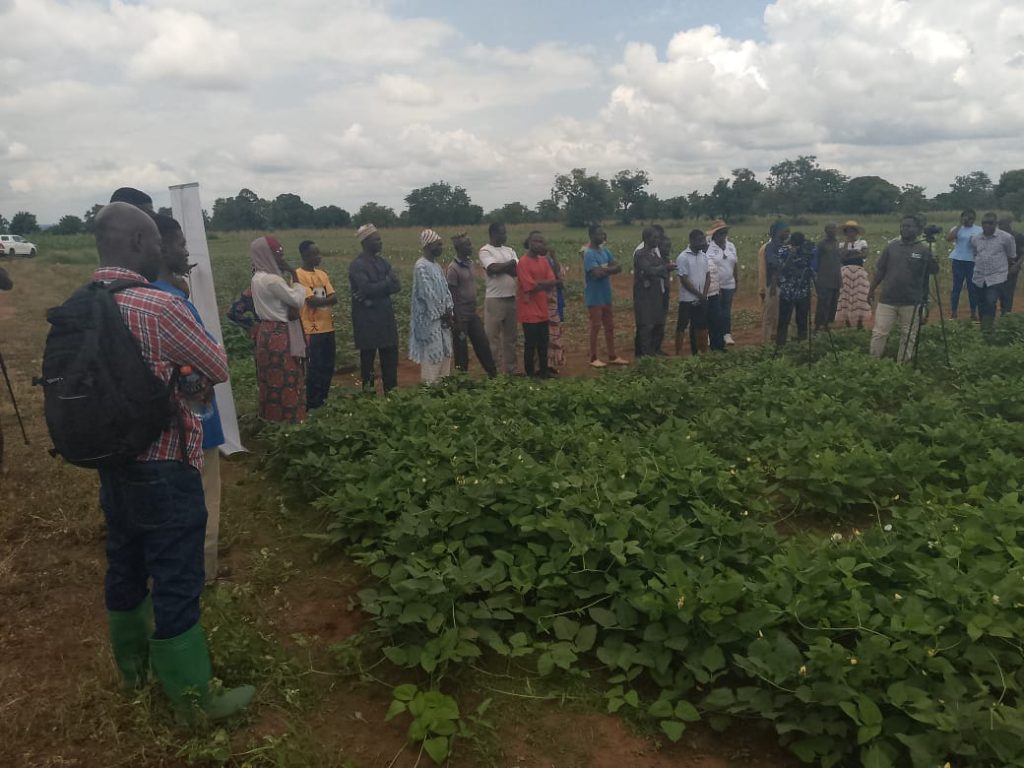
“Previously, farmers sprayed chemicals as many as 8 to 10 times in a season to control the pest. With the PBR cowpea, farmers may spray as low as twice per season, which reduces costs and chemical use,” she explained.
She added that the technology would help farmers increase yields, improve income, and contribute to tackling poverty, malnutrition, and environmental degradation.
Dr Flora Christine Amagloh, Senior Food Scientist at CSIR–SARI, emphasized that the genetic modification had not altered the nutritional composition of cowpea.
“Research has shown that the PBR cowpea provides the same proteins, vitamins, carbohydrates and minerals as the conventional variety. Its taste and texture remain unchanged,” she said.
She observed that given the challenge of protein affordability in Ghana, the PBR cowpea could serve as a valuable and accessible source of nutrition to families and members of public.
The engagement was attended by farmers, seed producers, researchers, and media.
Farmers at the event, commended CSIR -SARI, OFAB Ghana and other relevant stakeholders for introducing the variety and lauded it’s impact on improving their livelihoods.
Madam Abdulai Suweiba, one of the women farmers in Nyankpala who piloted the variety said the yield has been impressive compared to the conventional variety, urging other farmers to embrace it to enhance production.
GNA
Edited by Eric K. Amoh/Christian Akorlie