Tutu (E/R), Sept. 15, GNA – The historic town of Tutu in the Eastern Region is set to become a beacon of cultural preservation and international cooperation with the launch of the “Tutu Wɔ Bi Ka” Heritage Centre.
This is a major milestone of the Unfolding Cultural Heritage (UCH) project.
The UCH project is a stakeholder Ghanaian –Italian partnership that seeks to preserve and reimagine intangible cultural heritage such as oral storytelling, drum language and folklore traditions through art, research and community collaboration.
It is funded by Regione Puglia of Italy and coordinated locally by ArtLife Matters Ghana, with Ramdom and the Library and Museum Centre of Lecce, Italy, as lead partners.
The project connects Ghanaian communities with international stakeholders to ensure heritage remains a living and shared resource for future generations.
In Tutu, the initiative has taken off with strong grassroots participation as artists, researchers and community elders collaborated to collect, archive and reinterpret local traditions.
The Heritage Centre features a multilingual picture book in Akuapem Twi, English and Italian, which tells the tale of a missing hunter, drum language, and a historic map of Tutu.
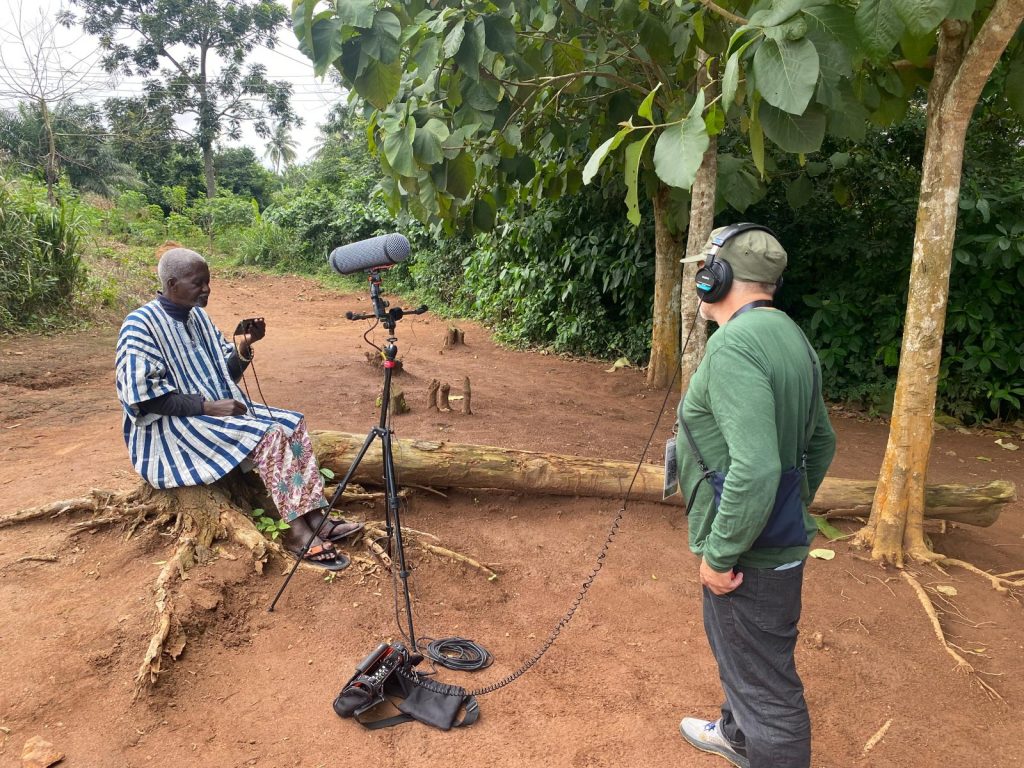
It also houses field recordings and community soundscapes, accessible onsite and online at www.artlifematters.org/uch/tutu, as well as three vibrant murals celebrating Tutu’s cultural identity.
Mr Eric Agyare, Director of ArtLife Matters, said the project demonstrated that heritage was not only found in monuments but also in stories, rhythms and collective memory.
He said the initiative aimed to create a space where “the past converses with the present”, allowing local voices to resonate on the global stage.
Mr Luigi De Luca, Director of the Library and Museum Centre in Lecce, Puglia Region, said the project highlighted how art could serve as a bridge across continents.
He stated that by sharing tools and stories, partners were safeguarding and reimagining culture together with the communities that live it daily.
The new centre is envisioned as a living archive and cultural hub that would host workshops, research exchanges and digital documentation projects to keep Tutu’s traditions dynamic and accessible.
Mr Kizito Amartey, representative of the National Commission on Culture (NCC), described the project “as cultural sustainability that equips future generations with tools to embrace their roots, while engaging with the world”.
Project partners believe the model can be replicated across rural communities in Ghana and beyond, connecting oral histories with digital platforms and bridging generations through storytelling.
Through the UCH initiative, Tutu has emerged as an example of how communities can reimagine tradition not as something frozen in time but as a living and evolving practice that strengthens identity and resilience.
The UCH project is funded under Regional Law 20/2003 – “Partnership for Cooperation” – Public Call 2024 by the Puglia Region, Department of Economic Development, Section for Research and International Relations.
GNA
Edited by Beatrice Asamani Savage