By Eunice Hilda A. Mensah
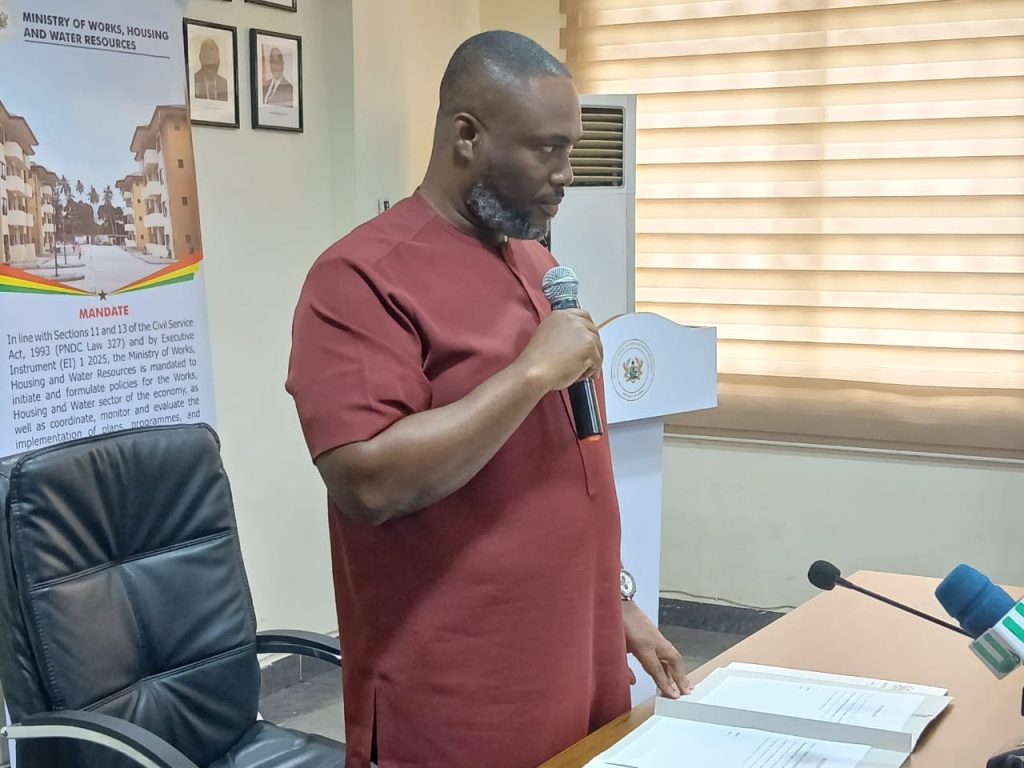
Accra, Aug 1, GNA – Mr Kenneth Gilbert Adjei, the Minister of Works, Housing and Water Resources, has sworn into office Governing Board for the Water Resources Commission.
They are to ensure that water resources are sustainably managed, equitably distributed and wisely protected.
The Board of Directors are from the Volta River Authority, Ghana Water Company, Safe Water Network, Environmental Protection Agency, Ghana Meteorological Agency, the Ghana Irrigation Development Authority, Water Resources Commission and the Ministry.
They are Daasebre Kwebu Ewusi VII, Mr Christian Selorm Kwadwo Siawor, Mr Joseph Yaw Owusu-Ansah, Mr Kwabena Asare Gyasi-Duku, Mr Abdul Noor Wahab, Mr James K. Ashaley, Professor Mike Yaw Osei-Atweneboana, Mr Charles Bredu Badoo, Madam Jewel Esi Kudjawu, Mrs Valerie Fumey Nassah, Mr Seidu Mahama Alidu, Okogyeman Kweku Gyamprah III, Nana Amponsah Kwaa IV and Nana Nteboa Pra IV.
Mr Adjei said water was no longer merely a consumable utility, but a driver of economic growth, an instrument of peace or conflict and a barometer of ecological integrity, hence the establishment of the Commission.
Despite the modest success made, he said Ghana was confronted with more urgent and complex challenges than before, where pressures threatened not just her water security, but also the social fabric and economic prospects of the nation.
The country was operating in a time marked by climate variability, where erratic rainfall, drought and flood had become more intense and frequent.
“From the White Volta in the north to the Densu Basin in the south, flow regimes are no longer predictable. The Volta River Basin Authority reports of a 20 per cent reduction in dry season flows since 2000.
“Illegal mining commonly referred to as galamsey continues to pollute our rivers and threatens our ecosystems and deforestation and poor land management practices continue to degrade our watersheds,” he said.
The Minister said over 60 per cent of Ghana’s river catchments had been subjected to unsustainable land use practices and forest cover loss continued to erode the resilience of the nation’s watersheds, adding:
“The siltation of our dams and reservoirs has reduced their storage capacity by as much as 30 pet cent in the last two decades.”
Mr Adjei explained that inadequate enforcement of regulations, overlapping institutional mandates, limited resources and lack of real-time data did hamper coordinated interventions and further compounded challenges.
Moreover, uncontrolled urban sprawl had led to the encroachment of wetlands, riverbanks and recharge zones, while borehole drilling, largely unregulated was depleting aquifers, with industrial expansion often disregarding effluent control measures.
“The road ahead will demand your unwavering dedication and principled leadership. You have been chosen because you embody the qualities necessary for this great task,” he told the Board.
Mr Adjei admonished the Board to provide strategic oversight that aligned the Commission’s operations with national goals; ensure transparent and accountable governance of the Commission resources; and strengthened institutional coordination across ministries, agencies and communities.
The Board was also to advocate policy reforms and enforcement mechanisms; build capacity within the Commission and among stakeholders to adapt to emerging challenges; and support climate resilience and ecosystem-based adaptation approaches.
The Minister reminded the Board to champion innovation and research that improved water use efficiency and quality; and enhance public confidence through regular stakeholder engagement and communication.
“Your work as Board Members will influence the lives of millions including farmers irrigating their crops, children drinking clean water, industries powering our economy and ecosystems that sustain biodiversity,” he added.
Daasebre Kwebu Ewusi VII, Paramount Chief of Abease Traditional Area and Chairperson for the Board, said the Board would work in humility, with purpose and a deep sense of deed.
He said they would execute their mandate with commitment to regulate and manage the suitable use of Ghana’s water resources guided by science, equity and stewardship.
He said they would do so within four pillars – river basin protection, policy reforms, data-driven decision making, and public awareness on responsible water usage.
As the Board pledged to serve with integrity, diligence and unwavering commitment, he called on all to take responsible actions around water bodies.
GNA
Edited by George-Ramsey Benamba