A GNA Feature by Emmanuel Nyatsikor
Ho, Aug. 28, GNA – Culture is defined as the shared beliefs, customs and social behaviours of a particular group of people that distinguishes them from other groups of people.
It encompasses a wide range of aspects, including language, arts, food, religion and social norms, all of which shape how people interact with each other and the environment.
Culture is learned and not innate, and it provides a framework for understanding and guiding behaviours.
Names of people, their way of dressing, their greetings also show their cultural background.
Understanding culture is crucial for navigating a diverse world, fostering communication and understanding between different groups and appreciating the richness and complexity of human societies.
The Ghanaian culture has been vibrant and celebrated throughout history.
The rich tapestry of the Ghanaian culture is woven for various influences, including indigenous traditions and colonial experiences.
Ghana with a population approximated to be 33 million people with many tribes like Akans, Gas, Ga-Dangbes, Guans, Dagombas, Mamprusis, Gonjas, Ewes, Fantis and Nzemas, just to mention a few.
Each of these tribes is identified by its cultural heritage.
For example, the Ashanti culture, is known for its bright fabrics and exquisite woodworking, the adowa and fontofrom music.
Rev. Samuel Amegboe, Pastor in-charge of Awudome Tsito Area of the Assemblies of God Church in the Ho West District of the Volta Region stated that the mutual cohesion and the realisation of the common objectives of a community is greatly affected if it ignores its cultural norms.
He said there is a difference between culture and tradition saying that culture is God-given, thus natural, whereas tradition is what people do over time and keep holding on to it.
The Minister of the Gospel noted that sometimes tradition goes with religion as we see with the Pharisees, adding, “it is also prevalent today.”
He said a Christian must view culture as natural and not sin.
Rev. Amegboe continued that however, the lines should be carefully and clearly drawn such that the child of God is not misled into certain ungodly traditions perceived as culture.
He said these are subtly embedded in our social activities, particularly at festivals.
Rev. Amegboe stated that culture is not godliness or Christianity, but the Church thrives better within the cultural setting of the people without compromising the Gospel of Christ.
He said it should also be noted that apart from social norms, the Church also has traditions. They should be carefully guarded so that they do not infringe upon the Word of God.
Mama Agbeewornu, Acting Queenmother of Adaklu Kodzobi stated that some Christians and educated people today associated culture with the fetish.
She noted that without culture it will be difficult to differentiate between people.
The Queenmother said: “We should be proud of our cultural heritage instead of shying away from it in the name of Christianity or modernity.”
In her words, “culture is our way of life and our identity.”
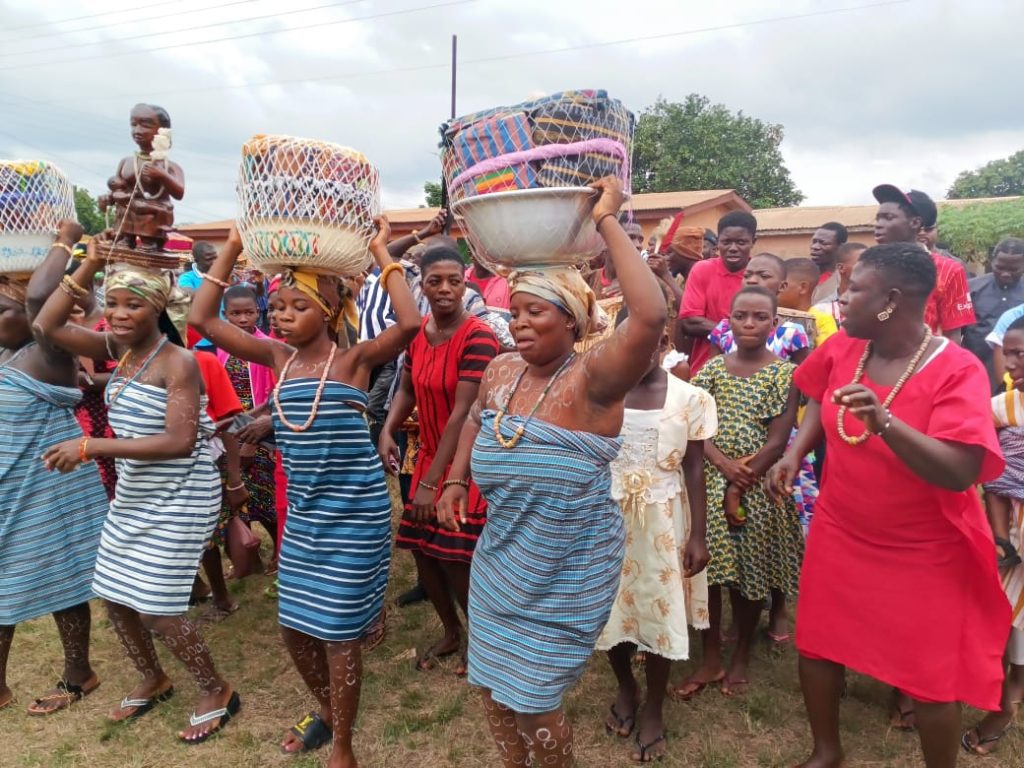
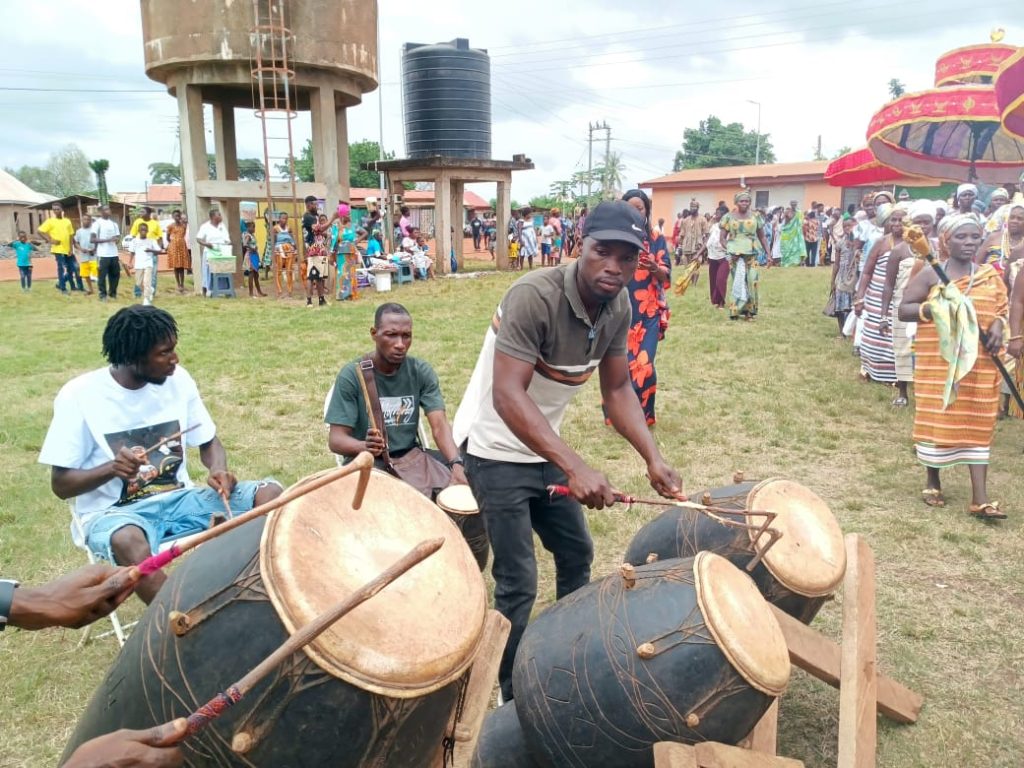
The Ewe culture was on display at Adaklu Kodzobi in the Adaklu District, when six communities from three districts of the Volta rounded up their fourth Goeviwo festival with a grand durbar.
The chiefs, in a retinue were adorned with rich kente, gold ornaments and beads; teenage girls adorned with beads carrying “nutsordidi” (a load of kente cloths and gold ornaments and beads) and various traditional drumming groups like asafo, gabada and borborbor, just to mention a few.
Whilst people from the Diaspora adore the rich Ghanaian culture, modern day Christians and the educated are demonising it.
In the words of Rev. Amegboe and Mama Agbeewornu, culture is not sin, it is not fetish but “our way of life, our identity and our heritage.”
GNA
Edited by Maxwell Awumah/Benjamin Mensah