By Elsie Appiah-Osei
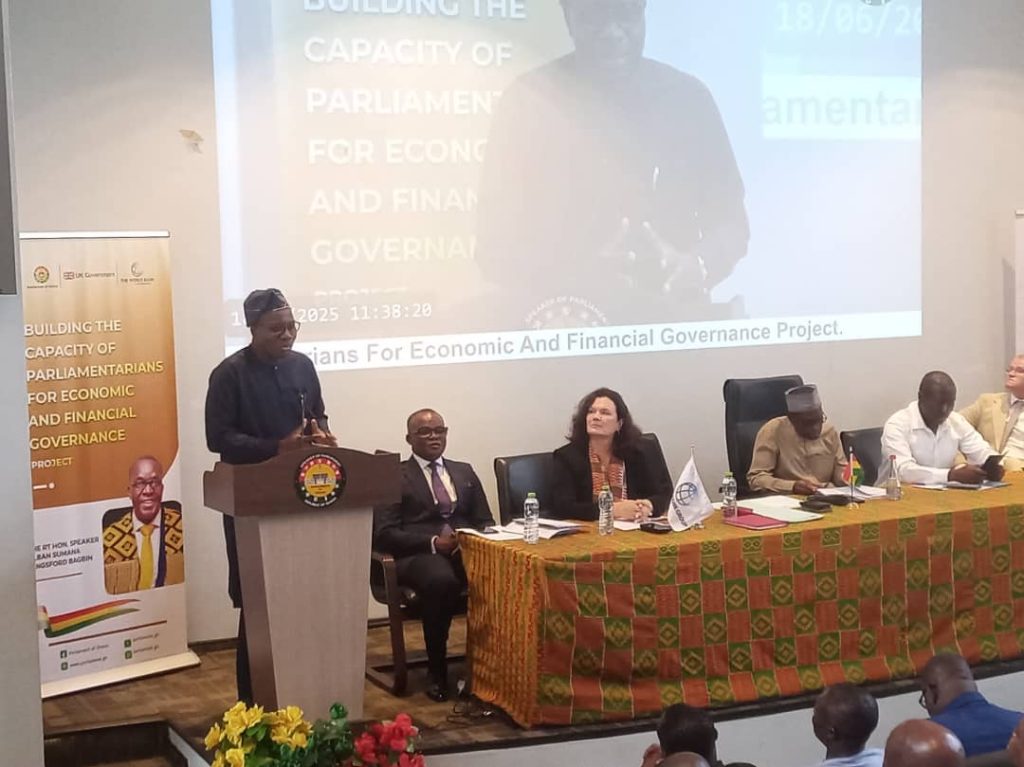
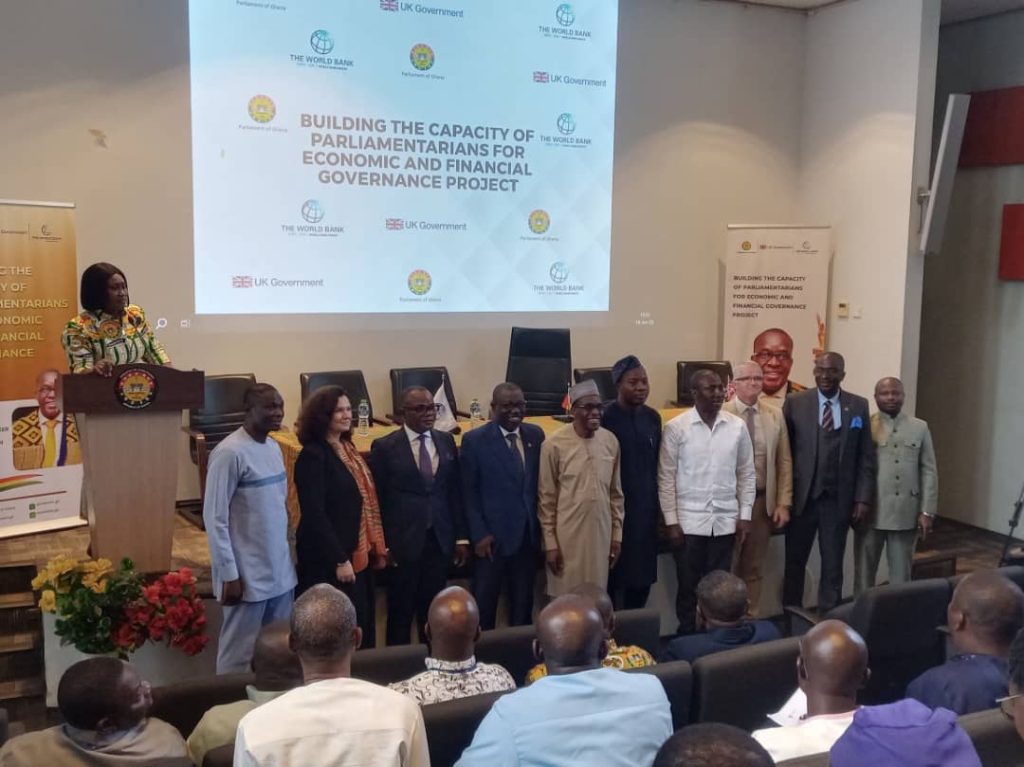
Accra, June 18, GNA – Parliament, in partnership with the UK’s Foreign, Commonwealth and Development Office (FCDO) and the World Bank, has launched a project to enhance its economic and financial governance capacity.
The “Building the Capacity of Parliamentarians for Economic and Financial Governance” project is backed by £800,000 in funding from the FCDO through the World Bank.
The project has, among the key objectives, to strengthen parliamentary oversight to improve fiscal management and deepen understanding of economic policies among Members of Parliament (MPs).
It will also equip parliamentarians, especially new legislators, with necessary skills and knowledge to foster effective governance, accountability, and transparent management of public resources.
“Economic governance that will enhance Parliament’s ability to evaluate allocations and uses of government expenditures and revenues, assess economic and distributional impacts of fiscal decisions, and ensure alignment with medium-term macroeconomic sustainability and inclusive development goals is another aim,” Mr Alban Sumana Kingsford Bagbin, the Speaker of Parliament, said at the launch in Parliament House on Wedneaday.
He said the project marked a significant step towards fostering good governance and sustainable development in Ghana, underscoring the confidence of development partners in the country’s commitment to strengthening its democratic institutions and economic resilience.
He added that the initiative would strengthen parliamentary oversight, improve fiscal management, and deepen understanding of economic policies among MPs over the next 18 months.
Among the project components will be a technical Support to provide assistance on economics, Public Financial Management (PFM), tax policy, and administration to key parliamentary entities; training and Capacity building to develop training materials, toolkits, and handbooks for induction and training of members of relevant parliamentary committees and entities.
“There will be the promotion of peer learning with other legislatures to enhance parliamentary capacity, transparency and accountability to support Parliament’s transparency and accountability efforts, fostering greater awareness and usage of published information by the media and civil society,” Mr Bagbin said.
Madam Michelle Keane, Acting World Bank Division Director, said the World Bank was glad to be part of the important initiative.
She said: “Members of Parliamentary committees require necessary skills and knowledge to enhance their ability to evaluate allocations and uses of government expenditures and revenues.”
Mr Keith McMahon, Chargé d’affaires at the British High Commission, in his address, said the UK firmly believed that only Ghanaians and their elected representatives could drive Ghana’s prosperity.
“We are proud to support both the public and parliamentarians to deliver the best economic outcomes for the country through this new partnership,” he said.
Mr Mahama Ayariga, the Majority Leader, emphasised the importance of parliamentary oversight and accountability, particularly in ensuring that government institutions were transparent and effective in their operations.
He explained that there was a need for equal allocation of resources to committees that focused on delivering basic necessities of life, in addition to those that focused on financial accountability and governance.
Mr Ayariga also emphasised the importance of having an independent media house or television station to promote transparency and accountability, suggesting that this would allow for live coverage of committee hearings and public scrutiny of government institutions.
The Majority Leader and a National Democratic Congress MP for Bawuku Central appreciated the initiative to build the capacity of committees. They noted the potential benefits of partnering with research institutes to provide valuable data, research findings, and expertise to inform committee decisions and oversight activities.
On his part, Osahen, Alexander Afenyo-Markin, Minority Leader, said parliamentary oversight in economic growth and human development, particularly in the implementation, monitoring, and post-expenditure phases of the budget process, was important.
He said such pillars highlighted the benefits of the project, which included deepening members’ technical understanding of fiscal discipline, budgetary efficiency, and public expenditure accountability.
The Minority Leader noted that the project builds on existing initiatives, such as the work of committees like the Public Accounts Committee, Finance Committee, and Budget Committee, which had consistently challenged irregularities and contributed to key financial and economic reforms.
He, therefore, emphasized the need for parliamentarians to be well-equipped to analyze budgets and hold the executive accountable, particularly in the context of public debt reduction and fiscal reform.
Osahen Afenyo-Markin expressed full support for the project and encouraged his colleagues to participate in trainings and workshops.
He thanked the World Bank Group, UK FCDO, and other partners for their commitment to the project.
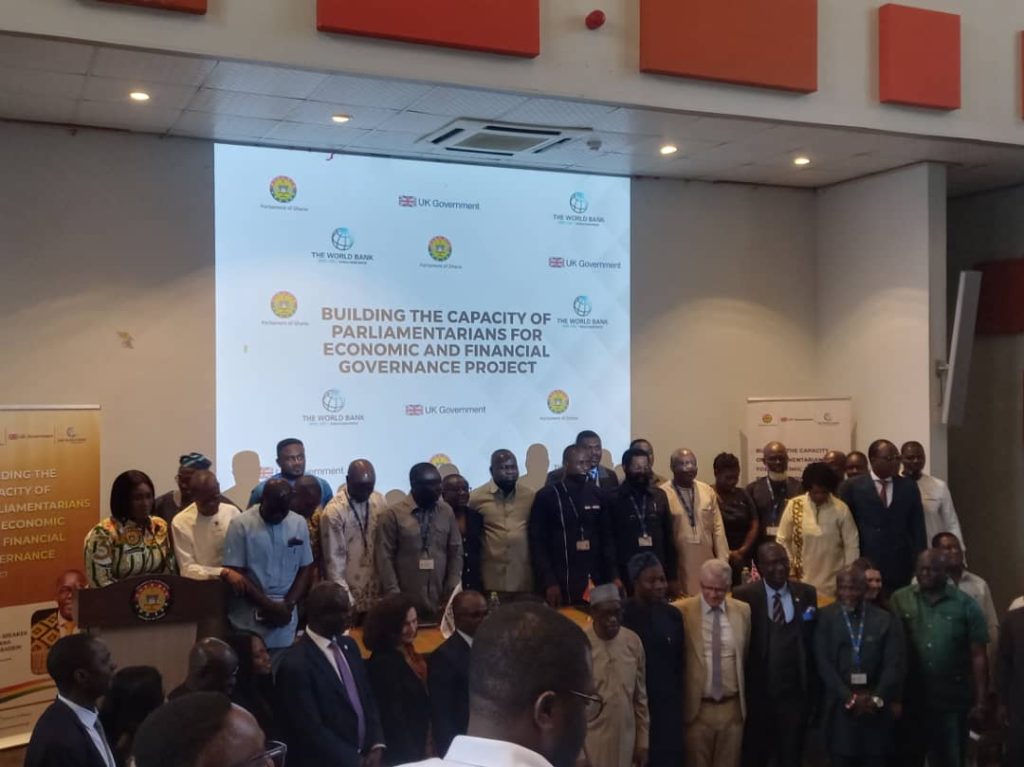
The Committees to benefit from this support include the Finance, Budget, Economy and Development, Assurances, and Public Accounts.
Support from the project is also envisioned for the newly created Office for Parliamentary Analysis and the Citizens’ Bureau.
GNA
Edited by Christian Akorlie