By Beatrice Asamani Savage, GNA Special Correspondent, Dunhuang
Dunhuang, China, May 30, GNA – China’s Vice President Han Zheng, Friday opened the Fourth Dialogue on Exchanges and Mutual Learning Among Civilisations, with speakers urging nations to adopt the Global Learning Initiative towards solving today’s dire challenges and leapfrogging sustainable development.
They noted that raging wars and conflicts, health problems, global warming, global trade disagreements, and migration crises, among others, could be resolved with shared responsibility, mutual learning and respect.
Mutual learning among civilisations was also crucial for promoting peace, innovation, and inclusive development across the globe.
The three-day gathering, underway in Dunhuang in China’s Gansu Province, is being held on the theme: “Carrying Forward the Spirit of the Silk Road and Gathering Momentum for the Implementation of the Global Civilisation Initiative.”
It has drawn more than 300 participants, including researchers, academics, media professionals, sinologists, writers, development experts, students, and scientists from around the world.
The event opened with vibrant cultural performances and compelling video stories, illustrating how China’s ancient Silk Road values – such as openness, inclusivity, and cooperation – can serve as a guiding light for global development in the 21st century.
In his keynote speech, Vice President Han Zheng said Dunhuang symbolised centuries of dialogue and integration, and called for renewed global commitment to the values that powered the ancient Silk Road.
He emphasised the foundational role that the principles of peace and cooperation, openness and tolerance, mutual learning and mutual benefit, played in the continued exchange between the East and West.
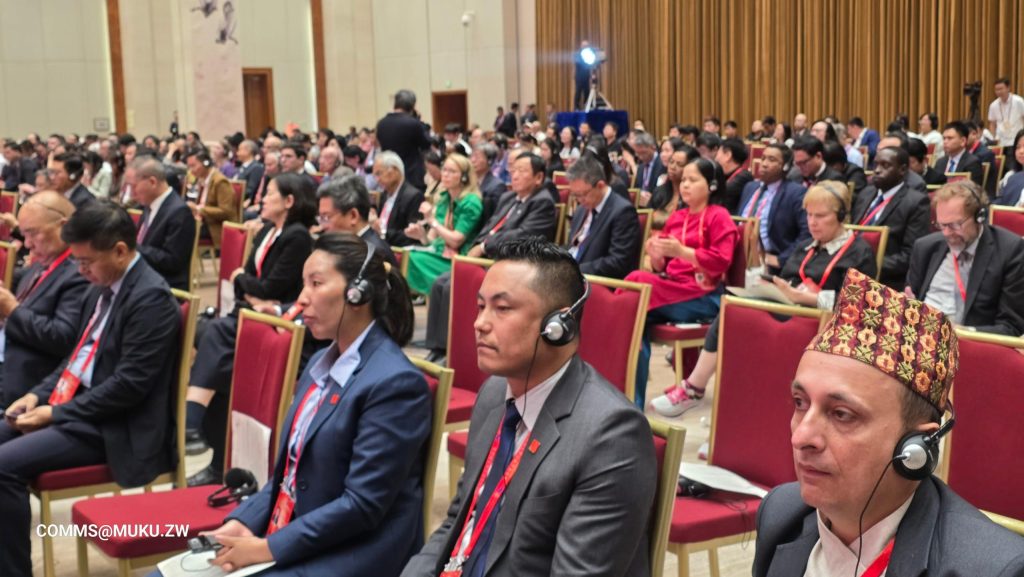
Vice President Han urged the global community to identify shared human values as a unifying force, and to draw strength from each other’s cultures in responding to common challenges.
He reminded delegates that in March 2023, President Xi Jinping launched the Global Civilisation Initiative, which called on nations to jointly uphold respect for the diversity of world civilisations, carry forward the common values of humanity, prioritise cultural inheritance and innovation, and deepen international cultural exchanges and cooperation.
“Civilisations must coexist, grow together, and collectively enrich global development,” he said.
Every civilisation, he added, had a unique value and none was superior or inferior to another.
Vice President Han called on countries to engage in equal, inclusive dialogue that enhanced cooperation.
He encouraged countries to focus on the innovative transformation of their traditional cultures within the context of modernisation, stressing that tradition and progress must go hand in hand.
He noted China’s role as a promoter and practitioner of cultural dialogue, citing the country’s proposal for an International Day for Dialogue on Civilisations as a sign of its dedication to deepening mutual understanding.
The Vice President said China would continue standing on the right side of history and humanity’s progress, working with other countries to actively implement the Global Civilisation Initiative.
He stressed the country’s determination to advance the Belt and Road Initiative and contribute Chinese wisdom to global civilisation in a spirit of mutual benefit and win-win cooperation.
He conveyed President Xi Jinping’s unwavering commitment to sharing China’s experience and development outcomes in partnership with other nations.
President Xi, through Han Zheng’s speech, called on world leaders to unite around the Global Civilisation Initiative, stating that it offered a new vision for global engagement based on respect, shared prosperity, and cultural harmony.
He said the Dialogue presented an important opportunity to consolidate consensus and inspire collective strength for the revival of global civilisation.
He urged participants to seize the moment to deepen mutual understanding and work together for a more harmonious world.
The Speaker of the National Assembly of Botswana, Dithapelo Keorapetsa, commended China for supporting countries to address their development needs.
Botswana, he said, had received significant support from China to improve its infrastructure and build the capacity of its people.
“I would like to reiterate that the Silk Road spirit lives on through partnerships like ours, proving that when civilisations engage with openness and mutual respect, both prosper,” he stated.
Professor Martin Woesler, a German Sinologist, urged the utilisation of Artificial Intelligence to foster mutual learning and share values of civilisations.
GNA
Agnes Boye-Doe