By Bajin D. Pobia
Olli, (UWR), March 05, GNA – The UNDP has presented assorted livelihood enhancement equipment to selected youth and women groups in the Upper West Region to help reduce poverty, sustain social stability, and inclusive growth essential for building resilience and peaceful co-existence in the communities.
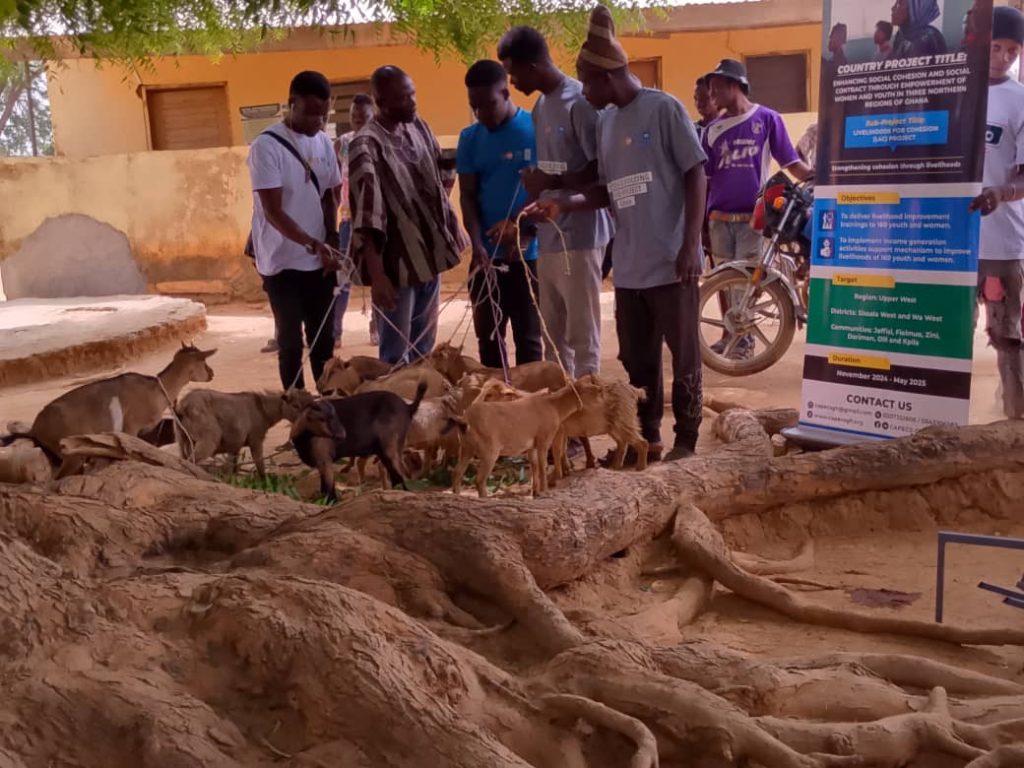
The equipment, funded by the UN Peacebuilding Fund, included sewing and tailoring supplies, hairdressing and beautification equipment, weaving materials and livestock for breeding, vocational tools and equipment, essential safety gears, machinery for welding, drilling, and spraying, hand tools and kitchen equipment were provided to 160 youth and women to enhance their skills and support income generating activities.
Dr. Edward Ampratwum, UNDP Ghana Head of Inclusive Growth and Accountable Governance, presenting some of the items to the beneficiaries at Olli and Kpila in the Wa West District, said the UNDP recognized the critical role women and the youth play in promoting peacebuilding, social cohesion, and community resilience.
He said the initiative was to equip the beneficiaries with the necessary resources to enhance their productivity, promote self-sufficiency, and improve their economic opportunities and empowerments contributing to the overall wellbeing and resilience of their communities.
He said the tool provided should be considered not just a set of tools but a pathway to economic independence, dignity and long-term prosperity as the UNDP believed that sustainable development was possible when individuals and communities had access to the resources, skills, and opportunities they needed to thrive.
The UNDP Ghana Head said more than 850 women and youth in the Upper West, Upper East, and North East Regions would benefit from the intervention and would undergo capacity building and skills training to support them in establishing and improving their livelihoods.
Dr Ampratwum noted that active and meaningful participation of the youth and women in local governance decision-making, conflict prevention, and peace-building processes, would help build their resilience levels to advocate for their rights and opportunities to enhance livelihoods, as well as create a stronger foundation for inclusive governance, social cohesion, and empowerment contracts.
That would also help prevent and address the root causes of localised and spillover conflicts, as well as vulnerabilities to violent extremism in Northern Ghana.
He said UNDP’s broader strategy was to promote inclusive governance, social cohesion, and economic empowerment under the UN Peacebuilding Fund Project through a partnership with local authorities, civil society organisations, and government institutions to support skills development and ensure sustainable impact.
He urged the beneficiaries to make the tools an investment in their lives for the future and a stepping stone towards greater economic opportunities, noting: “Your dedication and hard work will determine the success of this intervention, and I encourage you to expand your businesses, improve productivity and contribute to the development of your communities”.
Mr Clifford Tampuori, the Upper West Regional Executive Secretary of the National Peace Council, appealed to the community leaders to always use the appropriate channels and institutions to address all disputes to maintain peace for development.
He said issues of chieftaincy, land, and religious disputes should be handled with maximum care to give peace a chance to prevail and to attract investors into the communities to invest and address the unemployment challenges facing the youth.
GNA