By Ewoenam Kpodo
Ho, Nov 20, GNA- The Volta Region, which is home to 1.7 million people, representing 5.2 per cent of Ghana’s population and the seventh largest region of the 16 political administrative regions of Ghana, is losing its people.
The Volta Regions recorded the largest net out-migration of any region in the 2021 census: minus 435,000 people, a District Multidimensional Poverty Index (MPI) and the District Administrative Data report show that the Volta Region e, but it is not losing ground.
Mr. Louis Toboh, the Volta Regional Statistician, painted the striking picture in a regional
The Region recorded the largest net out-migration of any region in the 2021 census: minus 435,000 people.
At the same time, the region is an informal import gateway, handling GH¢6.1 billion — about a third of all informal imports into Ghana.
On the economy, the presentation showed 132,144 businesses counted in Volta Region in the 2024 Integrated Business Establishment Survey (IBES I), representing 5.0 per cent of Ghana’s 2.64 million businesses. Of these, 74 per cent operated in structures, 24 per cent in open spaces at fixed locations, and two per cent were mobile. Almost one in four establishments – 24.9 per cent were household-based, above the national rate of 19.2 per cent.
Digital finance was used by 36.3 per cent of establishments in the region, close to the national 37.2 per cent and the fourth highest in the country, while 16.9 per cent were green establishments, against a national 20.0 per cent.
Inflation averaged 14.1 per cent in the region in 2025, below the national 14.6 per cent, and fell to 9.1 per cent by December. Local items averaged 15.9 per cent and imported items 12.1 per cent. With 4.5 per cent of the national inflation basket, Volta contributed 4.3 per cent of national inflation.
Governance presented a mixed picture. In the Governance Series Wave 3 (July–December 2025), 19.9 per cent of people in Volta said they gave a gift to a public official – the seventh highest in the country and above the national 18.0 per cent. Nationally, gift-giving rose from 14.3 per cent in Wave 2 to 18.0 per cent in Wave 3, while requests from officials rose from 50.9 per cent to 69.4 per cent.
Yet the Volta Region also felt more heard than most regions. Only 14.4 per cent said they had no say at all in governance, against 30.5 per cent nationally, and 14.7 per cent said they had no influence at all, against 33.9 per cent nationally. About 21.9 per cent said citizens had a great deal of say.
The biggest, good news was on poverty. Multidimensional poverty fell in every district in Volta since 2021, by 14.8 points on average. The gap between the highest and lowest district narrowed sharply – from 26.8 points in 2021 to 7.7 points in 2025.
Health remained the largest dimension of poverty, contributing 36.2 per cent of Volta’s poverty, though below the national 40.9 per cent. At indicator level, lack of health insurance was the single largest contributor at 32.6 per cent, followed by toilet facilities at 13.4 per cent.
The Volta Region also shone on data quality. Its administrative data overall completion was 89.5 per cent, against a national 68.4 per cent, ranking 2nd of 16 regions. The region submitted 124 submissions covering 331,062 records from 2015 to 2025. Repeat submissions were only 0.11 per cent, against 0.58 per cent nationally, and invalid records 6.29 per cent, close to the national 6.95 per cent.
Its weakest areas were Births at 75 per cent completion, Road Accidents at 76 per cent, and Deaths at 78 per cent – though all were still well above national levels. Fifteen districts were rated Strong (80 per cent or more), three Moderate, and none Low.
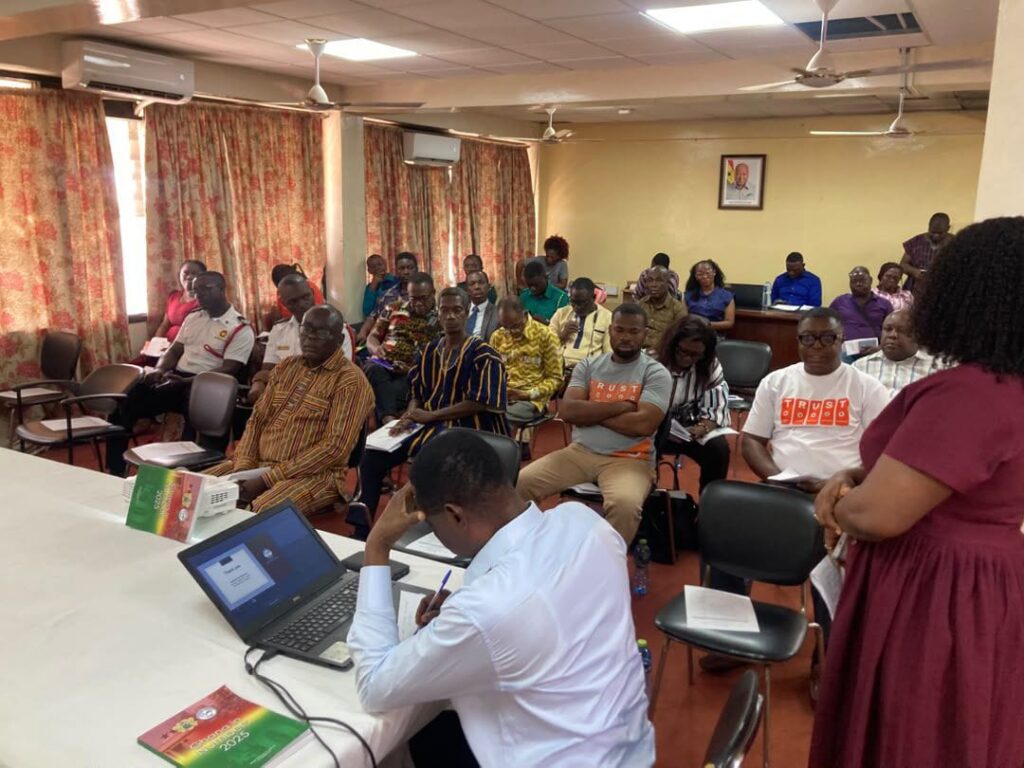
Mr James Gunu, the Volta Regional Minister, in his closing remarks delivered by Mr Mohammed Avona Akape, Chief Director, Volta Regional Coordinating Council said discussions at the event, held under the theme: “Leveraging Quality Statistics for Sustainable Water Supply and Safe Sanitation Systems in Africa” highlighted the critical role of quality statistics in addressing the region’s development challenges, particularly in sustainable water and safe sanitation.
He said the real value of statistics lay not merely in collecting and presenting figures, but in translating information into practical decisions and actions to improve the lives of citizens, thus, challenged all stakeholders to strengthen their data management systems to ensure that reliable statistical information informed their development plans, among others.
Some participants called for measures to check the drift of people from Volta, saying the region was losing its manpower to other regions.
GNA
Edited by Maxwell Awumah / Christopher Arko/Benjamin Mensah
Reporter: Ewoenam Kpodo, GNA
Reporter’s email address: [email protected]