By Anthony Adongo Apubeo, GNA
Gundoug (U/E), Nov. 4, GNA – Trax Ghana and the Beela Project have begun empowering farmers in the Nabdam District of the Upper East Region to preserve indigenous seeds and strengthen community seed systems to improve agricultural resilience to climate change.
The initiative dubbed “Strengthening Local and Indigenous Food Systems in the Upper East and North East Regions of Ghana,” and funded by the 11th Hour Project, seeks to reduce farmers’ vulnerability to seed shortages and dependence on externally sourced varieties that may not perform well under local soil and climatic conditions.
Under the project, community members have been trained as Community Seed Producers (CSPs), Community Seed Custodians, and Seed Collection Teams, while community seed banks are being established to conserve indigenous crop varieties and improve access to quality planting materials.
The intervention adopts a community-driven approach that enables farmers to produce, preserve, exchange and access locally adapted seeds to support sustainable agricultural production amid increasingly unpredictable weather conditions.
This came to light during a stakeholder engagement at Gundoug, a community in the Nabdam District, organised by Trax Ghana and the Beela Project to solicit technical inputs from agricultural technocrats and other stakeholders on the implementation of the community seed systems intervention.
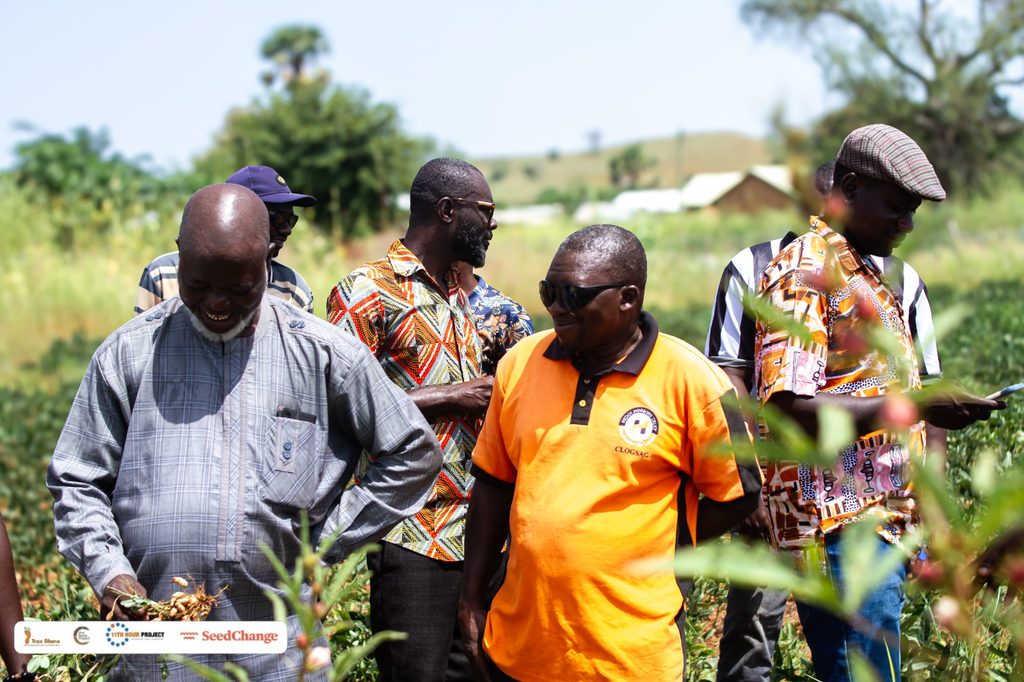
The engagement brought together officials of the Ministry of Food and Agriculture (MoFA), Agricultural Extension Agents, Assembly Members, CSPs, Community Seed Custodians, Seed Collection Teams and other stakeholders to assess progress and identify ways to strengthen the initiative.
Speaking at the engagement, Alhaji Zakaria Fuseini, Upper East Regional Director of the Department of Agriculture, expressed concern about the suitability of some externally sourced seed varieties for the soil and climatic conditions of Northern Ghana.
He said farmers risked poor germination and disappointing harvests when seeds that were not adapted to their local environments were introduced.
He underscored the need to strengthen community seed systems to improve agricultural productivity and equip farmers to cope with changing weather patterns.
He challenged the Community Seed Producers at Gundoug to transform their indigenous seed system into a model for climate-resilient farming that could be replicated across the five regions of Northern Ghana.
Mr Rasheed Imoro, Nabdam District Director of the Department of Agriculture, said indigenous seeds, because of their adaptation to local conditions, remained valuable resources in the face of climate change.
He said strengthening community seed systems would help address farmers’ planting-material needs by reviving traditional practices through which communities saved, preserved and shared seeds across farming seasons.
Ms Abena Offeh-Gyimah, Director of the Beela Project, expressed concern about the decline and possible disappearance of several indigenous seed varieties, adding that the project was building the capacity of smallholder farmers, promoting seed exchanges and encouraging the sharing of indigenous farming knowledge to safeguard local food systems.
She explained that the project focused on four thematic areas: seed security assessments and seed fairs; community seed banking and exchanges; agroecology for food, nutrition and income security; and farmer-led advocacy on seed policies and farmers’ rights.
Mr Vincent Subbey, Director of Trax Ghana, said the partnership sought to improve farmers’ access to quality local seeds while conserving biodiversity, protecting community seed systems, promoting seed sovereignty and encouraging agroecological farming.
Mr Robert Anaab Atiim, Field Coordinator and Technical Support Officer for Trax Ghana and the Beela Project, said the intervention had established and strengthened clusters of Community Seed Producers, Community Seed Custodians and community seed collection teams to support an organised, community-driven seed system.
He said the structures were intended to strengthen local capacity for seed production, collection, conservation and distribution, enabling communities to play a central role in safeguarding their planting materials.
Mr Atiim disclosed that the Gundoug Community Seed Bank was being piloted, with plans to stock indigenous and locally adapted maize, sorghum, cowpea and vegetable varieties by the close of the current farming season.
GNA
Edited by Caesar Abagali/Audrey Dekalu
Reporter: Anthony Adongo Apubeo
Email: [email protected]