A GNA Feature by Eric Appah Marfo
Accra, Oct. 5, GNA —The introduction of Ghana’s automated traffic enforcement system, TRAFFITECH-GH, has renewed debate about road safety and the responsibilities of motorists and government, with calls for stricter compliance accompanied by concerns about inadequate road infrastructure.
While the Ghana Police Service insists that motorists must take responsibility for their conduct, transport operators and other stakeholders argue that effective enforcement must go hand in hand with the provision and maintenance of essential road facilities.
The debate raises a fundamental question: can motorists be expected to comply fully with traffic regulations when some infrastructure needed to support safe road use remains inadequate?
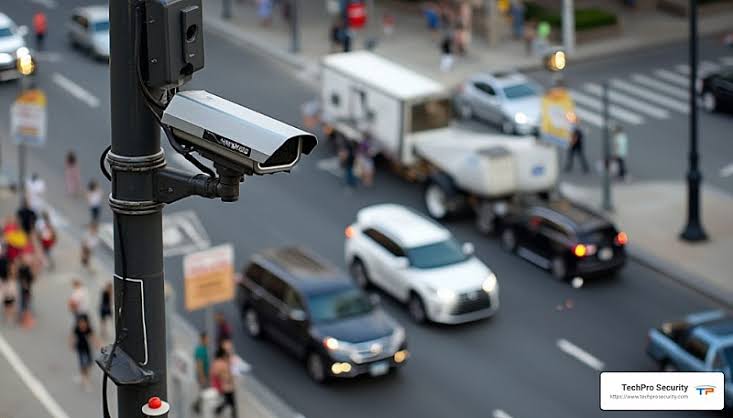
TRAFFITECH-GH, which became operational on November 1, 2026, uses fixed and mobile digital equipment, including cameras, to detect traffic violations and facilitate the issuance of electronic notices to vehicle owners.
The system is intended to strengthen compliance, deter dangerous driving and reduce road crashes.
On its first day of deployment, the Motor Traffic and Transport Department (MTTD) recorded motorists travelling above 130 kilometres per hour on roads with posted speed limits of 50 kilometres per hour.
Assistant Commissioner of Police (ACP) Alexander Kwaku Obeng, Director of Education, Research and Training at the MTTD and Project Coordinator of TRAFFITECH-GH, said the offences were recorded at locations including Boundary Road, School Junction, Mallam and Kasoa.
He said motorists captured by the system would receive electronic notices containing details of the alleged offences and evidence, with two weeks to pay the prescribed fines or contest the notices.
However, the rollout has also brought longstanding concerns about road infrastructure into sharper focus.
Motorists and transport operators have raised concerns about missing speed-limit signs, faulty traffic lights, faded road markings, inadequate pedestrian facilities and the occupation of designated bus stops by traders.
These concerns prompted five transport unions to threaten a withdrawal of services on November 4, arguing that drivers are expected to comply with traffic regulations without adequate attention to conditions affecting their work.
The planned action was suspended following discussions with government representatives, who assured the unions that measures would be taken to address roadside trading, inadequate signage and public education.
The Accra Metropolitan Assembly also gave traders occupying bus stops in the Metropolis 48 hours to vacate ahead of an enforcement exercise.
The National Road Safety Authority (NRSA) has also acknowledged the importance of infrastructure to the success of the initiative.
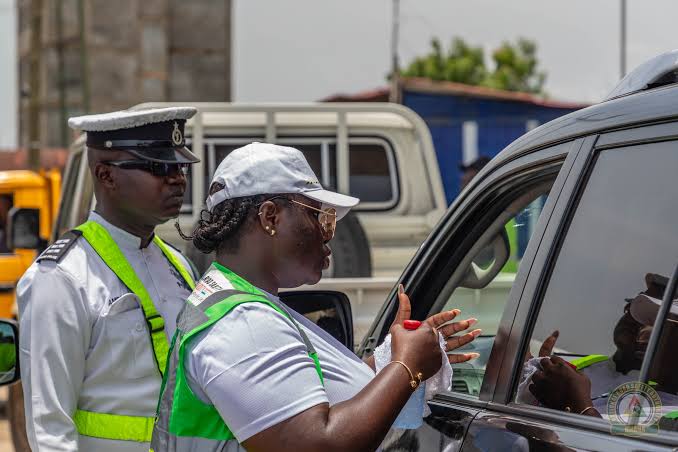
On November 3, the Authority directed the Ghana Highway Authority and the Department of Urban Roads to repair faulty traffic lights, replace missing or damaged road signs and restore faded road markings.
It warned that infrastructure deficiencies could undermine the effectiveness of automated enforcement and pose risks to road users.
Mr Abraham Amaliba, NRSA’s Director-General, subsequently indicated that cameras would initially operate only on roads where speed limits were clearly displayed. Roads without the necessary signage would be excluded until the infrastructure was provided.
The position raises an important issue in relation to comments by ACP Obeng that motorists should understand speed limits based on the nature of the road environment, even where signs are absent.
While the MTTD maintains that drivers have a responsibility to recognise built-up areas and adjust their speed, the NRSA has emphasised visible speed-limit signs as a condition for camera deployment.
The two positions make it necessary for the authorities to clearly explain the distinction between a driver’s general duty to drive safely and the requirements for automated enforcement.
Shared Responsibility
Concerns about infrastructure, however, should not be interpreted as a justification for motorists to disregard traffic regulations.
Speeding, dangerous overtaking and other forms of reckless driving remain threats to road safety, irrespective of the condition of the road.
The first-day recordings under TRAFFITECH-GH, particularly cases involving speeds exceeding twice the posted limit, demonstrate why enforcement remains necessary.
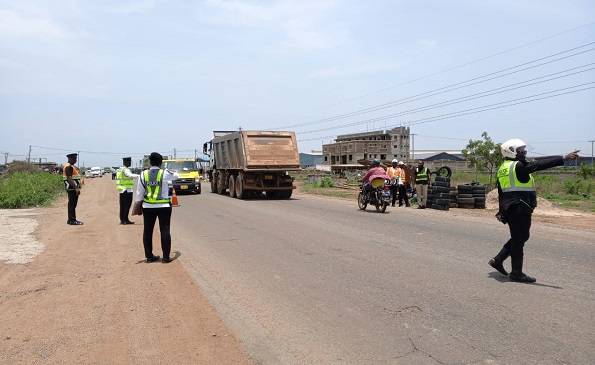
Motorists must observe speed limits, respect traffic signals, use designated stopping points and exercise caution around pedestrians and other vulnerable road users.
Commercial drivers also have a responsibility not to turn infrastructure challenges into excuses for unsafe driving or unauthorised stopping.
Similarly, traders must respect spaces designated for vehicles and pedestrians, while local authorities must ensure that public spaces are properly managed.
The responsibility of government agencies is equally important. Providing and maintaining road signs, traffic lights, road markings and pedestrian facilities are essential to creating an environment in which road users can comply with regulations.
The Ministry of Transport has also undertaken public education on the Road Traffic (Amendment) Act, 2025 (Act 1153), and the Road Traffic Regulations, 2026 (L.I. 2519), which provide the legal framework for reforms, including automated enforcement.
The Way Forward
For TRAFFITECH-GH to achieve its intended purpose, enforcement must be accompanied by sustained investment in road infrastructure and public education.
The Ghana Highway Authority and Department of Urban Roads must respond to the NRSA’s directive with clear timelines for addressing identified deficiencies. The Police and NRSA must also communicate which roads qualify for automated enforcement and explain how motorists can challenge disputed notices.
Local assemblies, meanwhile, must sustain efforts to reclaim bus stops and pedestrian walkways from unauthorised occupants, while working with transport operators and traders to address the challenges surrounding the use of public spaces.
Beyond enforcement and infrastructure, the NRSA should periodically assess the system’s impact using reliable road-safety data.
The number of motorists captured or penalties issued should not be the principal measure of success. Changes in crashes, injuries and fatalities, particularly along monitored corridors, would provide a more meaningful indication of whether the intervention is improving road safety.
Ultimately, the debate should not be reduced to a contest between motorists and government.
Motorists cannot use infrastructure deficiencies as a blanket justification for disregarding traffic regulations, just as government cannot demand compliance while neglecting its responsibility to provide and maintain essential road facilities.
The success of TRAFFITECH-GH will depend not simply on how many erring motorists it catches, but on whether it helps make Ghana’s roads safer for everyone.
GNA
Reporter: Eric Appah Marfo
Email: [email protected]*
Edited by Samuel Osei-Frempong