By Edward Dankwah
Accra, Nov. 20, GNA – Madam Muniratu Issifu, Country Director of Plan International Ghana, has reaffirmed the organisation’s commitment to preventing violence against children, saying prevention must go beyond policy statements to become a national promise to protect every child.
She said protecting children required collective efforts to strengthen child protection systems, enforce existing laws, and ensure that every child, irrespective of their background or location, enjoyed their rights.
“We believe that prevention is not just a policy; it is a promise we make to every child. Protection is not a favour; it is a right. And participation is not a privilege; it is a necessity,” she added.
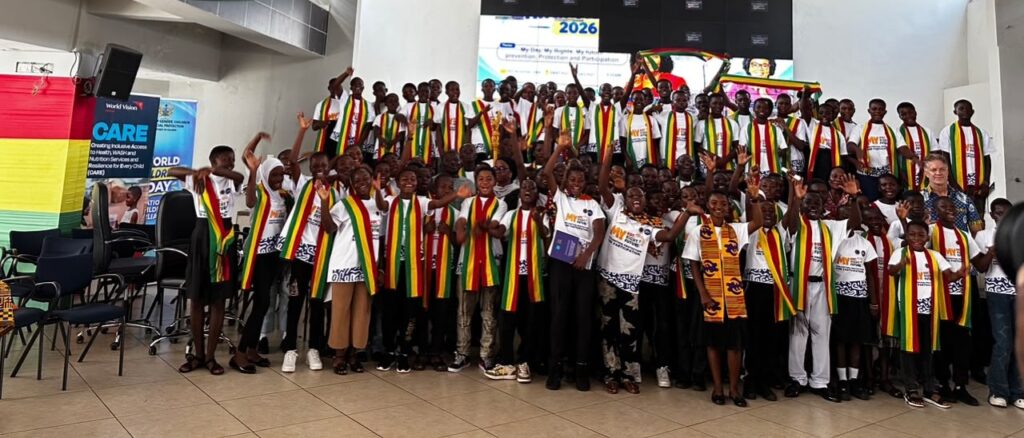
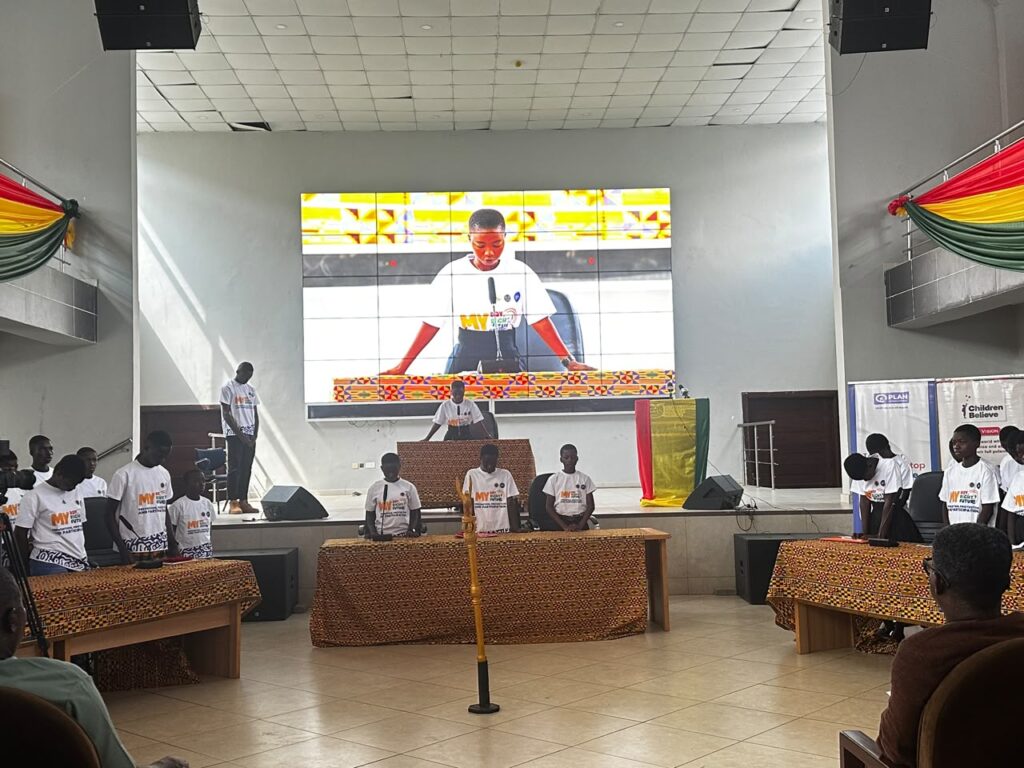
The Country Director was speaking at the 8th Session of the National Children’s Parliament in Accra, as part of commemoration of the celebration of the World Children’s Day, on the theme, “My Day, My Rights, My Future: Prevention, Protection and Participation.”
It was convened under the auspices of the Ministry of Gender, Children and Social Protection (MOGCSP), Plan International Ghana, and other partners, providing a platform for children to engage in parliamentary debate and contribute to national discourse on child rights and child protection issues.
She said Plan International Ghana, which had worked for more than 30 years to advance children’s rights and equality for girls, believed every child deserved a safe environment, protection from harm and the opportunity to shape their future.
Madam Issifu noted that 20 children from communities where the organisation operated in the North East, Upper West, Volta and Oti Regions were participating in the parliamentary session, and that their participation highlighted the need to ensure that the voices of children in rural communities were not only heard but also translated into decisions and actions.
The Country Director identified child marriage, child labour, teenage pregnancy, limited access to quality education and various forms of violence as some of the challenges confronting children in the communities where the organisation worked.
Madam Issifu called on the Government and Parliament to strengthen the enforcement of child protection laws, invest in adequately resourced protection systems and ensure equitable access to quality education and justice.
She also urged Metropolitan, Municipal, and District Assemblies to prioritise child protection in their development plans and budgets.
“Traditional and religious leaders, parents, teachers and communities must work together to challenge harmful social norms, end child marriage, reject child labour and speak against all forms of violence against children,” she stressed.
Madam Issifu called for recommendations from the Children’s Parliament to be formally documented, submitted to relevant authorities and followed up with clear responsibilities and measurable actions.
“The true measure of this Parliament will not be what we say here today, but what we do differently for children tomorrow,” she said.
She encouraged the participating children to speak boldly, question decisions affecting their lives and hold adults accountable, stressing that they were not merely future leaders but leaders of today whose voices and ideas mattered.
Mr Alexander Boadu Sefah, Acting Director, Department of Children, MOGCSP, said Ghana remained committed to ending violence against children by 2030 through stronger child protection systems, enforcement of laws and increased child participation in decision-making.
He said the Government had pledged to address harmful social norms, create safe environments for children, strengthen support services and ensure that children participated in decisions affecting their lives.
The Acting Director expressed concern about the high prevalence of violence and abuse against children, noting that such experiences negatively affected their social, emotional, psychological, and general well-being, while undermining national development.
He said poverty, gender discrimination, social inequalities, conflict and harmful cultural practices further exposed children to abuse and violence, calling on parents, caregivers, state institutions, civil society organisations and communities to work together to protect all children, irrespective of their circumstances.
GNA
Edited by Linda Asante Agyei