By Maxwell Awumah
Ho, Nov. 06, GNA – Mr Francis Asong, Executive Director of the Africa Disability Institute (ADI), has called on journalists and media practitioners to promote positive narratives in reporting on issues affecting Persons with Disabilities (PWDs).
He said media coverage of disability significantly influenced how PWDs were perceived, how their capabilities were recognised, how their challenges were understood, and how society responded to their rights and aspirations.
Mr Asong made the call at a Regional Media Capacity-Building Workshop on Disability-Inclusive Reporting held in Ho.
The workshop was organised on the theme: “Effective Media Reporting on Disability: Promoting Economic Justice and Inclusion through Responsible Journalism.”
He observed that disability reporting in many instances continued to be characterised by stereotypes, sensationalism, pity, and charity-based narratives.
“Persons with disabilities are sometimes portrayed primarily as people who need assistance rather than as citizens, professionals, entrepreneurs, leaders, innovators, and contributors to economic growth,” he said.
Mr Asong stressed the need to change the narrative, noting that disability was not merely an individual condition but was also shaped by environmental, institutional, social, and attitudinal barriers.
He said media reporting on disability issues must go beyond impairment and personal circumstances to examine the systems, policies and practices that either facilitated or restricted the participation of persons with disabilities.
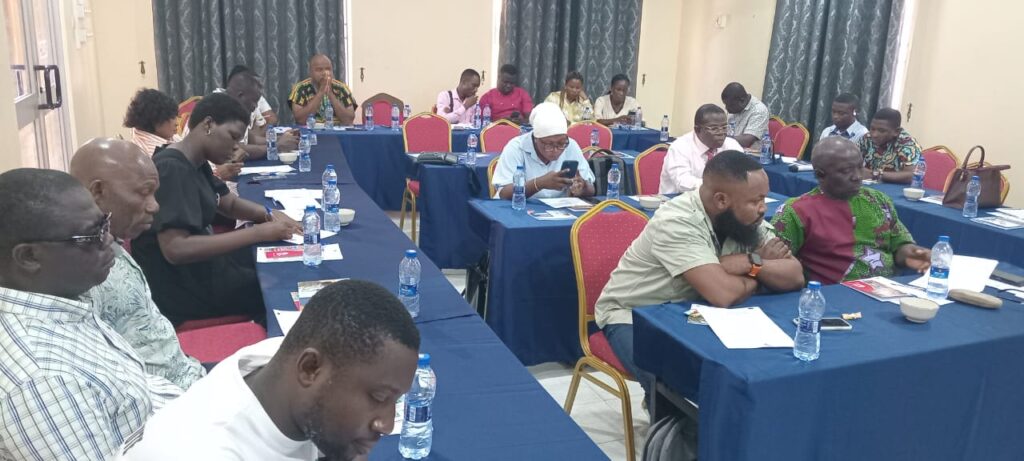
Mr Asong explained that the workshop formed part of the European Union-funded project, “Strengthening the Capacity of Organisations of Persons with Disabilities for Promoting Inclusion in Ghana.”
He said the project was being jointly implemented by the Ghana Federation of Disability Organisations as lead applicant, in partnership with the Mental Health Society of Ghana and the Africa Disability Institute as co-applicants.
According to him, the initiative sought to strengthen the capacity of organisations of persons with disabilities, promote evidence-based advocacy, influence inclusive policies and enhance the meaningful participation of persons with disabilities in governance and development.
Mr Asong urged participants to pay close attention to the Positive Disability Terminology Guide and Checklist, which he said would serve as practical reference tools in their daily professional work.
He encouraged journalists to regard persons with disabilities not merely as subjects of news stories but as credible sources, experts, commentators and active participants in discussions on national development.
Dr Harrison Kofi Belley, President of the Volta Regional Chapter of the Ghana Journalists Association (GJA), said the media played a vital role in creating awareness and educating the public.
He noted that the media also had the responsibility to challenge negative attitudes, stigma, and discrimination against persons with disabilities.
Dr Belley said persons with disabilities should not only be discussed in the media but must also be given opportunities to speak for themselves, share their experiences, express their concerns, discuss challenges and contribute to national conversations.
He said the media must advocate the protection and promotion of the rights of persons with disabilities by educating the public on disability-related laws and policies, including the United Nations Convention on the Rights of Persons with Disabilities and Ghana’s Persons with Disability Act, 2006 (Act 715).
Dr Belley further urged the media to encourage organisations to employ persons with disabilities and create working environments that accommodated their needs.
GNA
Edited by Lydia Kukua Asamoah
Reporter: Maxwell Awumah