By Benjamin Adamafio Commey, GNA
Accra, Nov. 26, GNA – The Ghana Meteorological Agency (GMet) has commissioned a modern operational building equipped with advanced forecasting technologies to improve weather prediction, early warning systems and the delivery of reliable meteorological services.
The structure, which was started in the 1980s but remained incomplete for more than four decades, was refurbished and expanded to accommodate a state-of-the-art central forecasting office, bringing together various forecasting units and essential operational technologies.
Named after the late Samuel Edwin Tandoh, a former Director of the Ghana Meteorological Services Department, the facility houses the daily weather forecasting, marine forecasting and aeronautical meteorological units, with additional spaces designated for the Ghana Hydrological Authority and the National Disaster Management Organisation (NADMO) to strengthen inter-agency collaboration.
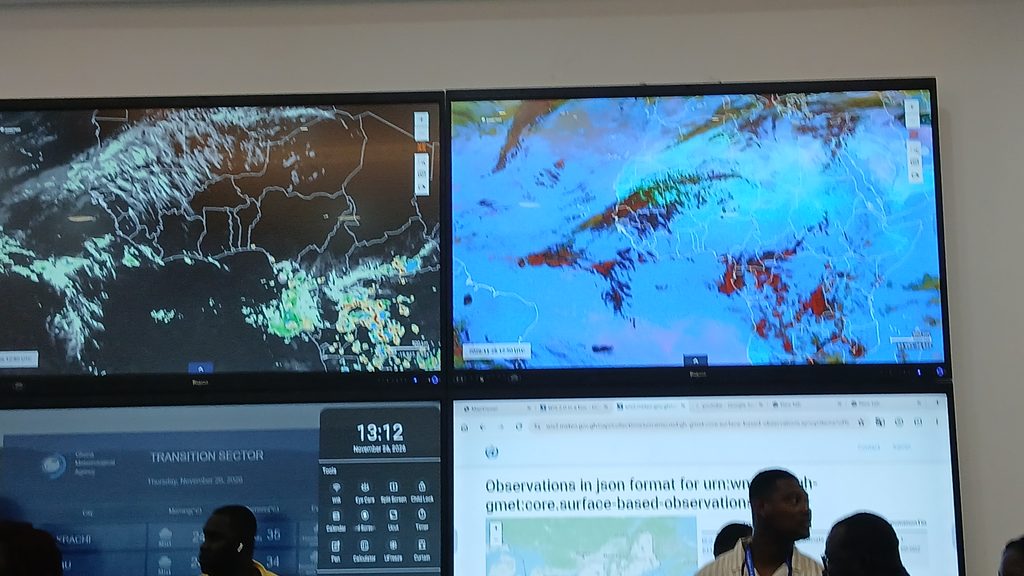
It is also equipped with Puma satellite receiving stations for accessing satellite imagery and global weather models, as well as systems for identifying and monitoring data from ground-based weather stations.
The integrated arrangement is expected to enable forecasters to access essential weather products, analyse information collectively and issue more accurate and timely forecasts and warnings.
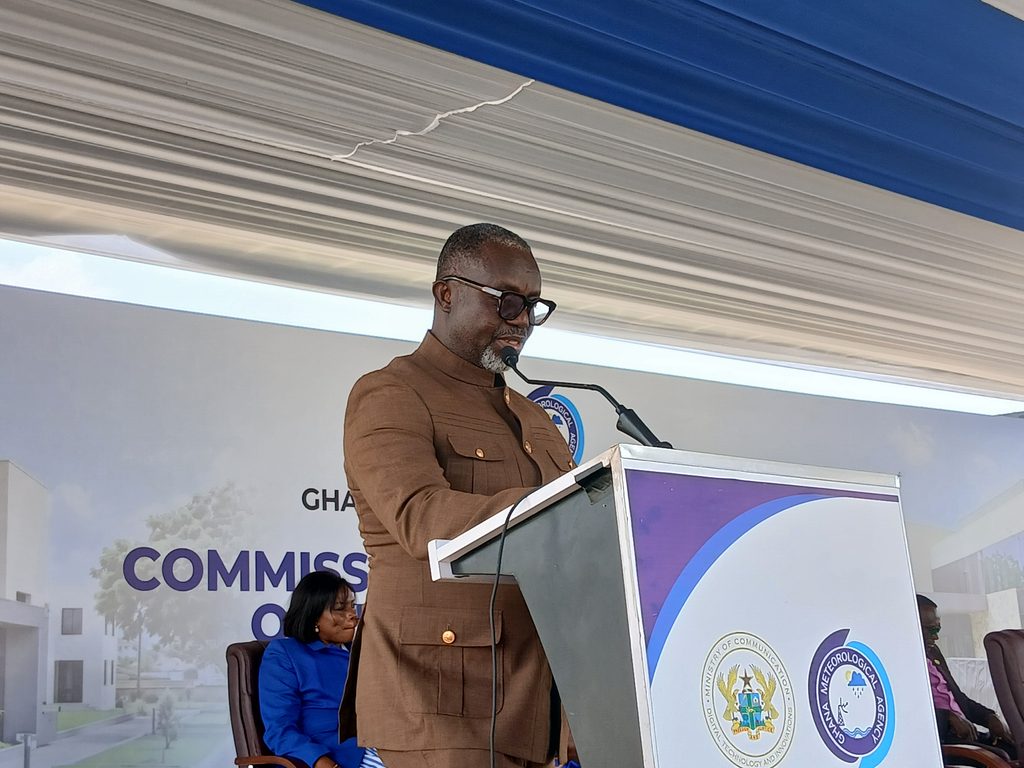
Speaking in an interview with the media on the side-line of the inauguration in Accra on Thursday, Dr Eric Asuman, Director-General of GMet, said the facility marked a significant milestone in the Agency’s efforts to modernise its operations and improve its contribution to national development and public safety.
He said the project, which had remained abandoned and deteriorated since its construction began in the 1980s, was revived about two years ago through the mobilisation of internal resources.
The facility was done with funds from the Agency’s Internally Generated Funds.
Dr Asuman said the Agency was also working towards accommodating officers from the Ghana Hydrological Authority and NADMO in the operational block to facilitate the immediate sharing of weather warnings and strengthen emergency preparedness.
He explained that while GMet provided information on rainfall and other atmospheric conditions, the Ghana Hydrological Authority was responsible for assessing the potential impact of rainfall on rivers, drainage systems and communities.
“When the water is in the atmosphere, it is GMet, but as soon as it hits the ground, it is Hydro,” he said.
He said collaboration between the institutions would support impact-based forecasting, enabling authorities to identify vulnerable communities and take timely preventive measures against flooding and other weather-related disasters.
Dr Asuman, however, said the new facility did not resolve all the Agency’s operational challenges, noting that additional automatic weather stations, weather radars, staff capacity development and renovation of regional facilities across the country were required to meet the changing needs in weather forecasting.
He said although a radar installation was being prepared at the headquarters, GMet required about five radars strategically located across the country to achieve wider weather monitoring coverage.
Mr Samuel Nartey George, Minister of Communication, Digital Technology and Innovations, charged GMet management and staff to use the facility in improving forecasting accuracy, early warning alerts and the quality of services delivered to the public.
“It is not about us cutting the ribbon and saying the project is completed. It is about what we do with the building that matters,” he said.
He also urged GMet to use the facility to strengthen its human resource capacity and ensure the proper maintenance of the building and its equipment.
To further the operations of the Agency, Mr George said a weather radar would soon be installed at the facility to enhance accuracy.
Mr Tandoh was described as a hardworking, humble and principled administrator who led the Department around 1980 and encouraged staff to remain committed despite challenging working conditions.
He was also recognised for his research contributions to climatology, particularly studies on Ghana’s rainfall patterns, and his mentorship of young meteorologists, including supporting their professional development and further education.
GNA
Edited by Kenneth Odeng Adade
Reporter: Benjamin Adamafio Commey