By Francis Ntow
Accra, Nov. 5, GNA – Dr Johnson Pandit Asiama, Governor of the Bank of Ghana (BoG), has called for coordinated action to translate Ghana’s expanding financial access into improved financial health for households and businesses.
He said government, financial regulators, industry players and development partners must establish clear priorities and make concrete commitments to strengthen the capacity of individuals and businesses to manage money, withstand financial shocks and build long-term prosperity.
Dr Asiama made the call at a high-level roundtable on financial health held during the visit of Queen Máxima Zorreguieta Cerruti of the Netherlands, the United Nations Secretary-General’s Special Advocate for Financial Health (UNSGSA).
He said although Ghana had made significant progress in expanding financial access, there was a need for clear priorities and a shared strategy to address barriers preventing people from achieving financial stability, resilience and sustainable growth.
Dr Asiama noted that Ghana had become one of Africa’s leading digital finance markets, with interoperable payment systems, mobile money and fintech innovations expanding access to financial services.
However, he said access must translate into improved financial health through savings, insurance, pensions, investment, financial literacy and productive, responsible credit.
“For Ghana, one of the most important pathways to improving financial health is through productive and responsible credit,” he said, adding that properly structured credit could deliver significant benefits.
“Credit, when appropriately designed and delivered, enabled households to invest in their future and gives businesses the capital they require to grow, to innovate, and to create jobs, particularly important for micro, small and medium-sized enterprises (MSMEs),” he said.
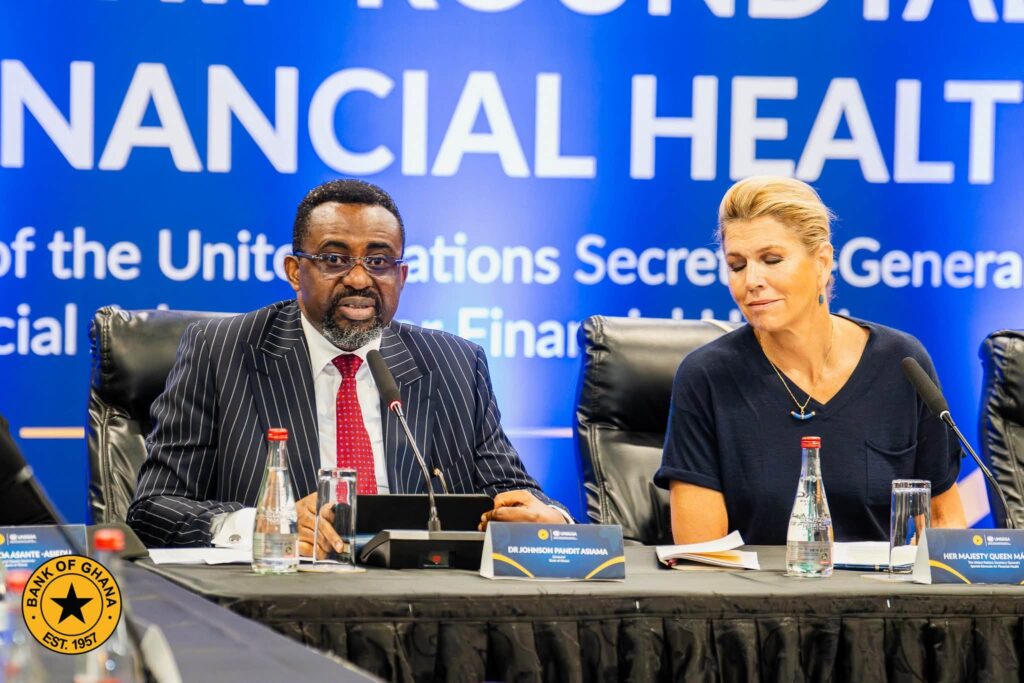
Dr Asiama urged financial institutions to leverage technology, data and innovation to improve access to appropriate financial services for MSMEs, women and farmers, while strengthening savings, insurance and financial resilience.
He expressed appreciation to Queen Máxima for her longstanding leadership in promoting financial inclusion and financial health globally, and for supporting efforts to advance the discussion in Ghana.
Queen Máxima commended Ghana’s progress in expanding access to finance but stressed the need to translate that progress into improved financial outcomes, enabling people to plan, save and invest while avoiding excessive indebtedness arising from poor-quality credit.
She said financial health made business sense because it contributed to economic stability and “mobilising domestic resources to actually make the investments we need to do to actually have productivity.”
“Ghana is now positioned to start looking into the development of longer-term products, including pensions and insurance schemes at a time when insurance penetration remains only about three per cent of Gross Domestic Product (GDP),” she said.
Queen Máxima urged Ghana to build its financial health agenda around four pillars: effective daily money management, access to liquidity to bridge financial gaps, resilience against shocks such as illness and climate change, and savings for education, retirement and business growth.
GNA
Edited by Kenneth Sackey
Reporter: Francis Ntow
Email: [email protected]