By Isaac Arkoh
Twifo Praso (C/R), Nov. 10, GNA – A Professor of Civil and Environmental Engineering at the University of Cape Coast (UCC), Prof Albert Ebo Duncan has warned that empirical research evidence indicates that Ghana’s water bodies polluted by illegal mining, popularly known as galamsey, could take as long as 100 years to regain their original purity.
Similarly, lands contaminated with mining chemicals might also require about 300 years to be fully restored to their natural state.
Prof Duncan was speaking at an anti-galamsey public education forum for school children, miners and media practitioners at Praso in the Twifo Atti-Morkwa District of the Central Region.
The forum, organised by the Department of Civil and Environmental Engineering, UCC, in collaboration with the Canada Fund for Local Initiatives (CFLI), forms part of a two-month house-to-house anti-galamsey education campaign in the area.
It was on the theme: The theme: Environmental Sensitisation and Civic Education on Illegal Mining in Ghana : Protecting our Land, Water and Future.“
As part of the campaign, 16 young environmental advocates who had undergone several days of training, would move in groups with identifiable codes to educate residents, particularly their peers on the dangers of illegal mining.
The young advocates would be supported by selected teachers to explain the importance of using children and young people to scale up anti-galamsey education in their communities.
The forum specifically targeted pupils and students to instil in them a sense of environmental responsibility, cleanliness and civic consciousness.
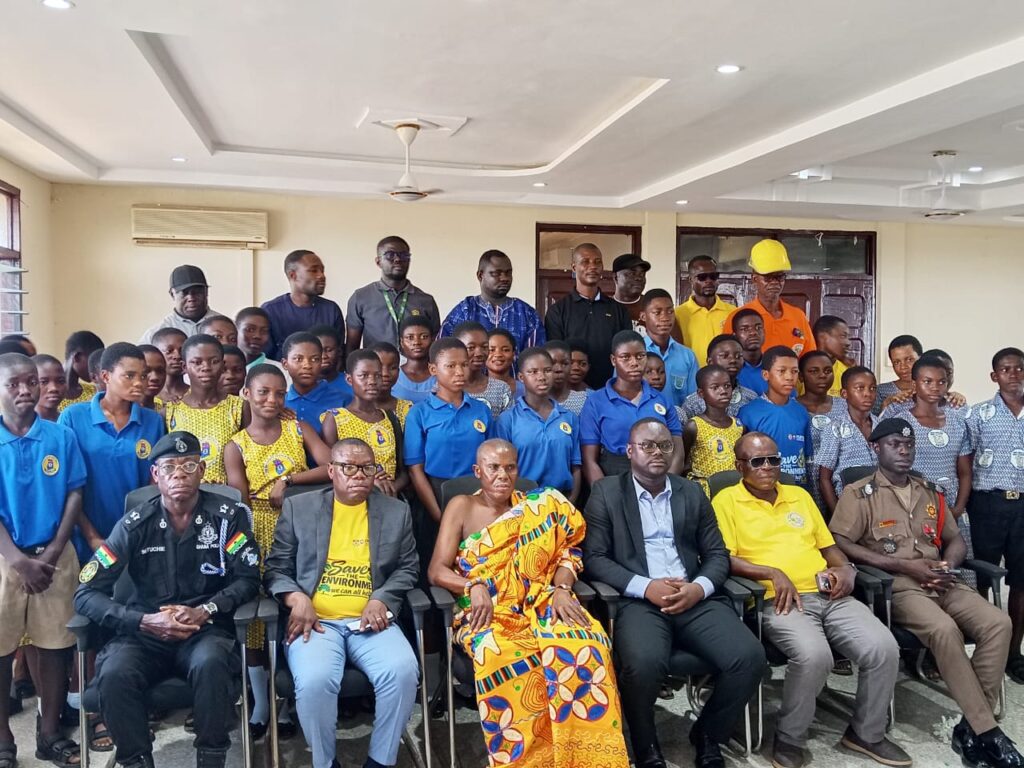
The participating schools were Twifo Praso Senior High School, Anglican Basic School, Precious Montessori, Praso Methodist Basic School, Praso Sakora Park Basic School, Twifo-Juaben Basic School, Praso A and D Basic School, New Paradise School and Roman Catholic School.
The event was interspersed with drama performances by pupils, depicting the effects of polluted water bodies caused by illegal mining on agriculture, human health and national food security.
He explained that although clean-up and treatment efforts could begin immediately, the natural processes required to remove pollutants from water and break down of extract toxic chemicals from the soil were extremely slow.
“Illegal mining has introduced pollutants including heavy metals and processing chemicals into Ghana’s rivers and soils at levels that natural recovery alone cannot quickly reverse.
“Even if galamsey stops today, contaminated water may take up to 100 years to return to a safe, clean state, while chemically degraded farmlands could remain unsuitable for full ecological and agricultural recovery for roughly 300 years,” the Processor said.
Prof Duncan, therefore, called on the youth to desist from illegal mining and urged all stakeholders, including government, traditional authorities, communities and civil society, to support efforts to end the menace and protect Ghana’s water bodies and lands.
Mr Frederick Eshun, Health Information Officer with Twifo-Atti-Morkwa District Health Directorate said illegal mining threatened public health by polluting rivers and drinking water with chemicals such as mercury, cyanide, arsenic, and lead, which could cause kidney damage, neurological disorders, skin conditions and other chronic illnesses.
He said it could also increase the spread of waterborne diseases such as cholera, typhoid, and diarrhoea, while stagnant pits created by mining could become breeding grounds for mosquitoes and dead traps.
In addition, he said dust, fumes, and toxic particles from mining exposed miners and nearby residents to respiratory diseases, lung damage and long-term risks such as cancer, particularly affecting children, pregnant women and other vulnerable groups.
Mr David Agyekum Baidoo, an official of the Environmental Protection Authority (EPA), said poverty had pushed many young people and rural households into mining, while the quick cash returns from gold could outweigh the longer-term effects of environmental damage.
He said there was weak enforcement because the regulatory institutions often lacked enough personnel, vehicles, monitoring equipment and local intelligence to inspect the many scattered and constantly changing mining sites.
Mr Isaac Yawson, the District Chief Executive for Twifo-Atti-Morkwa, said government was not against mining but was committed to ensuring that it was done responsibly and in accordance with the law, because responsible mining protected lives, the environment, and local livelihoods.
He cautioned that he would not countenance illegal mining, as galamsey exposed miners to fatal accidents and caused serious environmental degradation and so many illegal miners had been removed and were being transition into regulated small-scale operations, while supporting interventions such as Blue Water Guards to protect rivers and forest reserves.
GNA
Edited by Alice Tettey /Kenneth Odeng Adade
Reporter: Isaac Arkoh