By Albert Futukpor
Zabzugu (N/R), Oct 15, GNA – A total of 250 women have undergone successful corrective surgeries to treat them of fistula to restore their health and dignity.
The corrective surgeries were undertaken under the Access Bank Ghana Plc’s Fist Against Fistula initiative, which seeks to restore the health, dignity and social well-being of women living with obstetric fistula.
The initiative, championed by the Bank since 2018 in partnership with the Ghana Health Service, the United Nations Population Fund (UNFPA) amongst other stakeholders, seeks to improve access to treatment and raise awareness about the condition.
Madam Beverlyn Quaynor, Group Head of Commercial Banking at Access Bank Ghana Plc, announced this at a community engagement and outreach activity on obstetric fistula at Zabzugu in the Northern Region.
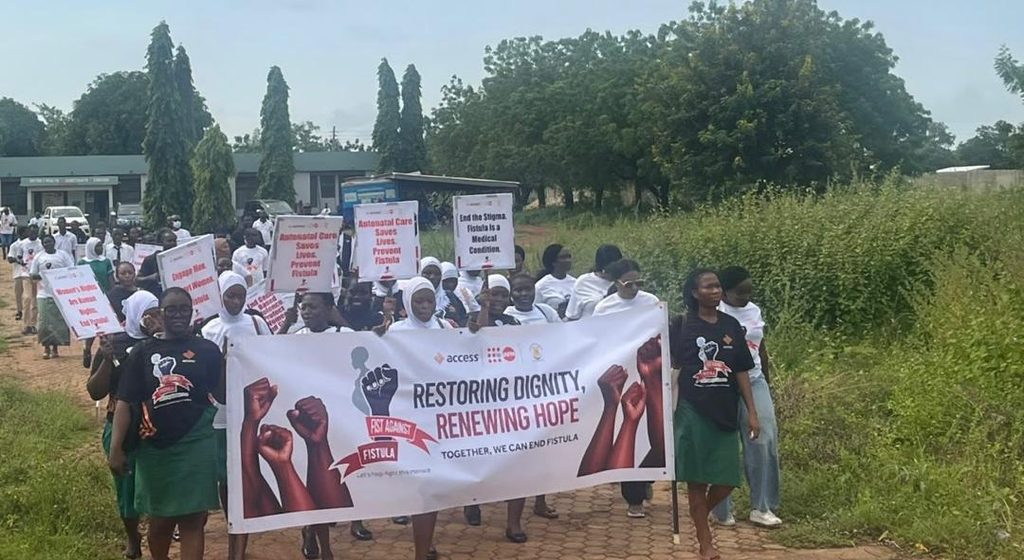
The outreach brought together traditional authorities, health professionals, community leaders and residents to raise awareness about the condition, encourage early treatment and strengthen community support for women affected by the condition.
Prior to the outreach, the stakeholders embarked on an awareness walk through the Zabzugu town with participants holding placards bearing inscriptions such as “Engage Men. Support Women. End Fistula”, “Safe Pregnancy. Safe Childbirth. End Fistula”, “End the Stigma. Fistula Is a Medical Condition”.
Madam Quaynor said the Bank’s commitment to addressing the condition was driven by the belief that every woman deserved good health, dignity and the opportunity to participate fully in family and community life.
Obstetric fistula is a medical condition that can develop when a woman experiences prolonged labour without timely medical intervention potentially leaving her unable to control the passage of urine or stool.
Besides the physical challenges, many affected women endure stigma, rejection and isolation with some suffering in silence as they are unaware that treatment is available.
Madam Quaynor said the establishment of the Fistula Trust Fund had also strengthened the Bank’s efforts to mobilise sustainable support for treatment and related interventions.
She told community members that obstetric fistula was neither a curse nor a punishment but a medical condition that could be treated.
She urged women experiencing symptoms associated with the condition to seek medical attention and encouraged families and community members to support them in accessing treatment.
She called on traditional and religious leaders, Assembly Members and women’s groups to intensify public education to dispel misconceptions, reduce stigma and encourage affected women to seek help.
Madam Victoria Teni Aboyella, Zabzugu District Director of Health said 39 suspected cases of obstetric fistula had been assessed in the district this year, out of which 14 were confirmed and referred for corrective treatment at the Yendi Municipal Hospital.
She said eight other cases were awaiting confirmation and repair.
She said in 2024 and 2025, the district referred 10 suspected cases to the Zabzugu Hospital, out of which six were confirmed and treated through corrective surgeries at the Tamale West Hospital.
Madam Aboyella said home deliveries, teenage pregnancies, delays in seeking medical care and challenges with referrals were factors contributing to the condition.
She called on the Zabzugu District Assembly to provide emergency transport for women requiring urgent obstetric care and include affected women in its poverty alleviation programmes.
She urged traditional authorities to intensify advocacy against child marriage and female genital mutilation, while encouraging women to deliver under skilled medical supervision to reduce the risk of complications.
Mr Jude Domosie, National Programme Analyst, UNFPA urged community members to reject misconceptions about the condition and support women seeking treatment.
He cited instances where some husbands accompanied their wives to the Yendi Municipal Hospital for free corrective surgery and supported them after treatment and encouraged other men to demonstrate similar care and understanding towards women living with the condition.
Madam Unyinya Gmakalibe, from Sakol community, who received treatment under the Bank’s initiative, said she had lived with the condition for two years and isolated herself because of the challenges it posed to her social life.
She said she was linked to treatment at the Yendi Municipal Hospital and had since recovered and encouraged other women experiencing similar symptoms to seek medical assistance.
Madam Binjoti Gmabeya from Gnani community, who said she had lived with the condition for five years, indicated that it affected her social interactions and forced her to avoid other people.
GNA
Edited by Eric K. Amoh /Kenneth Odeng Adade
Reporter: Albert Futukpor
Email: [email protected]