By Mildred Siabi-Mensah
Takoradi, Oct. 15, GNA – The Ghana Standards Authority (GSA) is strengthening electricity meter testing, transformer calibration and quality assurance services to improve upon energy reliability, protect consumers and support Ghana’s transition to clean energy.
Professor George Agyei, the Director-General of the GSA, said accurate measurement and the testing of energy equipment were essential to achieving Sustainable Development Goal (SDG) Seven, which sought to ensure access to affordable, reliable, sustainable and modern energy for all.
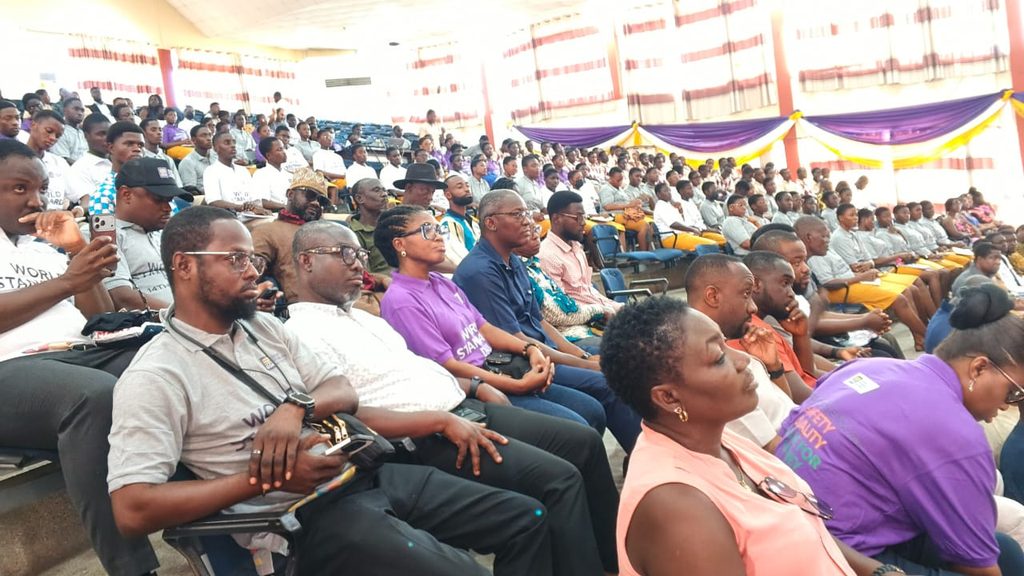
He was speaking at the 2026 World Standards Day Grand Durbar held at the Takoradi Technical University on the theme: “Shared Vision for a Better World – Spotlight on SDG 7: Affordable and Clean Energy.”
Prof. Agyei said some energy challenges attributed to inadequate supply could also result from failures in standards, including inaccurate electricity meters, faulty transformers and substandard solar panels.
“Energy can only be affordable when it is measured accurately. It can only be reliable when equipment is tested. It can only be clean when the technology we import and manufacture meets verified performance requirements,” he said.
He announced that Takoradi was one of three national electricity meter testing centres, alongside Accra and Kumasi, to ensure that consumers in the Western Region benefited from the programme.
He said under the National Electricity Meter Testing Programme, every electricity meter installed in Ghana was required to be tested and certified by the GSA.
The service is free to the public and financed by the Government, but compulsory under the Standards Authority Act, 2022 (Act 1078), he said.
Prof. Agyei added that meters already in service were required to comply with the applicable requirements by December 31, 2028.
He said the Authority was also advancing plans for a National Transformer Testing and Calibration Centre to ensure that transformers supplying electricity to homes and industries were tested against international standards before failures occurred.
The facility would be developed in line with relevant International Electrotechnical Commission (IEC) standards and ISO/IEC 17025 requirements for testing and calibration laboratories.
On service delivery, Prof. Agyei said the GSA’s 24-Hour Services Directorate would provide testing, inspection, certification, calibration and verification services around the clock.
He said the initiative would support the Government’s 24-Hour Economy agenda by enabling ports, factories and exporters to access quality assurance services without unnecessary delays.
“Ghana’s 24-Hour Economy cannot run on eight-hour quality services,” he said.
Prof. Agyei called for stronger collaboration among regulatory agencies, industry and other stakeholders, stressing that standards were essential for building public confidence in products and services.
He urged industry players to view compliance as an investment rather than a cost, describing it as a requirement for accessing markets and improving competitiveness.
He also encouraged students to pursue careers in engineering, metrology and standards development to support the future of clean energy and industrial growth.
Touching on Ghana’s role in regional standardisation, Prof. Agyei announced that the country would host the 33rd General Assembly of the African Organisation for Standardisation (ARSO) in Accra in July 2027.
The assembly would coincide with ARSO’s Golden Jubilee, marking 50 years since the organisation was established in Accra in 1977.
He said Ghana was committed to contributing to Africa’s standards development, particularly under the African Continental Free Trade Area (AfCFTA), to facilitate trade and improve upon the competitiveness of African products.
As part of activities marking the celebration, participants were expected to witness the commissioning of the GSA’s new Concrete and Ceramic Tiles Laboratory.
The laboratory is expected to strengthen quality assurance for building materials and provide additional protection for builders, homeowners and other users.
Prof. Agyei said standards often went unnoticed when they worked effectively but could have serious consequences for consumers, businesses and the economy when they failed.
He called on stakeholders to support the Authority’s efforts to uphold quality and safety, saying the GSA’s motto, “We Set the Standard,” required collective commitment to ensure that products and services met established requirements.
Nana Kobina Nketsia V , Omanhene of Essikado Traditional Area, said World Standards Day should be a reflection of how far the country hadentrenched standards that secured the future of the country-human and material resources in focus.
Some participants, however, questioned the standards on frenzy drinks, foods in second cycle institutions and the need to ban the usage of unapproved chemicals for food and other beverages to reduce the growing incidence of non-communicable diseases.
GNA
Edited by Justina Hilda Paaga/ Christabel Addo
Mildred Siabi-Mensah