By Eric Appah Marfo, GNA
Accra, Oct. 20 – Ms Rosemary Wayo,a Chief Reporter of the Ghana News Agency in the Northern Region, had just won two journalism awards including Best Road Safety Reporting in September 2024.
Days later, she boarded a VIP bus from Tamale to Accra for training. She never arrived.
“I was asleep when it happened. I woke up weeks later after surgery to find I had been in a coma,” she recalls.
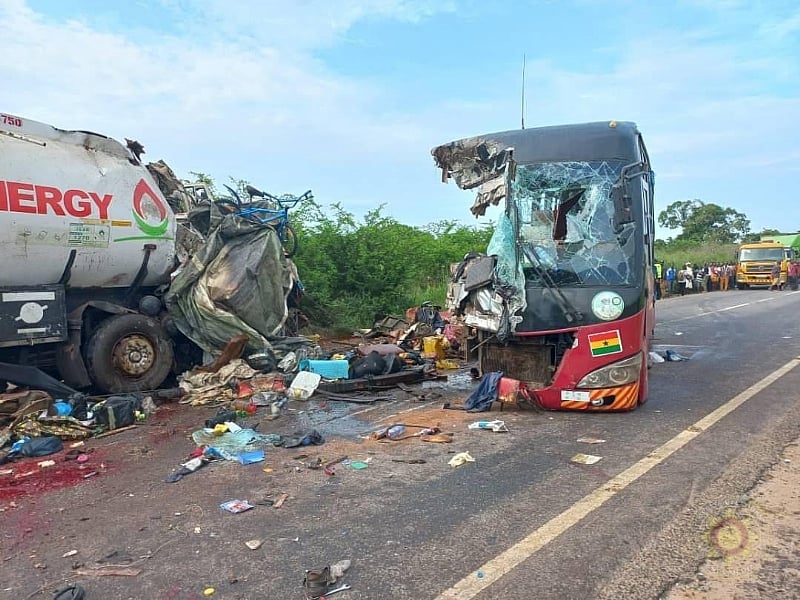
Police said a fuel tanker veered off its lane and rammed into her bus. Two years on, she cannot walk.
Her story mirrors a national crisis: what happens after the crash, when emergency response ends but bills, rehabilitation and lost income begin?
A toll beyond the headlines
Provisional data from the Motor Traffic and Transport Department (MTTD) of the Ghana Police Service shows 10,157 crashes, 2,151 deaths and 12,230 injuries between January and September 2026.
Mr Abraham Amaliba, Director-General of the National Road Safety Authority (NRSA) warns the real toll is higher, as many crashes go unreported.
Waking up to a new reality
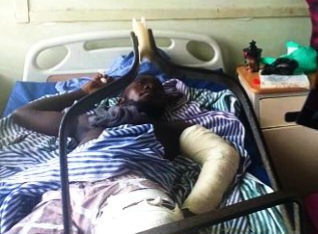
Rosemary sustained a fractured spine and nerve compression.
“I have lost sensation in my lower limbs. I can’t pass urine on my own, I wear a catheter and diapers. My life has completely changed,” she said.
Weekly physiotherapy cost GH¢2,000 for nine months, now GH¢300 per session.
“Imagine paying GH¢2,000 every Friday for nine months. It is unbearable,” she said.
When NHIS is not enough
For most Ghanaians, the National Health Insurance Scheme(NHIS) is the first line of defence. But its scope is limited for trauma.
NHIS covers about 95 per cent of common diseases and basic emergency care, but does not routinely cover advanced diagnostics like specialist trauma surgeries, many orthopaedic implants, and prolonged rehabilitation beyond basic physiotherapy.
NHIS officially notes that Computed Tomography(CT)/Magnetic Resonance Imaging(MRI) are covered only in emergency trauma cases, but in practice at Korle Bu, Komfo Anokye and other centres, patients are often told to pay out-of-pocket because of consumables, equipment breakdown, or referral to private diagnostic centres.
Even insured trauma patients still incur catastrophic costs 30 per cent spend more than 10 per cent of annual household income, according to a University of Washington/Komfo Anokye study.
A minimum wage that cannot pay for trauma
Ghana’s national daily minimum wage for 2026 is GH¢21.77, about GH¢587.80 a month for 27 working days.
At Korle Bu, Head of Accident and Emergency Dr Henry Bulley estimates a severely injured patient needs GH¢4,000 to GH¢5,000 in the first 24 hours alone for CT scan, MRI labs, blood and surgery consumables.
That is seven to eight months of minimum wage income in one day.
“How many patients can pay this?” Dr Bulley asked.
The wage, about $1.36 a day cannot sustain basic living, let alone trauma care, physiotherapy at GH¢300 per session, catheters, diapers and loss of income.
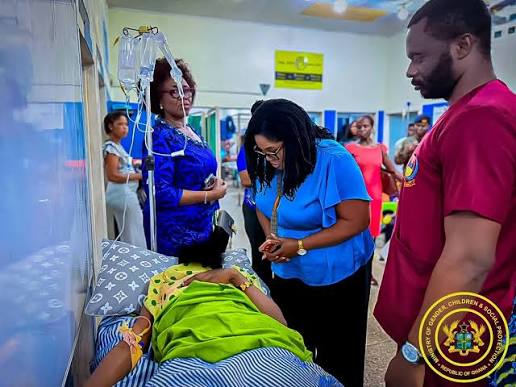
Unconscious patients without relatives are worst hit. While initial emergency care is given, investigations elsewhere in the hospital require cash. Staff sometimes pay from their pockets or appeal to social welfare.
Korle Bu saw 553 accident cases January-June 2026, up from 379 in 2025. Ten died, versus seven in 2025 and 12 in 2024.
For survivors like Rosemary, costs pile up long after discharge.
Insurance gaps
Third-party motor insurance is mandatory, but compensation depends on liability and a slow frustrating claims process. Rosemary says she submitted all documents but is yet to be paid.
Insurance broker Bishop Asante Marfo-Ahenkora advises using brokers to navigate claims.
The NIC says insurers paid GH¢3.6 billion in 2024, about GH¢9.8 million daily across all insurance. Commissioner Dr Abiba Zakariah put daily payouts at GH¢9.2m – GH¢5.2m general, GH¢4m life.
The Motor Compensation Fund, financed by insurers and supervised by NIC, supports eligible victims of uninsured or untraced vehicles. It requires police report, medical evidence and expense records, but does not cover all emergency, rehab and income-loss needs.
Help beyond the system
Rosemary has relied on well-wishers, mining groups, her association and limited government support.
Accident Victims Support Ghana, led by Rev Cyril Crabbe, donated GH¢2,000 and a hamper in December 2025.
Charity helps, but cannot sustain years of care.
*Who supports the ordinary Ghanaian?*
The question sharpens when compared to the August 6, 2025 helicopter crash that killed eight senior officials and officers.
President John Mahama announced a Children’s Support Fund. By July 2026, it exceeded GH¢10m plus US$20,000, with government contributing about GH¢8.46m, plus statutory compensation and healthcare.
The support was justified. The issue is whether similar commitment can extend to ordinary road crash victims who die leaving children, or survive with permanent disability.
Fund needed
Dr Bulley proposes a dedicated trauma fund: a percentage of all insurance premiums ring-fenced for trauma care.
It would need actuarial assessment, transparent rules and oversight, to complement existing compensation. It could prioritize emergency care for those unable to pay, then rehab, assistive devices and psychological support.
Safer roads
Rosemary wants the Tamale-Accra highway dualised. NRSA also advocates dualisation to curb head-on collisions, but says it must pair with enforcement, speed control and driver education.
Technology
The TraffiTech-GH camera and radar enforcement programme starts fully on November 1. During its pilot, police say crashes fell from 1,108 in Sept 2025 to 1,003 in Sept 2026; injuries 1,405 to 1,194; deaths 243 to 224.
The drop is encouraging but needs long-term assessment.
Still hoping
“I wrote that anyone can become vulnerable. The next day, I became the vulnerable one,” Rosemary said.
“What keeps me going is my family. They believe I will walk again.”
Ghana’ response must go beyond counting crashes. It needs safer roads, effective enforcement, prompt insurance compensation, accessible emergency care and sustained support when prevention fails.
GNA
Reporter: Eric Appah Marfo
Email: [email protected]
Edited by Samuel Osei-Frempong